October 14, 2026
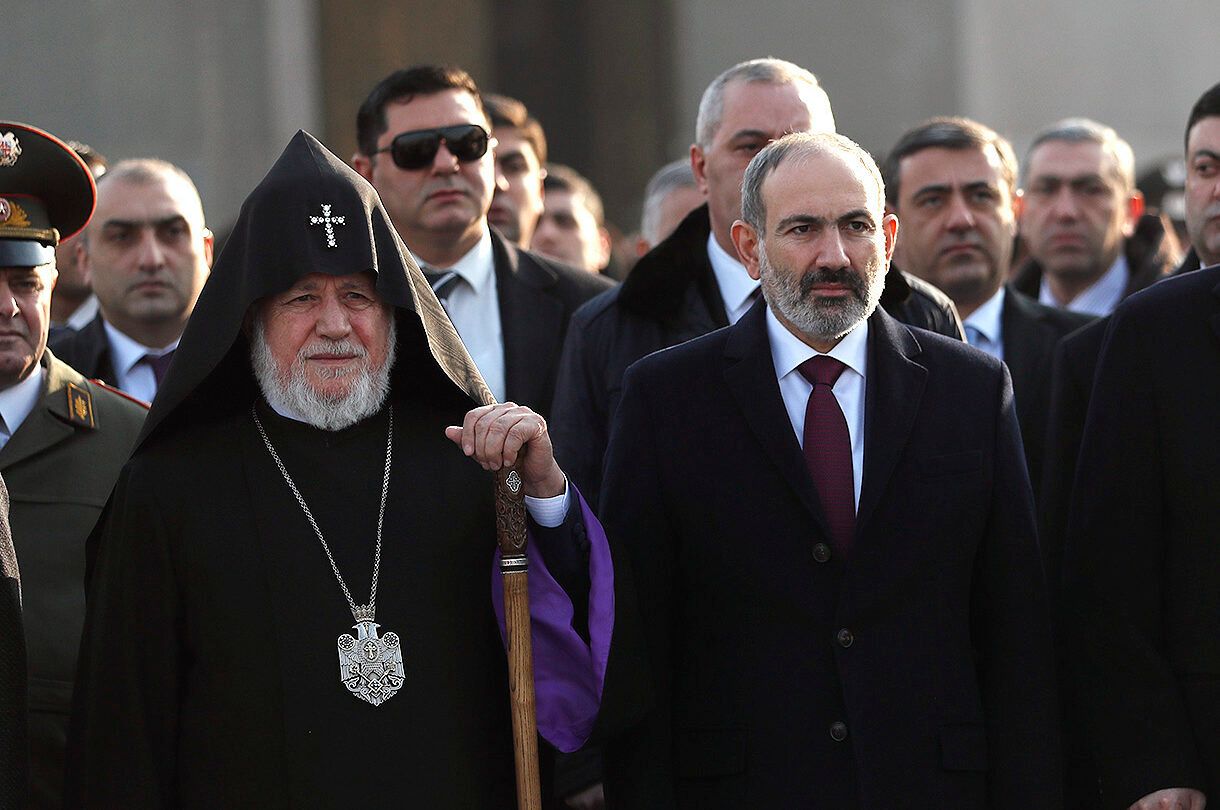
(Horizon Media / YEREVAN) — The Public Relations and Information Center of the Armenian Prime Minister’s Office published a report on September 24 on what it describes as a “crisis” within the Armenian Apostolic Church and proposed ways to address it. The report was prepared at the instruction of Nikol Pashinyan and stems from the government’s 2026–2031 program.
The report sets out 16 findings which, according to its authors, point to a crisis within the Church. Among them are alleged violations of celibacy vows and ethical standards, arbitrary persecution and defrocking of clergy, financial opacity, misuse of Church property, ordinations based on family ties, “clan-based governance,” the politicization of the Holy Altar, and divisions within Diaspora dioceses.
The authors say the report was prepared on the basis of open-source research and contains more than 250 references. It also proposes a five-step “road map” for addressing the issues outlined in the document.
The publication comes amid months of escalating tensions between the Armenian government and the Armenian Apostolic Church. Pashinyan has repeatedly directed harsh public accusations at Catholicos of All Armenians Karekin II and the Church leadership. In August, speaking from the floor of the National Assembly, he called the Catholicos “impure” and announced that the government would publish a report on what he described as the Church’s “systemic crisis,” to be followed by proposals for a parliamentary commission of inquiry and legislative changes.
The Mother See of Holy Etchmiadzin and the Supreme Spiritual Council, in turn, have described the government’s policy as interference in the Church’s internal affairs and autonomy. In August, the Supreme Spiritual Council said the government had no constitutional authority to make Church reform part of a state program or to impose demands on internal ecclesiastical matters. At its September 18 meeting, the Council again condemned the use of state mechanisms to exert pressure on the Church and impose restrictions on it.
Although the government report states that it does not challenge the Church’s doctrinal foundations or autonomy, the fact that it was prepared at the prime minister’s direct instruction, incorporated into the government’s official program, and accompanied by proposed state measures raises serious questions over the government’s involvement in the internal governance and canonical affairs of the Armenian Apostolic Church.














Subscribe to our newsletter