
September 02, 2026
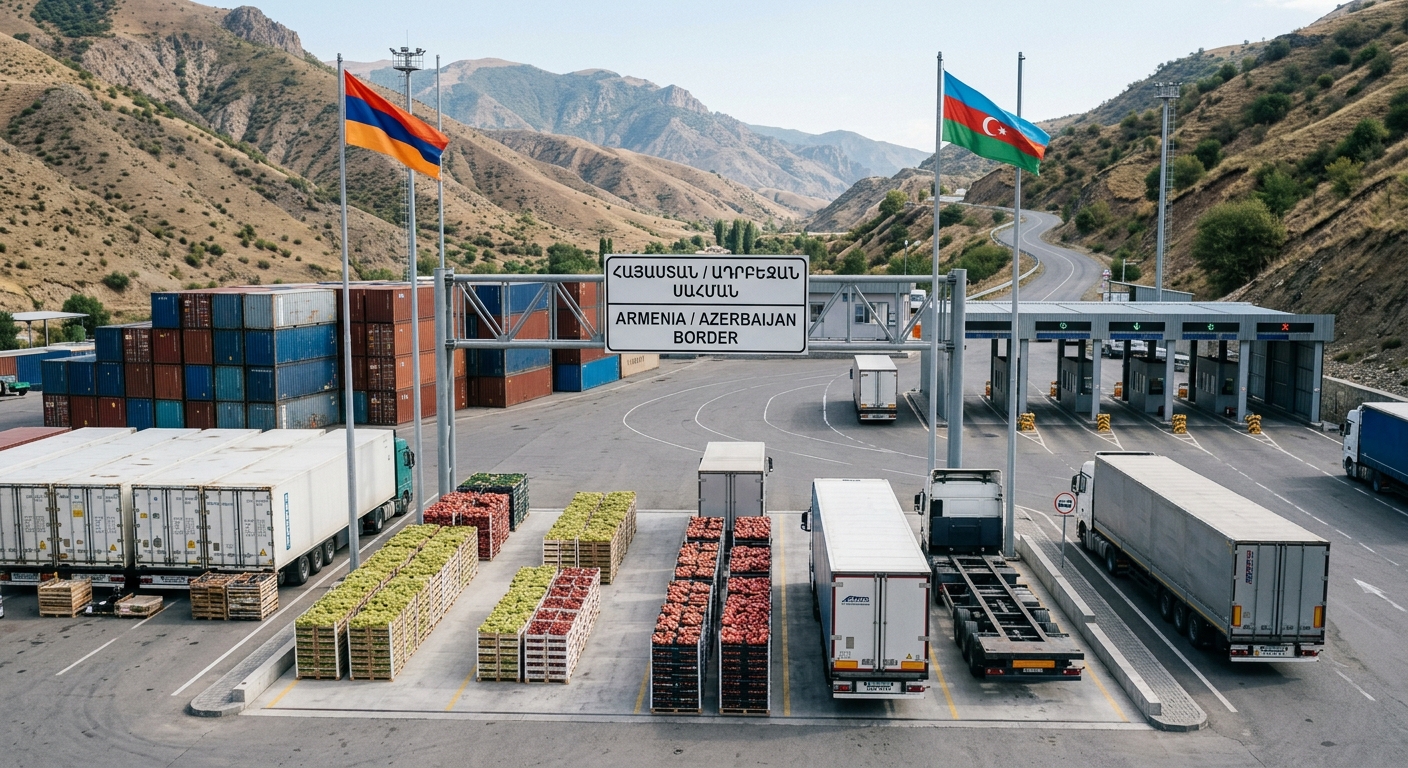
(Horizon Media / YEREVAN) — Armenian companies are expected to begin selling goods to Azerbaijan in the coming days, marking what officials say will be the first commercial exports from Armenia to Azerbaijan in more than three decades.
Armenian Foreign Minister Ararat Mirzoyan announced on September 1 that Azerbaijani firms had already reached agreements to purchase products from Armenian companies, although he did not disclose the businesses involved or specify what goods would be exported.
“In the coming days, you will learn that Azerbaijani companies have purchased goods from Armenian companies,” Mirzoyan said. “Armenia will sell goods to Azerbaijan. That will already constitute bilateral trade.”
The anticipated sales would represent a new stage in economic contacts between the two countries. Commercial exchanges over the past several months have largely been one-sided, with Azerbaijani products or transit routes serving the Armenian market.
In December 2025, Azerbaijan began supplying petroleum products to Armenia by rail through Georgia, in what was described as the first such delivery since the collapse of the Soviet Union. Azerbaijan has also facilitated the transit of wheat from Kazakhstan and Russia to Armenia.
Armenia, however, has so far registered no corresponding commercial exports to Azerbaijan.
Officials have discussed possible Armenian exports since early 2026. Economy Minister Gevorg Papoyan said in January that the two sides had exchanged lists of goods that could potentially be traded. Armenian products under consideration included aluminum foil, ferromolybdenum, textiles, flowers, tomatoes, peppers and materials used in brandy production.
The latest announcement coincides with renewed political contacts between Yerevan and Baku.
Nikol Pashinyan and Azerbaijani President Ilham Aliyev met on the sidelines of the Shanghai Cooperation Organization summit in Bishkek, where they reviewed steps taken since their August 8, 2025 meeting in Washington and the initialling of a peace agreement between Armenia and Azerbaijan.
Both sides have increasingly presented economic ties, transportation links and regional connectivity as practical components of the normalization process. Discussions in Bishkek also covered implementing the Trump Route for International Peace and Prosperity, or TRIPP, the transportation initiative that emerged from the Washington agreements. Various political and humanitarian issues, including the continued imprisonment of Armenian hostages, have been notably absent from these discussions.
Pashinyan separately said Armenia was making progress toward establishing interstate relations with both Azerbaijan and Turkey.
Those efforts have also included preparations along Armenia’s western border. Armenian officials recently visited the Akhurik border checkpoint and the nearby Akhuryan railway station, part of the Gyumri-Kars railway linking Armenia with Turkey, as discussions continue over the possible reopening of regional transportation routes.
The immediate economic impact of Armenian exports to Azerbaijan is expected to be limited. Their broader significance, however, lies in establishing mechanisms that have not existed for decades, including commercial payment arrangements, customs procedures, product certification and direct contacts between companies.
Major obstacles nevertheless remain before regular bilateral commerce can develop. Armenia and Azerbaijan do not yet have a formal bilateral trade framework, their shared border remains closed to regular commercial freight, and detailed customs procedures for direct trade have not been publicly established.
The first transactions would therefore constitute an initial test of commercial relations rather than the establishment of full-scale bilateral trade. Still, if implemented, they would mark the first time since independence that goods move commercially in both directions between Armenia and Azerbaijan.



















Subscribe to our newsletter