September 01, 2026
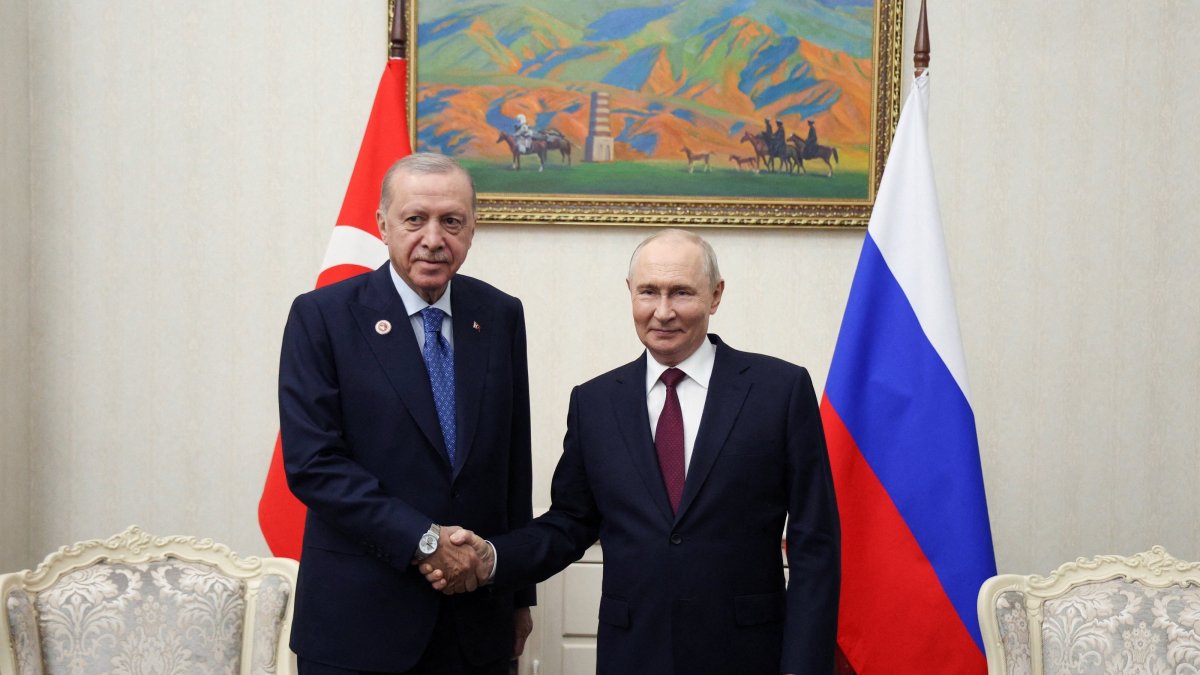
(Horizon Media / BISHKEK) — Turkish President Recep Tayyip Erdogan and Russian President Vladimir Putin signalled plans to deepen already extensive economic and energy cooperation during talks in Bishkek on Tuesday, with Erdogan announcing that the two countries intend to pursue additional nuclear power projects following the completion of the Russian-built Akkuyu Nuclear Power Plant.
The two leaders met on the sidelines of the Shanghai Cooperation Organization summit in the Kyrgyz capital, where Erdogan described Turkish-Russian relations as being at a more advanced level than at any previous period.
Putin, in turn, described Turkey as one of Russia’s “privileged partners” in both foreign policy and the economy, highlighting the continued scope of bilateral cooperation despite Turkey’s membership in NATO and the wider confrontation between Russia and Western states over the war in Ukraine.
Energy emerged as one of the most significant themes of the publicly released remarks.
Erdogan said construction of the Akkuyu Nuclear Power Plant, being built by Russia’s state nuclear corporation Rosatom on Turkey’s Mediterranean coast, had entered its final stages.
“We are now in the completion phase of the Akkuyu Power Plant,” Erdogan said, adding that Ankara was awaiting the plant’s completion and inauguration before proceeding with further projects in partnership with Russia.
Erdogan indicated that the opening of Akkuyu would be followed by steps toward additional nuclear power plants, underscoring the growing strategic dimension of Russian involvement in Turkey’s energy sector. He did not publicly specify during the meeting which future projects would be pursued.
Putin said the first unit of Akkuyu was expected to enter operation this year, telling Erdogan that the Turkish government’s target of commissioning the reactor in 2026 would be met.
The Russian president also pointed to broader economic cooperation and credited Erdogan’s interest in bilateral relations with maintaining economic ties at a high level.
Beyond nuclear energy, Erdogan highlighted cooperation in agriculture, conventional energy and tourism. He specifically underlined the importance of Russian visitors to Turkey, noting that Russians constitute a major part of the tourism market in Antalya.
The meeting also came against the backdrop of the continuing war in Ukraine and escalating security concerns in the Black Sea.
Ahead of the talks, Kremlin foreign policy adviser Yuri Ushakov confirmed that Ukraine and the situation in the Black Sea would be among the principal subjects discussed by Putin and Erdogan, alongside trade and economic relations.
Turkey has attempted to maintain a distinctive position throughout the Russia-Ukraine war. While Ankara has formally supported Ukraine’s territorial integrity and supplied Kyiv with military equipment, it has maintained extensive political and economic relations with Moscow and has not joined Western sanctions against Russia.
Turkey has also repeatedly sought a mediating role between Moscow and Kyiv, hosting negotiations earlier in the war and helping broker the now-defunct Black Sea grain initiative.
As of Tuesday’s initial reporting, neither side had released substantial details concerning the outcome of the leaders’ closed-door discussions on Ukraine or Black Sea security.
The Erdogan-Putin meeting formed part of a broader round of Turkish diplomatic activity in Bishkek. Earlier Tuesday, Erdogan met Azerbaijani President Ilham Aliyev, discussing Turkish-Azerbaijani cooperation in energy, infrastructure and transportation and reiterating Ankara’s intention to remain involved in the Armenia-Azerbaijan peace process.
Taken together, Erdogan’s meetings in Bishkek underscored Turkey’s effort to expand its influence across several overlapping regional frameworks — maintaining its NATO membership and relations with the West while simultaneously deepening economic and political engagement with Russia, Azerbaijan and the states of the Shanghai Cooperation Organization.
Erdogan also described the SCO during his address to the summit as a “rising star” in an increasingly multipolar international system and pledged to deepen Turkey’s cooperation with the organization, where Ankara currently holds dialogue-partner status.















Subscribe to our newsletter