
October 22, 2026
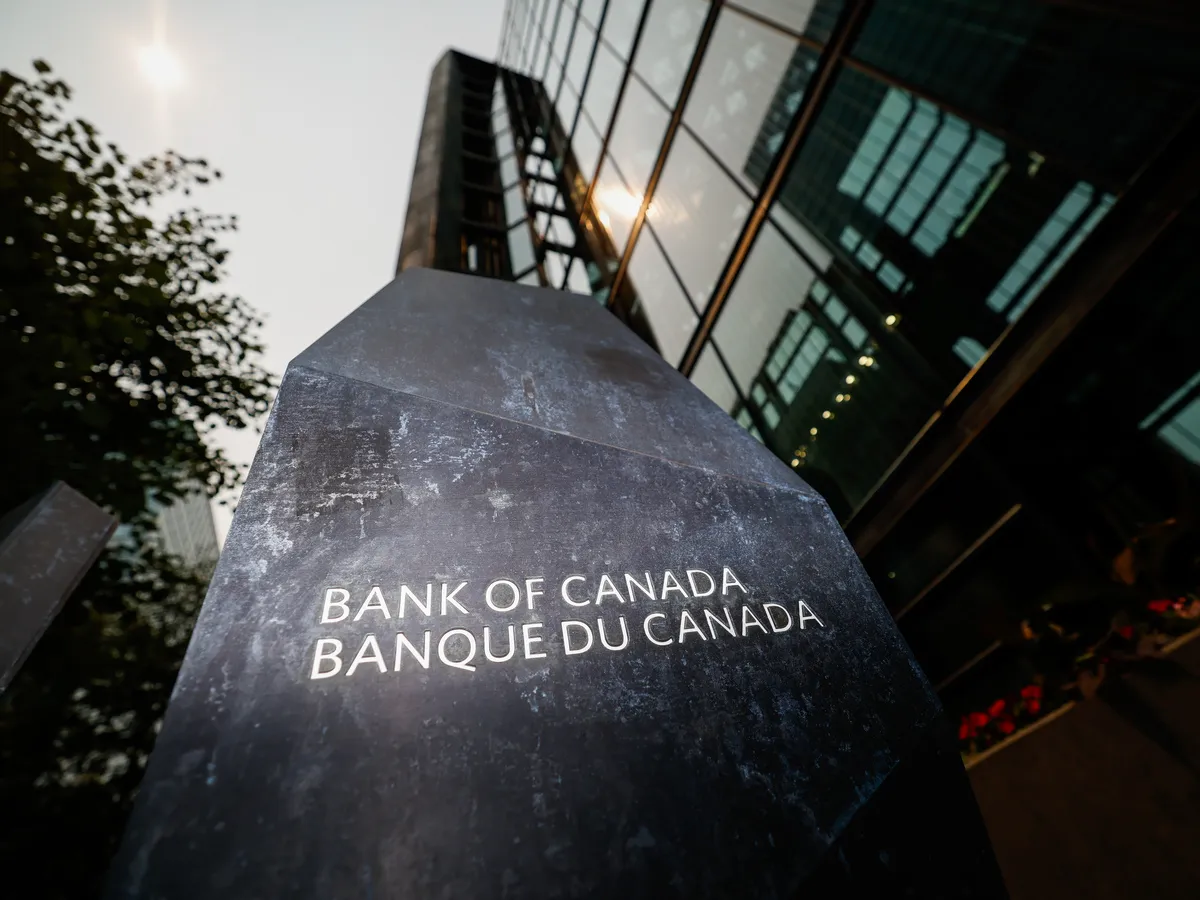
(Horizon Media / OTTAWA) — The Bank of Canada is widely expected to leave its benchmark interest rate unchanged Wednesday as policymakers weigh stronger-than-expected economic growth against renewed trade tensions with the United States.
The central bank will announce its next interest-rate decision on September 2, with economists overwhelmingly expecting the overnight rate to remain at 2.25 per cent.
A Reuters survey of 35 economists found that every respondent expects the Bank to hold the rate this week. The consensus also suggests borrowing costs could remain unchanged through much of 2027 as the central bank waits for greater clarity on inflation, economic growth and Canada’s trading relationship with the United States.
Financial markets are similarly confident. Market pricing late last week put the probability of another hold at about 99 per cent.
The decision comes as the Canadian economy sends conflicting signals.
Canada’s economy recorded a strong rebound in the second quarter, expanding at an annualized rate of approximately 3.3 per cent, its strongest quarterly performance in several years. That recovery has reduced pressure on the Bank of Canada to lower rates to stimulate economic activity.
Inflation, meanwhile, stood at three per cent in July, up from 2.8 percent in June and at the upper end of the Bank’s one-to-three-per-cent inflation-control range. Measures of underlying inflation, however, have remained comparatively stable.
The renewed Canada–U.S. trade dispute has complicated the outlook.
Washington imposed 50 per cent tariffs on roughly five per cent of Canadian exports on August 22 after negotiations between the two governments collapsed. Ottawa plans to introduce retaliatory tariffs on American goods beginning September 8.
Trade restrictions present competing challenges for the central bank. Tariffs and uncertainty can weaken investment, employment and economic growth, creating pressure for lower interest rates. At the same time, higher import costs and a weaker Canadian dollar can push consumer prices higher, making rate cuts more difficult.
Bank of Canada Governor Tiff Macklem has previously emphasized that monetary policy must respond to how trade disruptions ultimately affect both inflation and economic activity rather than simply reacting to tariff announcements themselves.
At its previous decision on July 15, the Bank kept the overnight rate at 2.25 per cent, saying economic activity was improving but warning that U.S. trade policy and geopolitical developments continued to present significant risks.
Most economists now expect policymakers to remain on the sidelines while assessing how the newest tariffs affect Canadian businesses and consumers.
Wednesday’s announcement will therefore be closely watched less for the rate itself than for any indication from Macklem about whether the renewed trade conflict has changed the Bank’s outlook for the Canadian economy and the future direction of interest rates.

















Subscribe to our newsletter

