ANC-International produces a policy brief: Comprehensive Critical Analysis of the TRIPP Armenia-U.S. Framework Agreement
- (0)
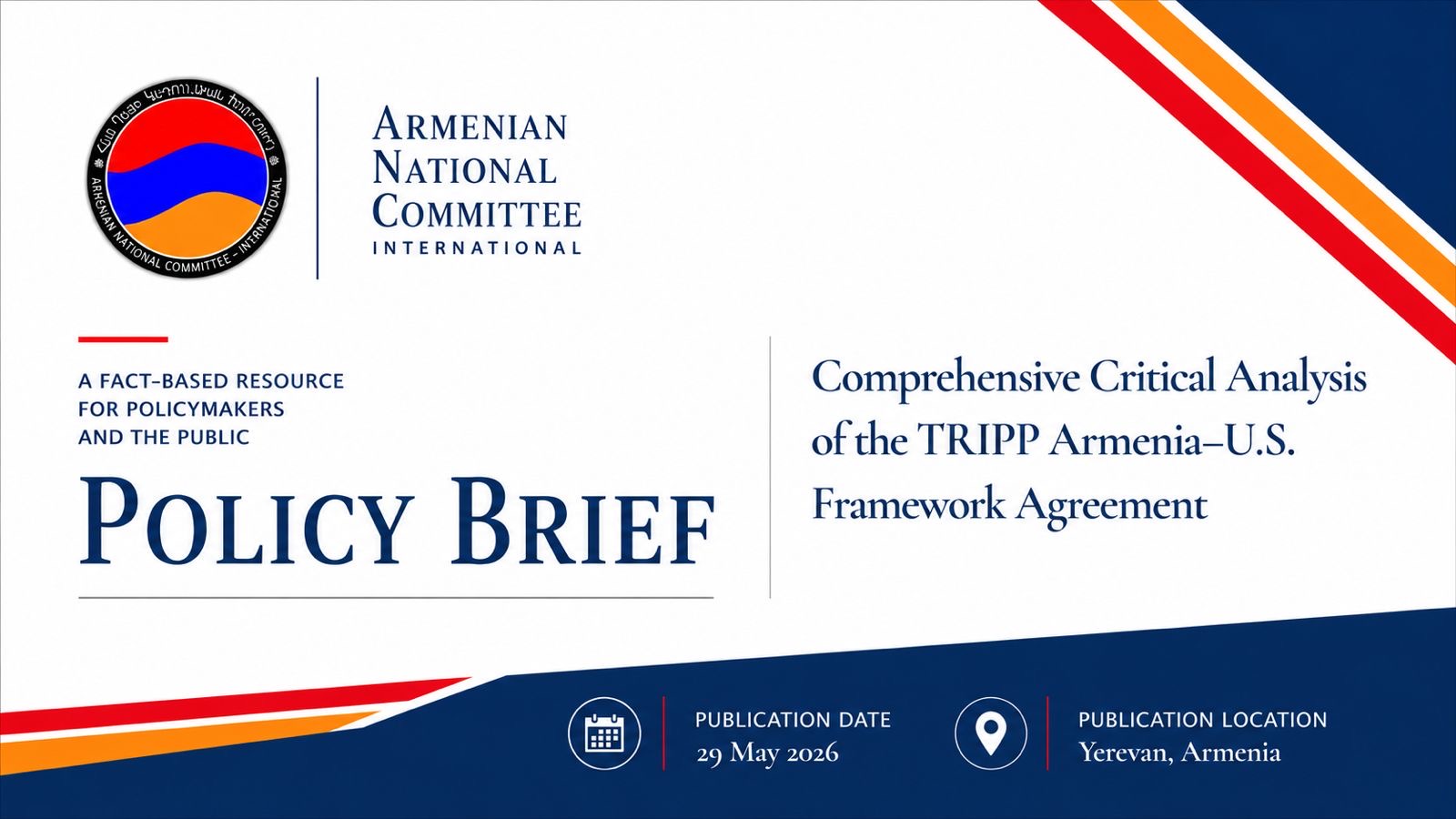
(YEREVAN) – Produced by the Armenian National Committee – International, this analysis examines the “Framework Agreement between the Republic of Armenia and the United States of America on Strategic Cooperation Concerning the Trump Route for International Peace and Prosperity (TRIPP),” initialled on 26 May 2026, which stems from the tripartite Armenia–Azerbaijan–United States agreements and understandings reached in Washington D.C. on 8 August 2025. The TRIPP initiative was presented as a connectivity- and peace-oriented regional infrastructure project intended to facilitate multimodal transit between mainland Azerbaijan and the Nakhichevan Autonomous Republic through the sovereign territory of the Republic of Armenia, while simultaneously contributing to regional stability, economic development, and broader international trade integration.
The present analysis focuses primarily on the legal, constitutional, institutional, governance, economic, and sovereignty-related shortcomings and challenges embedded within the Framework Agreement itself, rather than on broader geopolitical considerations alone. While the geopolitical dimension of the project is impossible to fully separate from its legal and institutional architecture, this document seeks above all to assess the internal structural implications of the Agreement for Armenia’s sovereignty, legal order, democratic accountability, economic autonomy, environmental governance, and long-term strategic flexibility.
The analysis identifies several major areas of concern arising from the current structure of the Agreement. These include the granting of long-term exclusive development and operational rights over strategically sensitive infrastructure on Armenian sovereign territory; the establishment of a foreign-majority-controlled governance structure; extensive derogations from Armenian domestic legislation; preferential fiscal and taxation arrangements; weak dispute resolution mechanisms; undefined governance and decision-making procedures; the absence of enforceable reciprocal connectivity rights for Armenia; and the lack of meaningful environmental safeguards or public accountability mechanisms.
The Framework Agreement additionally creates the risk of long-term structural dependency by embedding key aspects of Armenia’s transportation and infrastructure governance within externally influenced institutional arrangements extending potentially up to 99 years. At the same time, many of the anticipated economic benefits remain politically framed and non-guaranteed, while Armenia assumes concrete sovereign, territorial, regulatory, and political obligations.
The central concern raised by this analysis is therefore not opposition to regional connectivity or economic cooperation as such, but rather the possibility that the TRIPP Framework Agreement, in its current form, institutionalizes a deeply asymmetric legal and governance structure that does not provide enforceable reciprocal connectivity rights for Armenia and may significantly constrain the country’s future strategic autonomy while exposing it to long-term sovereignty, governance, economic, environmental, and security risks in the absence of sufficient safeguards, reciprocity, and democratic oversight.
Download the Policy Brief