
September 16, 2026
(Horizon Media) – U.S. and Armenian officials have held another session of a bilateral task force established last fall to advance practical arrangements tied to a proposed U.S.-administered transit corridor through Armenia linking Azerbaijan to Nakhichevan.
The mechanism stems from commitments made by Prime Minister Nikol Pashinyan during a White House meeting last August with U.S. President Donald Trump and Azerbaijani President Ilham Aliyev. The working group is tasked with implementing the understandings reached during those talks.
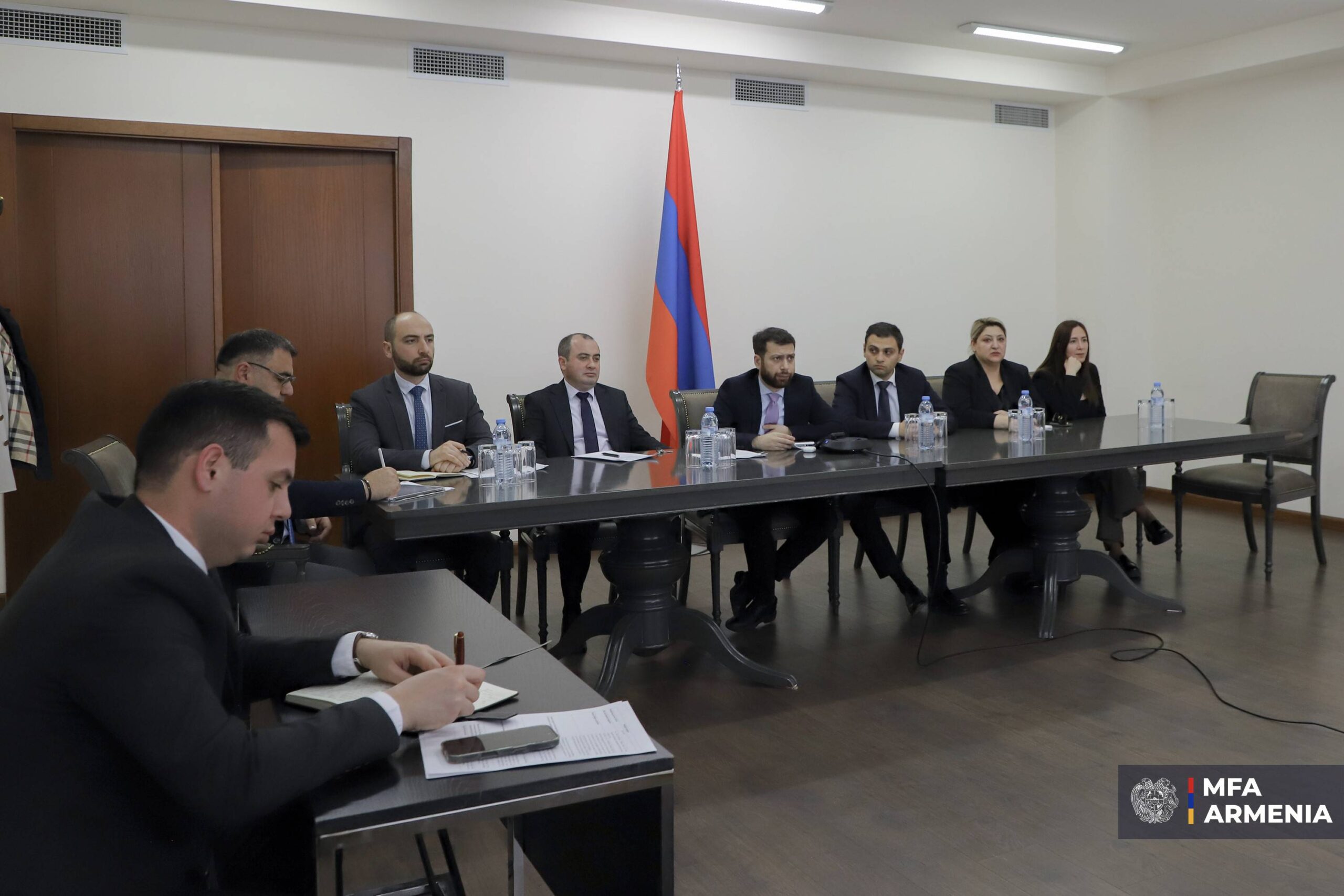
The third meeting of the group, co-chaired by U.S. Deputy Assistant Secretary of State Sonata Coulter and Armenian Deputy Foreign Minister Vahan Kostanyan, was held via video conference this week. According to Armenia’s Foreign Ministry, discussions focused on strengthening the Armenia–U.S. strategic partnership, with emphasis on economic cooperation, energy, and emerging technologies.
Notably, the official readout made no reference to the proposed “Trump Route for International Peace and Prosperity” (TRIPP), a planned corridor running through Armenia’s Syunik region along the Iranian border.
Under a U.S.–Armenian implementation framework signed in January, a U.S.-controlled entity is expected to construct and operate key infrastructure, including railways, roads, and energy networks, for at least 49 years. Pashinyan had indicated that construction could begin this summer, but more recently acknowledged potential delays linked to the ongoing Middle East conflict, describing the project as no longer a current priority for Washington.
The initiative has drawn strong concern from Iran, which has warned that such an arrangement could weaken Armenian control over its southern border and potentially open the door to a U.S. security presence in the region. Analysts suggest Tehran’s opposition is likely to intensify amid broader regional instability.

















Subscribe to our newsletter
