Did Pashinyan come to NY to address the UN or split up Armenian university students?
- (0)
By Harut Sassounian
Prime Minister Nikol Pashinyan has made himself such a controversial figure that his appearances in Armenia and overseas often generate major backlash.
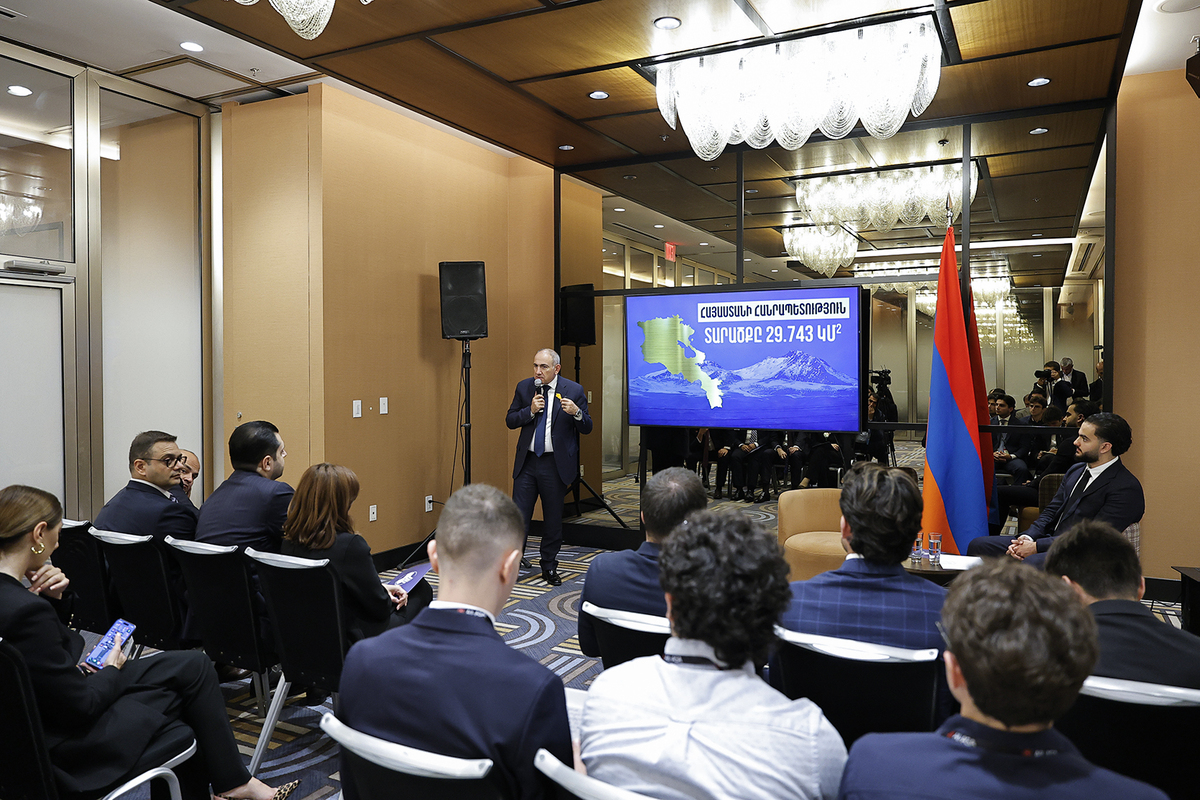
Outside of his expected meetings with foreign dignitaries at the UN, Pashinyan decided to meet in New York City on September 23 with a handful of Armenian-American university students who are members of the All-Armenian Student Association (ASA). This is actually the job of Zareh Sinanyan, the “High Commissioner for Diaspora Affairs for the Republic of Armenia,” who was not asked to accompany the Prime Minister during his trip to the U.S.
Given Pashinyan’s problematic positions on Armenian issues, the ASA Board not only violated its organization’s policy of remaining “apolitical,” but also failed to inform and consult with the leaders of ASA’s various chapters in the United States about the meeting with the Prime Minister.
The Pashinyan meeting ended up sowing discord among the members of the All-Armenian Student Association. Tamara G. Nahapetyan, Deputy Director of the Eastern Region All-Armenian Student Association, objecting to the meeting, submitted her resignation. She told me that she wrote a lengthy statement titled, “The ‘Apolitical’ All-ASA Enters Political Territory,” expressing her regret that Pashinyan managed to destabilize and split a nonpartisan and apolitical Armenian group in the Diaspora. Another Board member also resigned from the All-ASA Board. At least three ASA chapters issued statements distancing themselves from the All-ASA decision to meet with Pashinyan. While ASA members are free to choose their individual political views, the ASA is an independent umbrella organization. It is very damaging to fracture a group of young men and women who will become the future leaders of the Armenian-American community.
There is a much bigger problem than simply internal ASA dissension or Pashinyan’s wish to score a propaganda coup with Diaspora Armenians. It is the continuation of the Armenian government’s eight-year-long policy of alienating the Diaspora, many of whose members are opposed to Pashinyan’s submissive positions and multiple concessions to Armenia’s enemies. It started with the dissolution of the Diaspora Ministry after Pashinyan came to power in 2018; followed by repeated statements rejecting humanitarian assistance from the Diaspora; blocking Armenian citizens who had come to Armenia to cast their ballots on election day; making it more difficult for Diaspora Armenians to obtain Armenian citizenship; encouraging non-Armenians to immigrate to Armenia in order to reduce the “mono-ethnic” nature of the population of Armenia; questioning the facts of the Armenian Genocide; dismissing the historic significance of Mount Ararat and other sacred Armenian symbols; and handing over Artsakh to Azerbaijan, as well as parts of the Republic of Armenia’s territory.
In previous meetings with Armenian communities in other countries, the Prime Minister demanded that those attending hand over their cell phones until the end of the meeting. Pashinyan would then post very brief excerpts of his remarks on his Facebook page, excluding any of the guests’ questions. The attendees were preselected to ensure that no one raised any controversial issues that might contradict the Prime Minister.
ASA’s leaders had initially asked the students to submit their questions in writing in advance. Later on, due to complaints, they decided to allow the students to ask their questions. After the meeting, the ASA’s leaders issued a statement making the excuse that “after hearing some of the feedback from the community, we realize in hindsight that some of our internal communication could have improved for transparency.” The ASA’s statement has so far garnered 172 comments on its Instagram page, mostly critical. There were many complaints that the students’ negative comments were deleted. Some called for the resignation of the ASA Board.
If Pashinyan really intended to meet with Armenian-Americans in New York City, why did he not reserve a large hall and allow hundreds of members of the community to hear him and be given the chance to question and challenge his anti-Armenian policies?
The government of Armenia has a contradictory position on the Diaspora’s involvement in Armenia. We are being told that we have no right to comment on matters involving the Republic of Armenia. Those who say such nonsense forget that Armenia is the homeland of all Armenians, regardless of their place of residence. The real reason why Diaspora Armenians are told not to comment on Armenia-related issues is that Pashinyan’s intolerant supporters do not like Diaspora’s opposing views. I am certain that if a Diasporan were to praise Pashinyan rather than criticize him, no one from Armenia would dare to say, “You have no right to comment.” Besides, regardless of the nature of the comment, people everywhere have the right to express themselves. Not tolerating any dissenting views is a violation of the basic principles of democracy that the Prime Minister claims to uphold.
Pashinyan cannot take such anti-Diaspora positions and then invite the members of the ASA to meet with him. Furthermore, since Pashinyan repeatedly states that the Armenian government is fully capable of meeting the needs of its population and does not need any aid from outside, why does it organize an annual fundraiser by the Hayastan All-Armenia Fund in dozens of countries? The Board of the Armenia-headquartered Fund is headed by the President of the Republic of Armenia, followed by the Prime Minister and several other high-ranking officials. As Tamara G. Nahapetyan wrote in her complaint, “The Diaspora cannot be simultaneously waved off as irrelevant to Armenia’s politics and recruited as an audience for them.”
The students who objected to Pashinyan’s anti-Armenian policies and rejected the ASA Board members’ decision to meet with him should be commended.
Related Articles
October 22, 2026
What did Carney and Erdogan sign in Ankara?
October 22, 2026