
Հոկտեմբեր 06, 2026
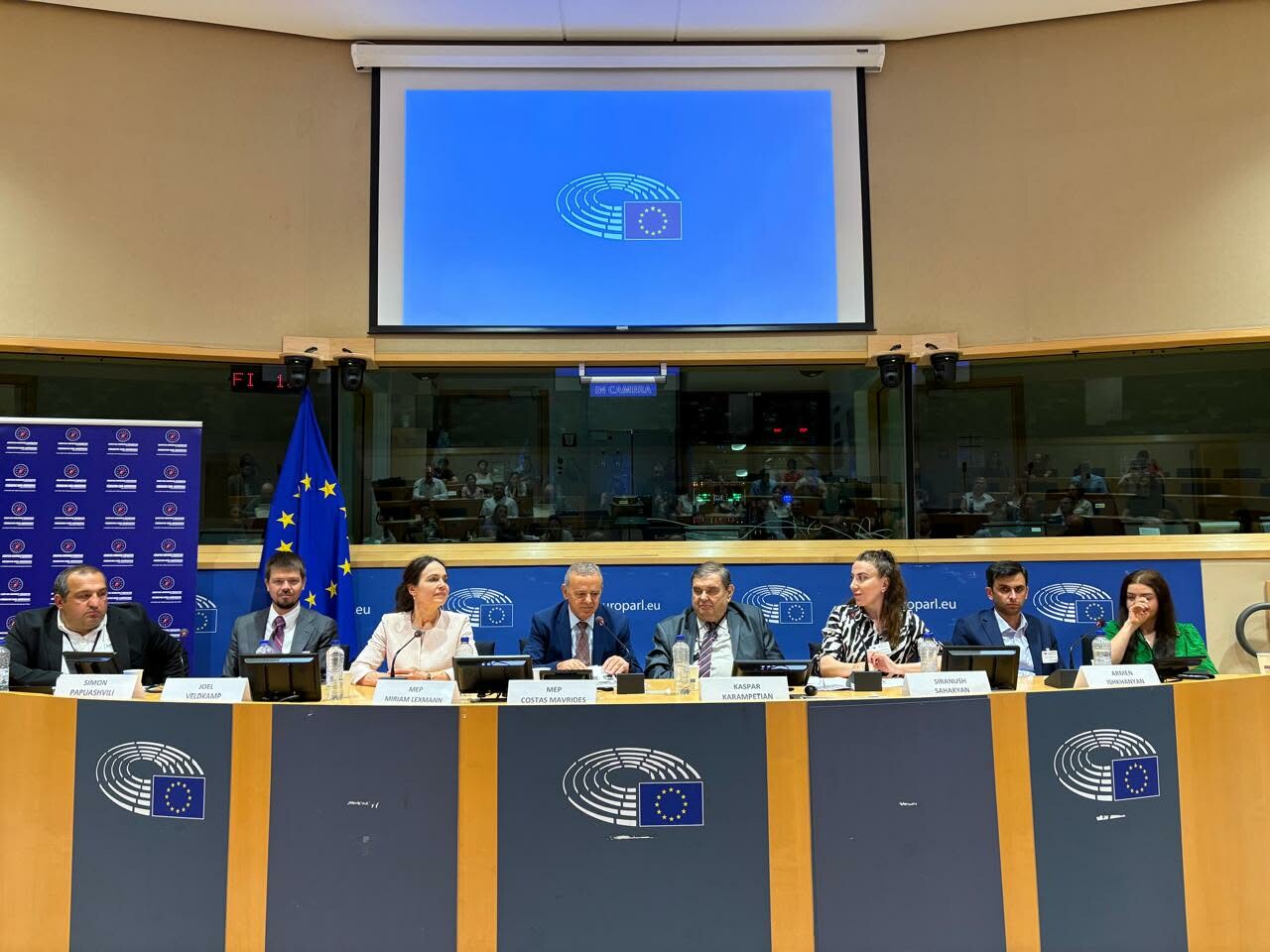
(Horizon Media / BRUSSELS) — European lawmakers, human rights advocates and legal experts have called for stronger European Union action to secure the release of Armenian hostages held in Azerbaijan, warning that their continued imprisonment is being used as political leverage against Armenia.
The conference, titled “Armenian Prisoners in Azerbaijan and the Imperative of European Union Engagement,” was held at the European Parliament with the support of the European Armenian Federation for Justice and Democracy. It was hosted by Cypriot MEP Costas Mavrides of the Socialists and Democrats Group and Slovak MEP Miriam Lexmann of the European People’s Party, the Parliament’s standing rapporteur on Armenia.
Siranush Sahakyan, executive director of the Armenian Legal Center for Justice and Human Rights, said the fact that the former Nagorno-Karabakh Republic was not internationally recognized could not provide a lawful basis for Azerbaijan’s prosecution of its former political and military leadership.
She noted that the United Nations Security Council had never declared Nagorno-Karabakh’s independence legally invalid or instructed states not to recognize it. For decades, its political status remained the subject of internationally mediated negotiations under the OSCE Minsk Group, while representatives now imprisoned in Baku had participated in that recognized peace process.
According to Sahakyan, the proceedings should not be viewed as ordinary criminal trials. She said they serve political objectives by reversing the narrative of responsibility, portraying members of the forcibly displaced Armenian population as criminals and seeking to criminalize the political existence of Nagorno-Karabakh itself.
Simon Papuashvili, Eastern Europe and South Caucasus programme director at the International Partnership for Human Rights, said the EU must move beyond resolutions and make the release of Armenian detainees a measurable priority in all dealings with Azerbaijan.
Pending their release, he urged the EU to demand unrestricted access for independent humanitarian organizations, regular family contact, independent medical examinations, confidential meetings with lawyers and access to case materials in a language understood by the defendants.
Papuashvili also called for clear deadlines and benchmarks, warning that Azerbaijan’s failure to comply should have consequences for political cooperation, bilateral negotiations and broader EU-Azerbaijan relations. He said targeted sanctions should be considered against officials credibly implicated in torture, arbitrary detention or serious abuses of judicial authority.
Joel Veldkamp, director of public advocacy at Christian Solidarity International, criticized the international community for failing to demand the detainees’ immediate release. He warned that silence risked legitimizing the use of military force to settle political disputes and deny peoples their right to self-determination.
Veldkamp also questioned the EU’s current regional policy, arguing that Brussels was deepening ties with both Armenia and Azerbaijan while demanding most concessions from Yerevan and applying little comparable pressure on Baku. He said Europe’s energy interests had contributed to the lack of meaningful accountability for Azerbaijan’s conduct.
Armen Ishkhanyan, the son of imprisoned former Artsakh National Assembly speaker Davit Ishkhanyan, said prisoner releases have historically been among the first steps accompanying peace agreements, yet Azerbaijan continues to avoid the issue.
Quoting his father, Ishkhanyan said the Baku trials were directed against the Republic of Armenia and that the Armenian detainees were being used as leverage against Yerevan. He said their continued imprisonment raised serious questions about Azerbaijan’s declared commitment to peace.
Lexmann similarly called for a more consistent European policy, saying the EU could not deepen cooperation with Azerbaijan while overlooking serious human rights violations because of energy considerations. She urged Brussels to use its political and economic influence to demand the immediate release of the Armenian detainees.
Participants also criticized the widening gap between resolutions adopted by the European Parliament and the policies pursued by the European Commission, questioning why Azerbaijan continues to be treated as a reliable partner despite its human rights record and the continued imprisonment of Armenians.

















Բաժանորդագրվել