
October 14, 2026
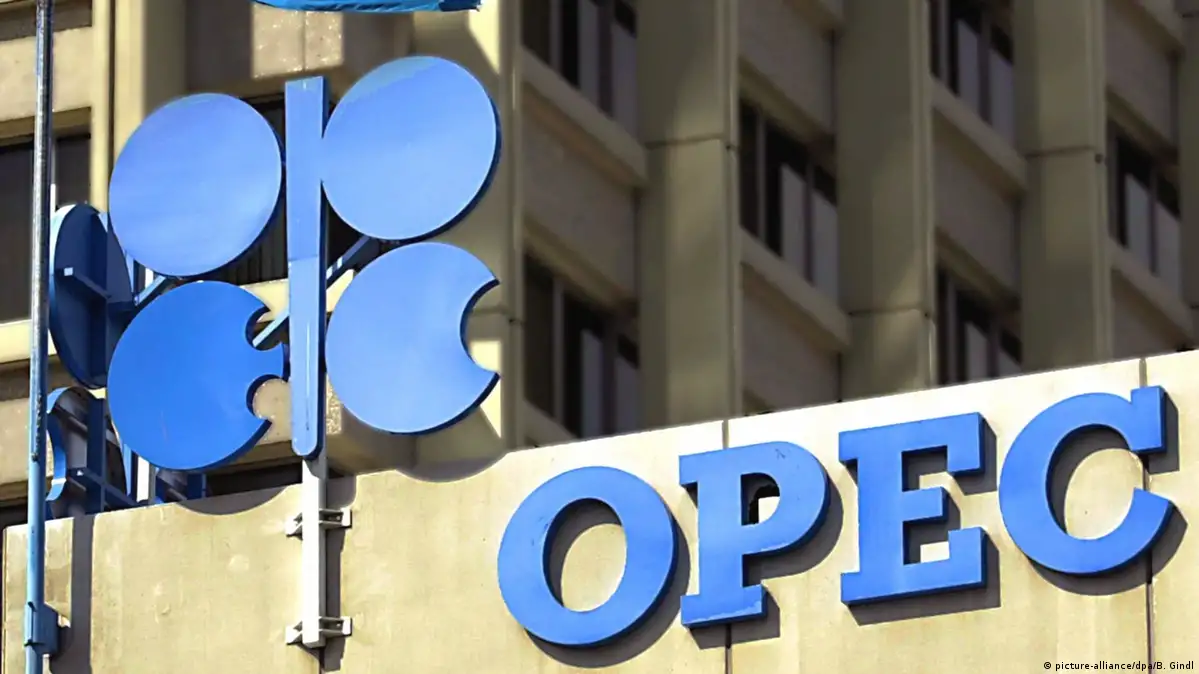
(Horizon Media / YEREVAN) — Armenia’s government has approved a new €80 million budget-support loan from the OPEC Fund for International Development, adding to a rapidly expanding stock of government debt and raising further questions about the authorities’ increasing reliance on borrowing to finance state spending.
Under the agreement approved Thursday, the funds are to be drawn by September 30 and will be used to help finance Armenia’s 2026 state budget deficit. The loan carries a floating interest rate of six-month EURIBOR plus 1.56 percentage points, equivalent to 4.241 percent as of July 30. Armenia will have a five-year grace period before beginning principal repayments in July 2031, with the final payment due in January 2044.
The government says timely receipt of the funds is important for financing expenditures already envisaged under the state budget. Officially, the loan forms part of the “Armenia Economic Transformation Program,” which is tied to reforms aimed at improving the investment climate, trade, competition and economic resilience. It is being provided by the OPEC Fund for International Development — a development-finance institution established by OPEC member states — rather than by OPEC itself. The World Bank is providing a parallel €170.3 million loan under the same reform program.
But unlike financing for a specific road, school, power plant or other capital project, the €80 million is budget support and will ultimately help cover the government’s broader financing gap. Armenia’s 2026 state budget was adopted with a deficit of AMD 536.8 billion, equivalent to 4.5 percent of projected GDP. The government planned from the outset to finance AMD 326.7 billion of that deficit from external sources.
The latest loan is therefore less an isolated transaction than another component of an increasingly debt-dependent fiscal model.
At the end of 2018, Armenia’s government debt stood at approximately $6.37 billion, of which about $4.99 billion was external debt. By June 30, 2026, government debt had reached approximately $13.89 billion — an increase of roughly 118 percent in dollar terms. Government external debt stood at about $6.62 billion, roughly one-third higher than at the end of 2018.
The figures also show that the growth in Armenia’s debt burden since 2018 cannot be attributed to foreign borrowing alone. Domestic government debt has expanded even more dramatically, from roughly $1.39 billion at the end of 2018 to about $7.27 billion by June 2026. The government has deliberately increased domestic borrowing in part to reduce exposure to foreign-exchange risk, but the strategy has not eliminated the growing cost of servicing a much larger debt stock.
That cost is becoming increasingly visible in the budget. Armenia paid approximately AMD 139 billion in interest on government debt in 2018. For 2026, the Finance Ministry has budgeted AMD 419.9 billion for interest payments alone — more than three times the 2018 figure. Combined principal repayments and interest payments are projected to reach AMD 1.05 trillion this year.
The government’s own borrowing plan underscores how heavily the 2026 budget relies on new debt. It envisages AMD 514.5 billion — about $1.34 billion — in gross external loan disbursements this year, including roughly $1 billion in budget-support loans rather than project-specific financing. The plan had already anticipated borrowing as much as €100 million from the OPEC Fund, alongside financing from the World Bank, Asian Development Bank and France’s development agency.
The Finance Ministry projects government debt at $15.15 billion by the end of 2026, or 52.9 percent of GDP. If that projection materializes, nominal government debt will be almost 2.4 times its end-2018 level.
The government can point to an important counterargument: Armenia’s debt-to-GDP ratio has not increased at anything approaching the same pace as the nominal debt stock because the economy itself has expanded substantially. Government debt amounted to 51.4 percent of GDP at the end of 2018, while the Finance Ministry projects a 52.9 percent ratio at the end of this year. The IMF, which uses somewhat different assumptions, has also continued to describe Armenia’s debt level as moderate and says economic activity remains strong.
Yet that does not remove the longer-term fiscal concern. The IMF itself has urged Armenia to carefully prioritize expenditures, improve spending efficiency and strengthen revenue collection in order to preserve fiscal space and maintain debt at a moderate level.
The central question for the government is therefore no longer simply whether Armenia can borrow. International institutions clearly remain willing to lend. The more consequential question is whether the surge in borrowing since 2018 is producing durable economic capacity sufficient to justify the obligations being passed on to future budgets.
The new OPEC Fund loan will be spent in 2026, but Armenian taxpayers will still be servicing it nearly two decades from now. With government debt already more than twice its 2018 level and annual interest costs having tripled, each additional budget-support loan makes scrutiny of how borrowed money is used — and what measurable economic return it produces — increasingly difficult for the government to avoid.

















Subscribe to our newsletter