COP17 opens in Yerevan amid global biodiversity challenges and criticism of Armenia’s environmental policies
- (0)
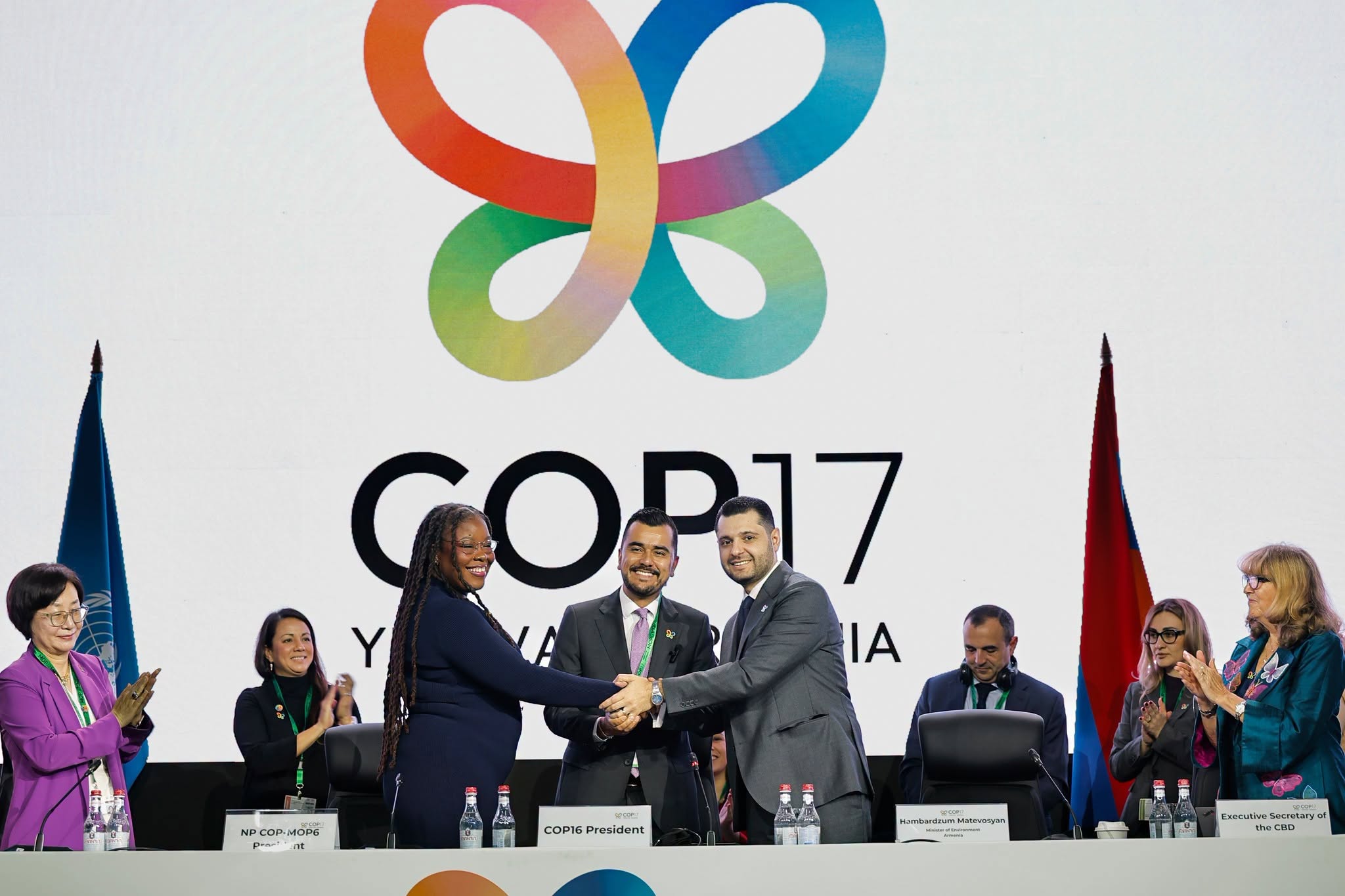
YEREVAN— The 17th Conference of the Parties to the United Nations Convention on Biological Diversity (COP17) officially began in Yerevan on October 19, bringing together government representatives, international organizations, scientists and environmental advocates for two weeks of negotiations on protecting the world’s increasingly threatened ecosystems.
The conference, hosted by Armenia under the theme Taking Action for Nature, runs until October 30 and represents the first comprehensive international review of progress toward the Kunming-Montreal Global Biodiversity Framework, adopted in Canada in 2022.
Prime Minister Nikol Pashinyan addressed the official opening ceremony, while Armenia’s Minister of Environment, Hambardzum Matevosyan, was elected president of COP17. UN Secretary-General António Guterres also participated in high-level events preceding the conference, including the Leaders for Nature Summit held in Yerevan on October 16.
At the centre of discussions are 23 internationally agreed biodiversity targets intended to halt and reverse the destruction of nature by 2030. These include protecting at least 30 per cent of the world’s land and marine areas, initiating restoration measures across 30 per cent of degraded ecosystems, reducing pollution, safeguarding endangered species and strengthening the sustainable management of natural resources.
However, the conference begins amid growing concerns that governments are falling significantly behind their commitments. A new United Nations assessment indicates that global progress remains insufficient on 22 of the 23 biodiversity targets, raising questions about whether the 2030 objectives can realistically be achieved without substantial policy changes.
One of the most contentious issues facing delegates concerns financing. Under the global biodiversity agreement, countries committed to mobilizing at least $200 billion annually for conservation by 2030, including $30 billion in international financial flows to developing countries and economies in transition.
Negotiations are expected to expose continuing disagreements between wealthier and developing nations over financial responsibilities, access to conservation funding and the mechanisms needed to ensure that promised resources are delivered.
Another major issue involves eliminating or redirecting at least $500 billion annually in government subsidies and incentives that contribute to environmental destruction, particularly in agriculture, fishing and other resource-intensive industries. Delegates will also examine the role of private corporations in financing conservation, including the Cali Fund, established to ensure that companies commercially benefiting from genetic resources contribute toward biodiversity protection.
The conference will additionally address scientific monitoring, accountability, the participation of Indigenous Peoples and local communities, and the equitable sharing of benefits arising from genetic resources. Parallel negotiations under the Cartagena and Nagoya protocols will focus on biosafety and access to genetic resources.
Beyond these global challenges, Armenia’s own environmental policies have come under scrutiny, casting a shadow over the government’s efforts to present the country as an international leader in biodiversity conservation.
On October 10, just nine days before COP17, Pashinyan attended the official inauguration of operations at the controversial Amulsar gold mine in Vayots Dzor Province, near the resort town of Jermuk. The project, which has faced years of opposition from environmental campaigners and local communities, has prompted renewed criticism over its potential consequences for water resources, endangered species and surrounding ecosystems.
In a joint statement, Armenian environmental and civil society representatives condemned the government’s decision, warning that the commencement of mining operations undermines Armenia’s international environmental commitments and its credibility as COP17 host.
The signatories raised concerns about possible acid mine drainage, cyanide contamination and risks to the Arpa and Vorotan river systems. They also criticized the authorities for proceeding without what they consider a sufficiently credible reassessment of the project’s environmental consequences, citing recommendations issued under the Bern Convention on the Conservation of European Wildlife and Natural Habitats.
A separate appeal addressed to COP17 participants by 24 Armenian civil society organizations and initiatives further challenged the government’s environmental record, criticizing the prioritization of mining interests and questioning the effectiveness of mechanisms intended to compensate for biodiversity destruction.
Pashinyan, meanwhile, has defended the Amulsar project, describing its launch as an economic success and maintaining that environmental concerns have been addressed through extensive consultations and assessments. The government, which holds a 12.5 per cent stake in the project, expects the mine to generate employment, investment and substantial tax revenues.
The controversy has also drawn international attention. On October 16, Human Rights House Yerevan and the Human Rights House Foundation warned that environmental defenders in Armenia continue to face intimidation, harassment and lawsuits intended to discourage public participation. The organizations urged the authorities to ensure that environmental activists and affected communities can freely challenge government decisions without fear of retaliation.
Environmental lawyer and activist Oleg Dulgaryan has also expressed scepticism that hosting COP17 will produce meaningful improvements in Armenia’s domestic environmental policies, announcing his decision to boycott the conference over continuing concerns about mining expansion.
For the Armenian government, COP17 represents a significant diplomatic opportunity to strengthen the country’s international profile and demonstrate its commitment to environmental cooperation.
Yet the contrast between the ambitious conservation commitments being discussed in Yerevan and the controversies surrounding Armenia’s own environmental decisions has raised questions about the government’s willingness to apply those same principles domestically.
As negotiations continue through October 30, the conference’s success will ultimately depend not only on the declarations adopted by participating governments, but also on whether they produce measurable commitments, adequate financing and meaningful accountability for protecting biodiversity.