EU report flags judicial independence, pre-trial detention and risks of criminalizing dissent in Armenia
- (0)
(Horizon Media / YEREVAN) — Armenia’s government continued to promote an ambitious reform agenda in 2025, but persistent concerns over judicial independence, police accountability, prolonged pre-trial detention and the use of criminal proceedings against government opponents are raising questions over how much of that reform has translated into meaningful institutional change.
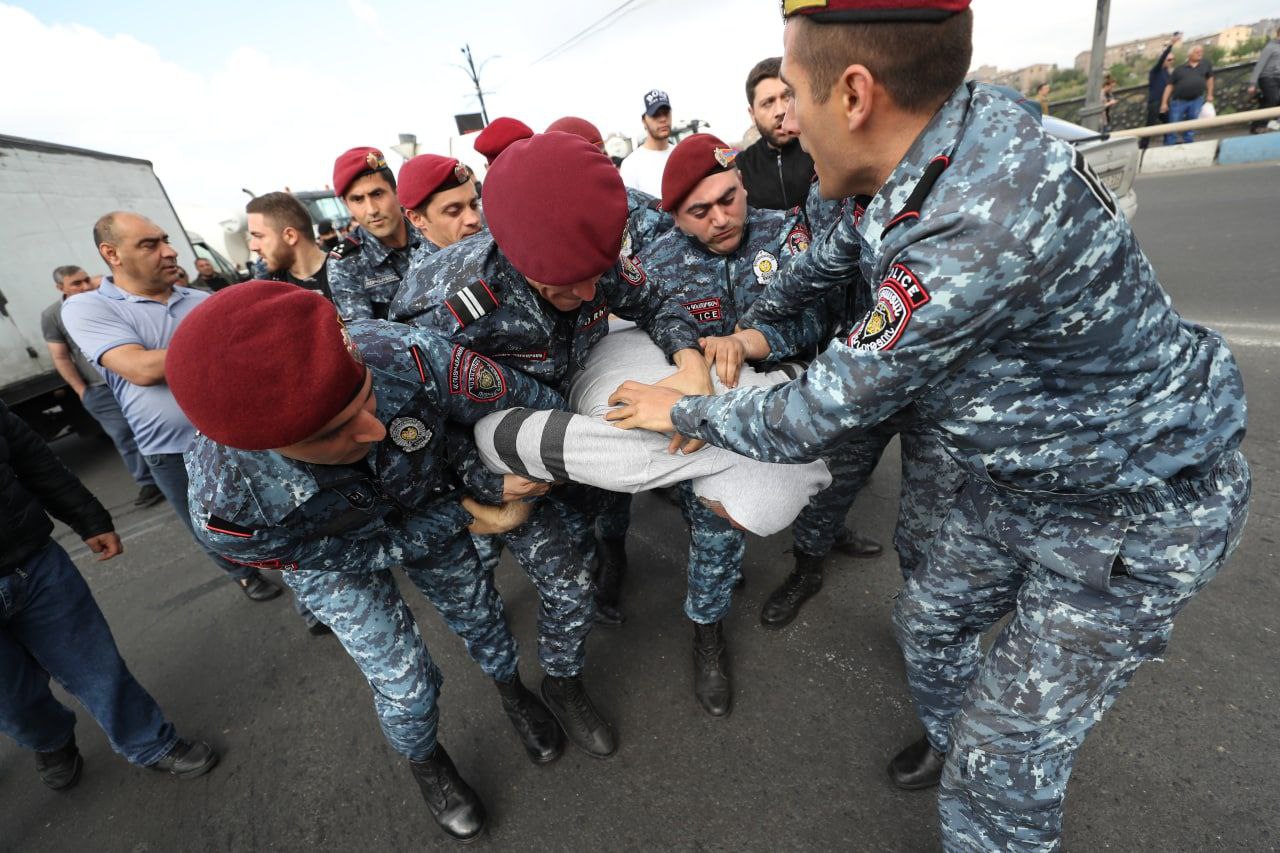
The European Union’s 2025 Annual Report on Human Rights and Democracy in the World, published by the European External Action Service, acknowledges legislative and institutional reforms undertaken by Armenian authorities but also records substantial criticism from civil society over their implementation. The report specifically points to ineffective investigations into alleged police abuse, particularly excessive force, a lack of full judicial independence and the continued extensive use of pre-trial detention.
Of particular significance is the EU’s warning about the criminal justice system itself. The report says opposition forces and sections of civil society have alleged that criminal proceedings are being instrumentalized in ways that risk punishing dissent and restricting freedom of expression. It also raises concern over the possible overuse of criminal provisions on hooliganism, while strategic lawsuits against journalists, environmental activists and human rights defenders remain a problem.
Those concerns have taken on greater significance following Armenia’s June 7 parliamentary elections. International observers from the OSCE/ODIHR concluded that voters had a genuine political choice and that election day was generally well administered, but their assessment of the campaign period was considerably more critical. Observers said numerous criminal proceedings involving opposition candidates and activists caused many opposition supporters to refrain from actively participating in the campaign. They also reported credible instances of pressure on public-sector employees to attend ruling-party events and said recently introduced social and economic measures benefited the governing Civil Contract party, undermining equality of campaign opportunity.
The observation mission further warned that investigations into alleged vote-buying and other violations were overwhelmingly focused on candidates and supporters of the main opposition forces. That concentration, observers said, created a perception of selective enforcement and affected campaign participation. Public television was also found to have displayed a clear bias in favour of the ruling party, contrary to its legal obligations and public mandate.
The arrests themselves were unusually prominent during the campaign. Fourteen people connected with Strong Armenia were detained in April on suspected electoral bribery charges, while six candidates from the party were arrested on June 6, one day before voting. Strong Armenia leader Samvel Karapetyan contested the election while under house arrest following his 2025 arrest and prosecution. The government has maintained that such proceedings are based on alleged criminal conduct rather than political affiliation, while opposition figures have repeatedly described them as politically motivated.
ODIHR’s broader assessment went beyond individual election cases. It noted criminal charges and arrests involving former officials, senior clergy and prominent opposition figures and cited reports by international and Armenian rights organizations of declining respect for freedom of expression and assembly, excessive reliance on pre-trial detention, inadequate investigations of police abuse and diminishing judicial independence. The mission said the concentration of prosecutions against opposition figures contributed to perceptions of selective justice.
Concerns about politically sensitive prosecutions have also reached the United Nations. In a May 11 communication to the Armenian government, six UN Special Procedures mandate holders raised concerns over alleged excessive police force and what they described as the possible misuse of counter-terrorism and national-security charges against members and supporters of the opposition Holy Struggle movement. Eighteen supporters of the movement, including Archbishop Bagrat Galstanyan, had been arrested in June 2025 on charges that included preparing terrorism and attempting to seize state power.
The UN experts stressed that they were not prejudging the accuracy of the allegations presented to them. Nevertheless, they warned that, if substantiated, the reported use of terrorism-related provisions against political opposition, protest activity and civil disobedience could violate Armenia’s international obligations on freedom of expression, assembly, association and political participation. They asked the government to explain how the alleged acts met international definitions of terrorism and urged measures to prevent the criminalization of legitimate political activity.
Armenia rejected the suggestion that peaceful political activity was being criminalized. In a July response to the UN, the government said its investigations were based on evidence obtained through lawful surveillance and investigative measures and insisted that Armenian law does not classify peaceful criticism, demonstrations, religious activity or political participation as terrorism. Authorities said the cases involved alleged preparations for violent acts and the forcible seizure of power and remained subject to judicial proceedings and due-process safeguards.
Independent international assessments nevertheless suggest that Armenia’s democratic and rule-of-law indicators have not shown the clear improvement implied by the government’s reform narrative. Freedom House continues to classify Armenia as “Partly Free,” with a score of 54 out of 100 in its 2026 assessment — unchanged from the previous year. Particularly low scores were assigned to judicial independence and due process, both receiving just one point out of four.
Human Rights Watch similarly describes Armenia’s human rights record as “uneven.” Its 2026 review cites ineffective investigations into police abuse, lack of judicial independence and excessive pre-trial detention, while also raising concerns about expanded state surveillance and pressure on the media. In the first half of 2025 alone, a local media monitoring organization documented four incidents of physical violence by law enforcement against media representatives and 61 other incidents of pressure. Twenty-nine new defamation cases were filed during the same period, including 15 initiated by state bodies or current and former officials.
Amnesty International has also highlighted the gap between legislative reform and accountability in practice. Its 2025 assessment found that concerns over unlawful police force persisted and noted that criminal proceedings arising from the violent dispersal of anti-government demonstrations in 2024 were brought against protesters rather than police officers despite evidence of possible unlawful force. Amnesty also cited lawsuits against journalists and rights defenders, prison conditions and expanded facial-recognition surveillance as continuing human rights concerns.
The EU report does record tangible steps, including judicial digitalization, anti-corruption reforms, new legislation on children’s rights, a gender-policy strategy and plans for an independent data-protection authority. Armenia has also aligned parts of its anti-corruption framework with GRECO and OECD standards and ratified additional international human rights instruments. Yet the EU itself notes deficiencies in judicial appointments, integrity mechanisms, monitoring of the government’s Human Rights Action Plan and comprehensive anti-discrimination legislation.
Taken together, the EU assessment and subsequent findings by the OSCE, UN experts, Human Rights Watch, Amnesty International and Freedom House suggest that Armenia’s human rights record remains marked by a widening gap between formal reform commitments and their application in politically sensitive cases. The continuing use of detention and criminal proceedings against opposition figures, concerns over police accountability and persistent questions surrounding judicial independence are likely to remain central tests of whether the government’s reform agenda produces substantive protections for dissent rather than institutional changes largely reflected on paper.