April 01, 2026
By Horizon Staff Writer
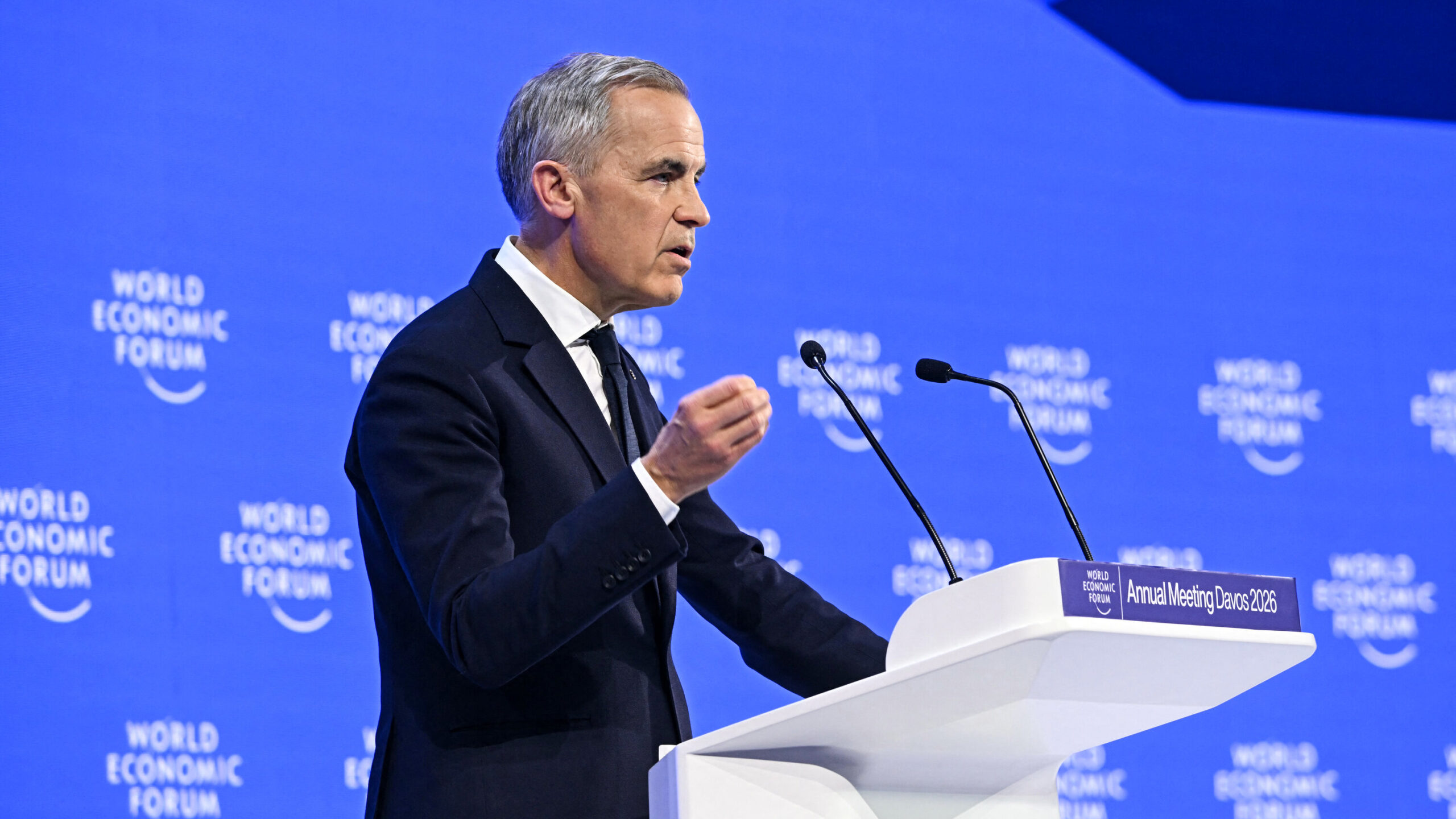
When Prime Minister Mark Carney took the stage in Davos a few days ago, he did something many leaders have hesitated to do for years. He described the international system as it is, not as it once was or as we wish it still were. His claim that the familiar United States-led post-war order has not merely shifted but broken marked a moment of strategic honesty that immediately set his remarks apart. The speech mattered because it reset the baseline. It asked leaders to plan for the world they are actually operating in, rather than continuing to govern by invocation.
That clarity is likely to be one of the reasons the address endures. For decades, middle powers like Canada built prosperity on the assumption that rules and institutions would reliably restrain coercion and reward cooperation. Carney argued that this assumption no longer holds. Economic interdependence has become a tool of pressure through tariffs, supply chain chokepoints, and financial leverage. He did not present this as a grievance or a lament. He presented it as a strategic briefing, delivered plainly, and paired with a call to adapt.
What gave the speech its gravity was the way it transformed what many privately acknowledge into public doctrine. Carney urged leaders to stop treating the phrase rules-based order as a protective incantation. Planning around an imagined past, he suggested, leaves countries exposed in the present. Negotiating from nostalgia while others negotiate from leverage is not idealism. It is a vulnerability. The unusually strong reaction in the hall reflected recognition that this diagnosis, however uncomfortable, had become unavoidable.
Carney’s argument about strategic autonomy was equally notable for its substance. Rather than using the term as a slogan, he grounded it in concrete domains where sovereignty is now tested. Energy, food, critical minerals, finance, and supply chains were not abstract categories but the pressure points through which states are now constrained or coerced. His warning was direct. When institutions no longer reliably protect you, capability does. At the same time, he rejected the false comfort of retreat. Isolation would not produce security, only fragility. The challenge he posed was to build strength at home precisely so cooperation abroad remains possible.
Perhaps the most consequential element of the speech was its reframing of the role of middle powers. Carney argued that countries of Canada’s scale can no longer afford to act alone or simply align quietly behind larger actors. Bilateral dependence, he noted, creates bilateral vulnerability. The implication was not confrontation but coordination. Middle powers must act together, align standards, deepen trade corridors, and invest jointly in resilience so that coercion becomes harder and more costly for any dominant player to deploy. In that sense, the speech marked a shift from the idea of middle powers as rule takers to middle powers as co-authors of a more durable international architecture.
The address also avoided a familiar Davos pitfall. It did not float above governance. Carney explicitly linked global realism to domestic statecraft. He argued that credibility abroad rests on competence at home, on the ability to move capital, reduce internal barriers, build infrastructure, and mobilize investment quickly. His references to removing obstacles within Canada’s own economy and to accelerating priorities in energy, technology, and defence signalled that the speech was not merely diagnostic. It was programmatic. It suggested that adaptation is not a slogan but an administrative task.
That the speech drew an immediate and sharp reaction from some quarters only reinforced its significance. In diplomacy, backlash often signals that a point has landed. Carney was not seeking provocation, but he was also not cushioning his message to avoid discomfort. He made clear that a partnership must be resilient to pressure and that loyalty should never be confused with vulnerability.
Speeches are remembered when they provide language that others end up using to navigate what comes next. Carney’s Davos remarks offered such a vocabulary. They described a world in which economics and security are inseparable, coercion is normalized, and middle powers must choose between adaptation and exposure. If the old order is not returning, then the question is not whether countries will change, but whether they will do so deliberately, collectively, and with public legitimacy. Carney’s speech will be remembered because it treated that choice as urgent and treated democratic societies as capable of meeting it.


















Subscribe to our newsletter