The Washington Agreements: A Comparative Analysis of the Armenian-American and Azerbaijani-American Memoranda (Part IV)
- (0)
By Gevorg Ghukasyan, PhD in Political Sciences
Special Project Manager at Armenian National Committee – International
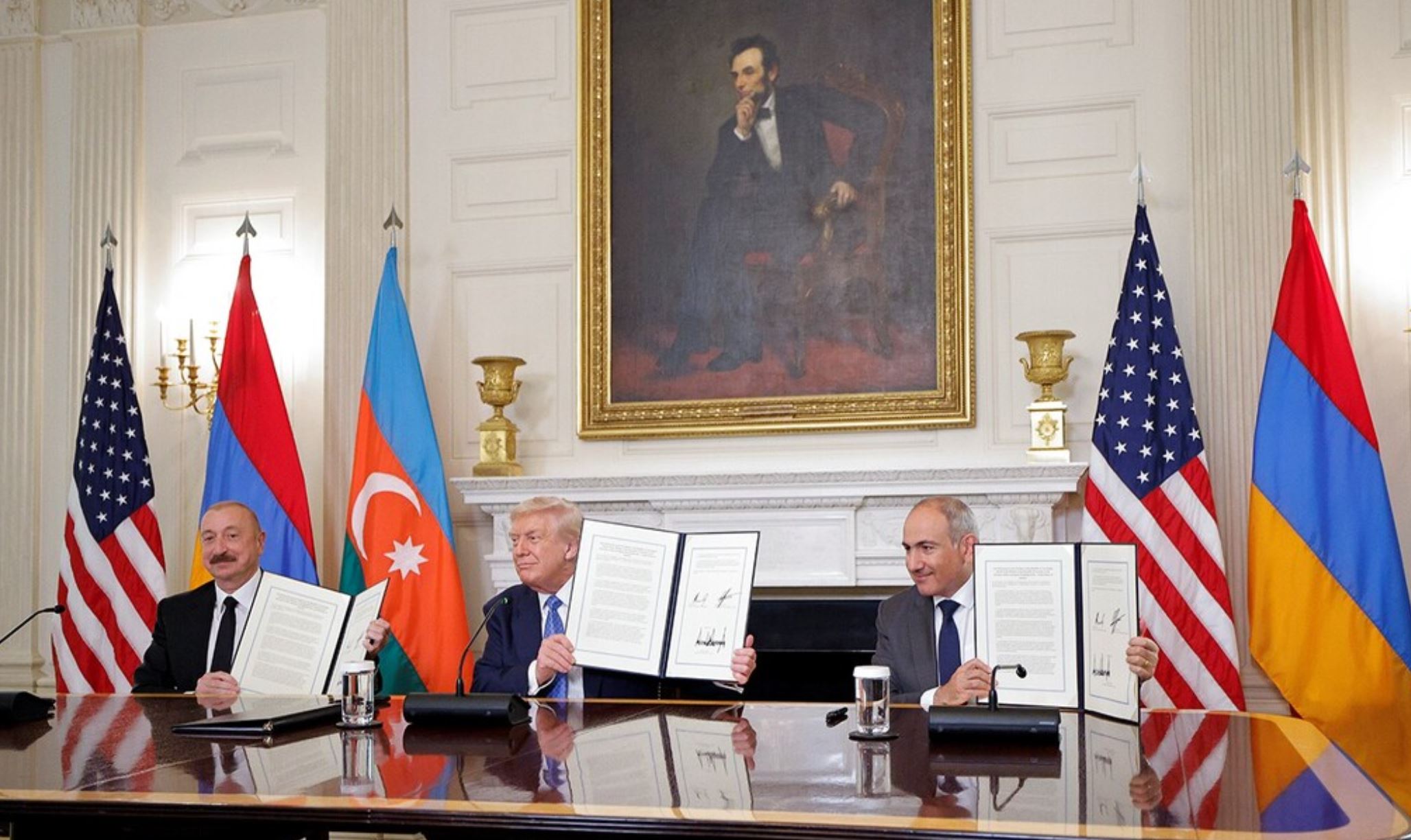
Among the documents signed and initiated in Washington on August 8, the Armenian-American and Azerbaijani-American memoranda arguably received the least public attention. With the exception of one memorandum signed with Armenia, these documents did not directly concern Armenia-Azerbaijan relations but instead focused on the development and priorities of the United States’ interstate relations with the two South Caucasus countries. Nevertheless, a closer examination of these memoranda is valuable for identifying the political priorities shaping Armenia-U.S. and Azerbaijan-U.S. relations.
On August 8, three memoranda were signed between the governments of Armenia and the United States:
- On Innovative Partnership in the Field of Artificial Intelligence and Semiconductors –
Aimed at deepening cooperation on secure semiconductor supply chains, commercialization of AI applications, and elevating Armenia’s export control status. Areas of focus include developing Armenia’s semiconductor ecosystem, encouraging private investment and public-private partnerships, promoting joint research projects, ensuring responsible AI use, and advancing human capital and high-tech infrastructure. - On Cooperation in the Field of Energy Security –
Designed to enhance the resilience of Armenia’s energy system, align regulatory and market standards with international best practices, and support the country’s transition toward a low-carbon, competitive, and globally integrated energy economy. Key provisions include encouraging private investment, expanding cooperation in civilian nuclear energy (including small modular reactor technologies), protecting critical energy infrastructure, fostering regional energy trade, modernizing transmission networks, and strengthening cybersecurity. - On Cooperation within the “Crossroads of Peace” Initiative –
Focused on improving Armenia’s infrastructure and border security. The memorandum emphasizes attracting private investment, strengthening customs efficiency, enhancing anti-smuggling and border capabilities, promoting best-practice exchange between Armenia’s state bodies and U.S. agencies, as well as upgrading cybersecurity, infrastructure modernization, and technical assistance for border management.
Azerbaijani-American Memorandum
The memorandum signed between the governments of the United States and Azerbaijan established a Strategic Working Group tasked with preparing a Charter of Strategic Partnership within six months. The group’s activities will concentrate on three key areas:
_ Regional Connectivity – energy, trade, and transit.
_ Economic Investment – including AI and digital infrastructure.
_ Security Cooperation – including defense sales and counter-terrorism.
The memorandum outlines priority areas of collaboration:
_ Expanding energy investments and regional connectivity infrastructure.
_ Building stronger defense and counter-terrorism cooperation.
_ Developing regional economic and trade partnerships.
_ Promoting joint investment in AI and digital infrastructure.
Both Armenia-U.S. and Azerbaijan-U.S. memoranda have a one-year validity period, with the possibility of three consecutive one-year extensions unless either side objects.
Comparative Context
Even a cursory comparison of the memoranda highlights the different frameworks through which Armenia and Azerbaijan envision their respective relations with Washington.
Armenia’s Priorities
To fully understand the logic of Armenia-U.S. relations, it is necessary to view the August 8 memoranda in the broader context of the January 14, 2025 Charter of Strategic Partnership signed between the two countries. Although officially described as a step toward strategic partnership-rather than full strategic alliance-the charter was presented domestically by Armenian authorities as a comprehensive solution to the country’s security challenges, despite its relatively weak security provisions.
Taken together, the documents reveal that Yerevan’s priorities with Washington primarily concern economic, trade, transport, and energy cooperation, as underscored both in the January 14 charter and the August 8 memoranda. While the January 14 charter also envisioned cooperation in defense, security, democracy, justice, and people-to-people exchanges, no specific memoranda were signed in these areas.
Strikingly, Azerbaijan, without having an equivalent strategic charter with Washington, managed through the August 8 memorandum to achieve far stronger provisions in the fields of security and defense than Armenia did.
At the same time, Armenia’s leadership excluded from the bilateral agenda issues of existential importance to the state:
_ the right of return of Artsakh Armenians,
_ the release of Armenian prisoners of war,
_ protection of Artsakh’s cultural heritage,
_ the withdrawal of Azerbaijani forces from occupied Armenian territories,
_ and the application of U.S. sanctions against Azerbaijani officials implicated in war crimes (including under the Global Magnitsky Act).
In the absence of state-driven diplomacy, these priorities are being pursued by the Armenian Cause (Hai Tahd) Committees in the United States. Indeed, as of September 29, Congressman Frank Pallone confirmed that the State Department acknowledged U.S. progress “in the right direction” concerning the return of Artsakh Armenians, the protection of Armenian heritage, and the release of POWs-an achievement credited to the tireless work of Armenian advocacy networks across more than 50 U.S. states, independent of unfavorable domestic and international circumstances.
Azerbaijan’s Priorities
Azerbaijan, meanwhile, entered the Washington talks with several urgent priorities, given the deterioration of U.S.-Azerbaijan relations in recent years:
_ restoring high-level political dialogue,
_ elevating relations to a qualitatively new level,
_ managing American pressure on issues related to Armenia and Artsakh,
_ avoiding accountability for ethnic cleansing and war crimes,
_ preempting U.S. sanctions,
_ and securing the annual presidential waiver of Section 907 of the Freedom Support Act, which restricts U.S. assistance to Azerbaijan.
Baku’s broader ambition is to push for a Congressional repeal of Section 907, which explicitly references the Karabakh conflict, Azerbaijan’s blockade of Armenia, and related unacceptable policies. Its repeal would not only absolve Baku of annual lobbying efforts to secure a waiver but also remove from U.S. law key provisions that affirm Armenia’s position. However, at present, Azerbaijan lacks the necessary support in Congress to achieve repeal.
Nevertheless, nearly all of these objectives are reflected-at least implicitly-in the August 8 memorandum. Azerbaijani diplomacy has succeeded in securing language that strengthens the case for Section 907 waivers and elevates bilateral relations. Moreover, high-level memoranda with Washington are seen by Baku as political shields against U.S. pressure or sanctions.
If successfully implemented, the memorandum’s objective of preparing a Charter of Strategic Partnership within six months would place U.S.-Azerbaijan relations on nearly the same institutional footing as those of Armenia-U.S., following Yerevan’s January 14 charter.
Conclusion
In summary, Yerevan and Baku envision fundamentally different trajectories in their relations with Washington. Azerbaijan prioritizes the development of military and security capabilities, while Armenia focuses on trade, transport, and economic cooperation.
This divergence underscores the asymmetry in the strategic outlooks of the two states and highlights the potential long-term implications for U.S. policy in the South Caucasus.