March 03, 2026
By Gevorg Ghukasyan
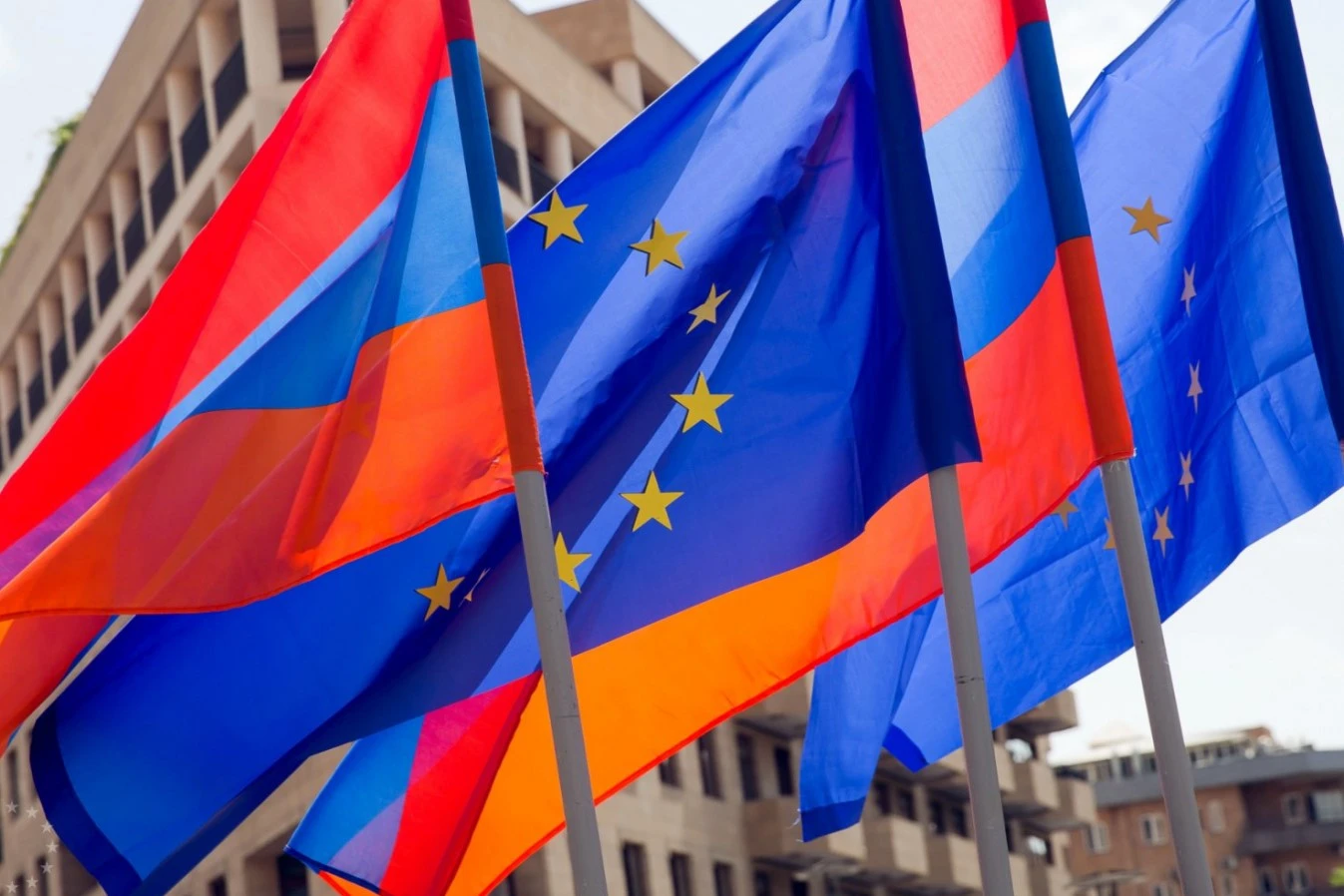
In the previous article, which analyzed the main guidelines of the European Union’s regional policy, we concluded that, amid the activation of the EU’s foreign policy in our region, Armenia is an important partner of the European Union, with relations experiencing forward-looking development. Armenia is also a country where, in the form of the EU civilian monitoring mission, the European Union maintains a physical presence. Perhaps most importantly, Armenia is a country whose people, political forces, and political culture in general are inclined toward the continued development of relations with the European Union — provided, of course, that such relations do not turn Armenia into a theatre of geopolitical confrontation.
We also noted that the stable development of Armenia–EU relations could be adversely affected by the EU’s unilateral positioning during Armenia’s upcoming electoral processes, its overt support for the current Armenian authorities, and attempts by those authorities to secure European backing in Armenia’s internal political processes.
In this article, we examine the legal, political, and institutional frameworks governing Armenia–EU relations and the main directions of their bilateral development.
The steps toward institutionalizing relations between the Republic of Armenia and the European Union began in 1996, when the Partnership and Cooperation Agreement (PCA) was signed between Armenia and the EU. It entered into force in 1999. The Comprehensive and Enhanced Partnership Agreement (CEPA) continues to have foundational significance for Armenia–EU relations. It was signed on November 27, 2017, and essentially replicated the political component of the draft Armenia–EU Association Agreement, while the economic component was adjusted to reflect Armenia’s obligations arising from its membership in the Eurasian Economic Union (EAEU). Nearly four years later, the agreement entered into force.
CEPA is an extremely ambitious and unique agreement not only within the Eastern Partnership framework but perhaps across the entire European Neighbourhood Policy area. It encompasses all spheres of public life and elevates Armenia–EU relations to an entirely new qualitative and substantive level.
The Armenia–EU Comprehensive and Enhanced Partnership Agreement (CEPA) provides the legal and political framework for deepening relations between Armenia and the European Union. It includes political dialogue, strengthening democracy and the rule of law, protecting human rights, judicial and public administration reforms, and combating corruption. At the same time, the agreement promotes deeper cooperation in foreign and security policy aimed at regional stability and joint action against transnational threats.
In the economic and trade spheres, CEPA aims to improve the business environment, support small and medium-sized enterprises, introduce European standards in competition, public procurement, and consumer protection, and strengthen financial stability. It also includes the development of the transport and energy sectors, with an emphasis on energy security and sustainability.
The agreement further covers environmental and climate policy, digital transformation and cybersecurity, cooperation in education, science, youth, social policy and healthcare, as well as cultural cooperation. It strengthens civil society and freedom of expression, thereby shaping a long-term and sustainable Armenia–EU partnership.
Numerous contracts, agreements, memoranda, protocols, and regulations between Armenia and the EU are based on this document.
To fully understand Armenia–EU relations, particularly current developments, it is necessary to examine the “Armenia–EU Partnership Strategic Agenda” signed on December 3, 2025. Adopted within the framework of the Armenia–EU Partnership Council, it is intended to provide operational guidance for bilateral relations over the next seven years.
The document defines priority areas for cooperation: strengthening democracy and human rights, economic development, security and defence cooperation, visa liberalization dialogue, and regional connectivity and investment.
One notable provision states that actions undertaken within the framework of the Strategic Agenda must fully comply with CEPA, including its preamble. Importantly, CEPA’s preamble makes significant reference to the Nagorno-Karabakh conflict, recognizing the exclusivity of the OSCE Minsk Group mandate and the importance of realizing the right to self-determination of the people of Artsakh, alongside the principles of territorial integrity and the non-use of force or threat of force.
The Strategic Agenda reaffirms the EU Resilience and Growth Plan for Armenia for 2024–2027 and commits €270 million in assistance. This includes €200 million in grants to support the socio-economic agenda and closer sectoral cooperation with the EU, and €70 million in investment grants to mobilize public and private investment in trade, energy, and transport connectivity, while strengthening the private sector.
The Agenda also recognizes the need, in the coming years, to pay closer attention to the needs of more than 115,000 displaced Armenians and to facilitate their socio-economic integration.
It emphasizes the timely completion of the ongoing visa liberalization process launched in November 2024.
The Strategic Agenda is aligned with Armenia’s EAEU membership. It states that economic, trade, and energy diversification, as well as further regulatory alignment in key sectors, will proceed to the extent they are compatible with Armenia’s obligations to other international organizations.
Perhaps the document’s main innovation lies in its security policy section. Armenia–EU cooperation will focus on regional security, security sector reforms, crisis management, counterterrorism, cybersecurity, and hybrid threats, including foreign information manipulation and interference. The objective is the establishment of a sustainable and dignified peace between Armenia and Azerbaijan based on mutual recognition of sovereignty, territorial integrity, and the inviolability of borders in accordance with the 1991 Alma-Ata Declaration.
The document also supports the full, immediate, and effective implementation of all relevant International Court of Justice rulings.
The release of Armenian prisoners of war and other detainees is set as a priority, along with addressing unresolved humanitarian issues, including missing persons and enforced disappearances, as confidence-building measures.
The Agenda supports inclusive regional transport connectivity within the framework of state sovereignty and national jurisdiction, based on the principles of equality and reciprocity. Notably, there is no reference to TRIPP (the Trump Route for International Peace and Prosperity), which raises questions about potential U.S.–EU competition in the region.
The document calls for deepening political and security dialogue, ensuring the full operational capacity of the EU Mission in Armenia (EUMA), and maintaining its presence for as long as necessary.
It also prioritizes continued support through the European Peace Facility. In January 2026, Armenia was allocated an additional €20 million from this fund to develop defence-related humanitarian capacities and civilian protection.
Azerbaijan’s Ministry of Foreign Affairs responded sharply, objecting to references to Armenians displaced following Azerbaijani military actions and to their characterization as “refugees,” as well as to the emphasis on ICJ rulings and Armenian prisoners of war. Baku also objected to the lack of reference to TRIPP and to the continued presence of EUMA.
In conclusion, Armenia–EU relations are experiencing forward-looking development, and on the surface, everything appears positive. However, reality is more complex.
Despite the solid legal foundation established in 2017, several challenges could complicate relations:
Nevertheless, given the current level of development and, provided that these challenges are managed effectively, Armenia–EU relations may continue their forward trajectory in the coming years.
(This article was originally published in Armenian on February 4, 2026)
Gevorg Ghukasyan, (PhD in Political Science) is the head of Special Programs at the Central Office of ANC-International.














Subscribe to our newsletter