March 03, 2026
By Dr. Kevork Hagopjian
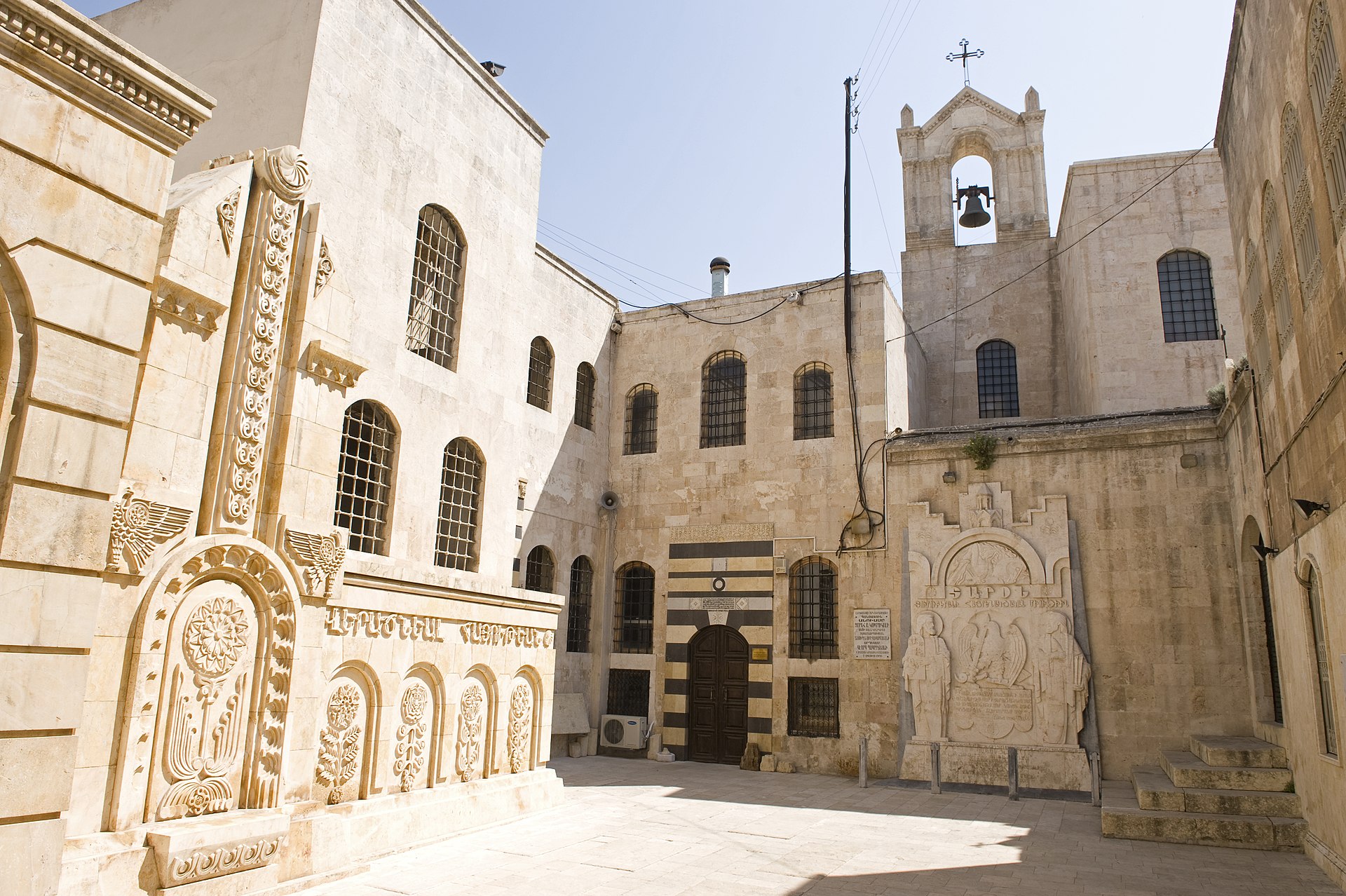
In Aleppo, the St. Kevork Armenian Apostolic Church—set ablaze during the years of the Syrian crisis but recently restored—has once again opened its doors to the faithful, while the complete bombing and destruction of the Holy Martyrs Church and the Armenian Genocide Memorial Complex in Deir ez-Zor continue to remain an open wound. Today, as Syria has entered a new political, geopolitical, and socio-economic phase, Syrian Armenians are searching (or ought to be searching) for an answer to the following question: How can the security, identity, and sustainable existence of Syrian Armenians be guaranteed, while reducing their vulnerability to fluctuating political and security developments and threats?
Following regime change in December 2024 and the emergence of a new and transitional leadership, Syria appears to be operating under an interim system intended to pave the way toward a permanent constitution and elections. The Constitutional Declaration signed on 13 March 2025 establishes a five-year transitional period and outlines the state’s objectives, grounded in citizenship, dignity, the rule of law, and transitional justice.
This transitional period can indeed become the principal path and guarantee of Syria’s genuine renewal. Yet it can also become a troubling period of uncertainty, waiting, security challenges, persecution, and mistrust for Syria’s national, ethnic, religious, and linguistic minorities—especially when, alongside positive and hopeful official rhetoric and steps, minorities are from time to time being targeted and criminal incidents are being recorded.
Minority rights are not “communal privileges”; they are essential human rights codified by international law and ratified by Syria through international treaties.
Notably, the Constitutional Declaration avoids the explicit terminology of “minorities,” preferring broader language such as “the components of Syrian society” and “all Syrians.” This choice is understandable in a region where the word “minority” has, over the last two centuries, been burdened by political anxieties—sometimes associated with foreign tutelage, communal fragmentation, or a hierarchy of belonging. Yet avoiding the label does not erase the reality. However, avoiding the term does not erase the reality. Syria, as a matter of fact—and even before it becomes an agenda item of law—is a multi-ethnic, multi-religious, multi-lingual, and multi-communal society. Syria is home to historic communities and minorities whose security, identity, equality, and participation in public life must be protected through clear constitutional guarantees and enforceable legal safeguards.
Syrian Armenians in the new Syria do not need to ask for “special treatment.” Rather, their demands must be articulated and implemented on the basis of international law and the most fundamental constitutional principles: full citizenship with full rights that are respected, protected, and enforceable. Properly understood minority rights, as recognized by international law, rest on four pillars:
1) The Right to Existence: Security and Protection
The most basic right of a minority is the right to exist and to live in safety. This includes protection of life, physical integrity, and community security—without discrimination, without selective protection, and without tolerating incitement to violence.
In the Constitutional Declaration, the state affirms the army as a professional national institution tasked with protecting the country “in accordance with the rule of law and the protection of human rights.” These commitments are important, but they must become the reality of day-to-day governance: equal protection and services for neighborhoods, churches, schools, business centers, and community institutions.
2) The Right to Identity: Culture, Religion, Language, and Heritage
Identity is not “folklore.” It is a living system: schools; religious, communal, civic, and cultural life; language; associations; media; charitable activity; and, above all, collective memory and a way of life. International law recognizes that minorities must not be denied, “in community with the other members of their group,” the right to enjoy their culture, practice their religion, and use their language.” (International Covenant on Civil and Political Rights (ICCPR), Article 27).
This is not a theoretical point for Syrian Armenians. The intentional destruction of heritage—or restrictions on the ability to sustain and develop identity—are among the most violent means of conveying to a community that it “has no place” in the broader society of a given country. The destruction of the Holy Martyrs Armenian Church and Genocide Memorial in Deir ez-Zor in 2014 was precisely such an act: an attack on memory, identity, and existence simultaneously.
Accordingly, transitional Syria must regard the protection and guarantee of minority identity and heritage as an urgent, non-deferrable state obligation. The range of duties is extensive: safeguarding minorities’ collective life and communal property; preventing hate-motivated attacks; guaranteeing linguistic and cultural rights; refraining from interfering with minorities’ freedoms, customs, worship, and way of life so long as they are lawful and do not endanger public order; protecting religious-cultural properties and assets as well as historic sites; and supporting legally prescribed restoration and rehabilitation works.
3) The Right to Equality and Non-Discrimination: One Law for All
The Constitutional Declaration includes a clear equality provision: citizens are equal before the law “without discrimination on the basis of race, religion, sex, or lineage.” This principle is foundational. But equality provisions only acquire meaning when coupled with practical laws, institutions, and legal remedies.
Syria has also ratified core international human rights treaties, including the ICCPR; the International Covenant on Economic, Social and Cultural Rights (ICESCR); the International Convention on the Elimination of All Forms of Racial Discrimination (CERD); the Convention on the Elimination of All Forms of Discrimination against Women (CEDAW); the Convention on the Rights of the Child (CRC); and the Convention against Torture (CAT), each of which affirms the prohibition of discrimination and the equal enjoyment of rights.
What is expected of the new Syria is straightforward: international obligations must not remain promises on paper. They must become domestic guarantees on which Syrians—whether minority or majority—can rely to protect their rights before courts and administrative authorities.
In practical terms, “the prohibition of discrimination” must cover the full spectrum of public life: public employment, education, licensing, housing, policing, access to reconstruction assistance, and the right to organize cultural and religious life without arbitrary interference.
4) The Right to Participation: Shaping the New Syria Collectively
Participation in public life is the environment in which minority rights either live and develop—or enter a slow agony until they die. For example, if Syrian Armenians are invited only to official ceremonies but are absent from decision-making processes, this transitional phase will produce a new culture of inequality and exclusion.
International law protects every citizen’s right to participate in public affairs (ICCPR, Article 25), including the right to vote and to stand for election. In transitional conditions—where elections may be delayed—participation must be ensured through meaningful representation within transitional bodies, transparent criteria for appointments, roles in local governance, and structured consultation throughout the constitutional drafting process.
Here, serious concerns exist. The interim system grants significant authority and powers to the transitional presidency: the People’s Assembly is “selected” through a process set by the President, and the new Supreme Constitutional Court is appointed by the President. Although this structure may be defended as a requirement of stability, one observation is unavoidable: minority protection must be explicit and enforceable—particularly given that the checks, balances, and oversight tools of state institutions are still in the early stages of formation.
The Constitutional Moment: What Must Be Entrenched Now
The Constitutional Declaration contains promising elements and, among other positive legal norms, states that the international agreements and treaties ratified by Syria are “an integral part” of the Declaration (Article 12). Consequently, treaty provisions pertaining to minorities contained in those instruments likewise—and equally—form part of the Constitutional Declaration.
This provision can be transformative if it is implemented seriously through adoption of three key steps:
1. Constitutional guarantees that clearly protect minorities’ existence, identity, equality, and participation—without vague wording that may later be subjected to varying interpretations and weakened.
2. Enforceable legislation (an equality and anti-discrimination law; equal access to public services; provisions imposing strong penalties for hate-motivated crimes and incitement consistent with human rights standards; protection of cultural and religious institutions; and fair procedures for property rights, restitution, and return).
3. Consistent and independent enforcement of the law through courts and professional law-enforcement institutions with real authority to pursue violations, conduct investigations, restore justice, and reduce the likelihood of recurrence.
Moreover, in a post-war context, minority protection in Syria cannot be limited to a policy of state “non-interference” in minority life. The state has positive duties to respect, protect, and directly support historic minorities—including Syrian Armenians—in order to ensure their survival and development. This is especially so given that war-related displacement and emigration have significantly reduced minority populations and weakened their collective institutions. Without lawful and targeted public support, comparative historical experience in other countries shows that minorities often cannot sustain schools, cultural life, and community services, and the “rights” they enjoy become merely symbolic slogans. Within the bounds of law, the state can support minorities through transparent and non-discriminatory measures such as: allocating a dedicated budget or providing matching grants for minority schools and cultural centers; promoting minority language rights; implementing programs to protect and restore religious and cultural heritage sites; simplifying legal recognition and tax incentives for community charities and endowments; supporting minority-language media; ensuring equal access to public service employment and fair participation in reconstruction contracts; and creating consultative mechanisms to ensure minorities have a voice in local governance, security coordination, and redevelopment/reconstruction planning.
Justice After the Crisis: Accountability and Repair
No transitional period becomes effective and stable if victims are instructed to forget the past and its suffering. The Constitutional Declaration explicitly calls for transitional justice and establishes a transitional justice commission with “victim-centered mechanisms” to identify those responsible, to realize the right to truth, and to restore justice for victims and survivors (Article 49).
This commitment must, beyond doubt, include the Armenian community’s experience during the years of conflict: displacement, emigration, deaths, kidnappings, destruction or looting of homes and businesses, attacks on churches and schools, and the systematic targeting of communal heritage. The destruction of the Deir ez-Zor memorial complex is not only symbolic; it is an example of why justice must include cultural and religious persecution as a real and legally cognizable harm.
Accordingly, a credible transitional justice process must ensure:
A. Truth mechanisms documenting harms suffered by all communities, including attacks on minorities’ religious and cultural sites.
B. Accountability pathways reaching those who ordered, facilitated, financed, or perpetrated serious crimes, with due process safeguards.
C. Reparations and restitution/return, including return of property where possible and compensation where return is not possible.
D. Dignified reconstruction, prioritizing basic public services (water, electricity, modern infrastructure, contemporary medical institutions), transport systems, schools, universities, research centers, civil society, and community institutions.
Restoring justice is not vengeance; it is the foundation of a Syria in which Syrians do not live with constant fear and anxiety that the painful and crisis-ridden history of the past will be repeated.
It must also be emphasized that Syria’s transitional stage is unfolding amid intense geopolitical pressures and developments: the lifting of international sanctions, highly active diplomatic engagement, massive reconstruction investment, large-scale socio-economic programs, security arrangements, and regional and international competition to influence Syria’s trajectory. International actors frame their engagement with Damascus through conditionality, and positively, among those conditions, the security and rights of minorities often occupy a central place.
This phenomenon matters to Syrian Armenians in two ways. First, it shows that minority protection is not a secondary issue, but a key component in the indicators and scrutiny applied by many international actors regarding the legitimacy and validity of the current authorities. Second, it creates an opportunity: Syria’s minorities, including Armenians, can remain vigilant during this phase and—mindful of an inclusive, pan-Syrian coexistence and the country’s wellbeing—pursue impactful, creative, and effective engagement, confident that their rights are respected, protected, and guaranteed.
A Civic Strategy for Syrian Armenians: Principled, Democratic, Visible, and Coalition-Based
What proposals can be made for Syrian Armenians today, as citizens of a transitional state?
A. Speak the language of citizenship, not communal dependency: equal rights, equal duties, equal protection.
B. Engage consistently and actively in constitutional debates with clear proposals (model clauses, draft laws, institutional designs).
C. Build coalitions with other Syrians who seek the rule of law and legality, because minority rights are best preserved within a system that protects everyone.
D. Through internal community democratic processes, establish a representative civic council of Syrian Armenians that includes all geographic and social strata of the community, and then clarify to the new authorities Syrian Armenians’ collective civic representation—alongside, and in cooperative partnership with and inclusion of, the historically established religious representation.
E. Systematically document harms for transitional justice purposes (if this has not already been done): clear registries of the missing, the kidnapped, losses of private property, destruction of institutions, displaced families, and targeted attacks on Armenians or Armenian institutions; valuation of damages and reparations frameworks.
F. Ensure meaningful participation beyond symbolic representation—real seats at the tables where laws are set, policies are designed, and budgetary, educational, economic, and social strategies and tactics are adopted.
Syria’s transitional stage will be remembered not only for who came to power, but for what kind of state was built after forty years of uniform governance. A state that genuinely seeks to respect, protect, and guarantee the dignity of its citizens—and to build a cohesive, developing, and secure state—is obliged to guarantee clear and stable rights for all inhabitants, including minorities, not as a concession but as an unavoidable constitutional priority and a prerequisite for sustainable development and peace.
Indeed, for Syrian Armenians this phase is a constitutional-legal crossroads. The present and future of Syrian Armenians will not be shaped by neutrality or anxious waiting. Nor should Syrian Armenians rely on others, or expect others to define their place and role in the new Syria. Syrian Armenians must, through firm, constructive, and legally grounded steps, reaffirm that they are full citizens of the Syrian state, entitled to the full corpus of minority rights provided by international law: the right to existence, the right to identity, the right to equality and non-discrimination, and the right to participation in political, economic, and social life—supported by guarantees that courts can enforce and institutions are obligated to implement.
For Syria’s transitional leadership and international partners, the test is simple: a stable and peaceful Syria cannot be built on selective belonging. It can be built only on the rule of law, the restoration of justice, and the principles of equal citizenship.
To conclude, guaranteeing the security, identity, and sustainable existence of Syrian Armenians—and reducing their dependence on shifting political moods and security developments—requires moving from informal “assurances” to binding and enforceable guarantees: (1) constitutional and legislative protections for equality, non-discrimination, cultural/linguistic and religious rights, and political participation; (2) independent institutions and courts that can genuinely take action in response to violations and crimes; (3) state “positive support” measures to sustain minority schools, cultural institutions, and heritage protection in the post-war context; and (4) a credible transitional justice pathway (truth, accountability, reparations, and restitution/return) so that crimes against the community—including those targeting heritage and sacred sites—do not remain unpunished and are not repeated. In short: rights must be entrenched, resourced, and enforceable.
Dr. Kevork Hagopjian, is an attorney and human rights advocate with expertise in international law, minority rights, civil litigation, and community engagement. He holds a Ph.D. in Law from the University of Vienna, along with two LL.M. degrees in Public International Law from SOAS, University of London and U.S. Law from George Mason University as well as an LL.B. from University of Aleppo. His doctoral research led to the publication of a book on “The rights of Armenian minorities in Lebanon and Turkey under National and International law”. In addition to legal practice, he facilitates dialogue and peacebuilding efforts in divided or post-conflict communities. With experience spanning legal, intergovernmental, nonprofit and civil society sectors, Dr Hagopjian remains actively engaged in global conversations on justice, accountability, and human dignity.















Subscribe to our newsletter