
Pashinyan Signals Support for Foreign Control of Syunik Road
- (0)
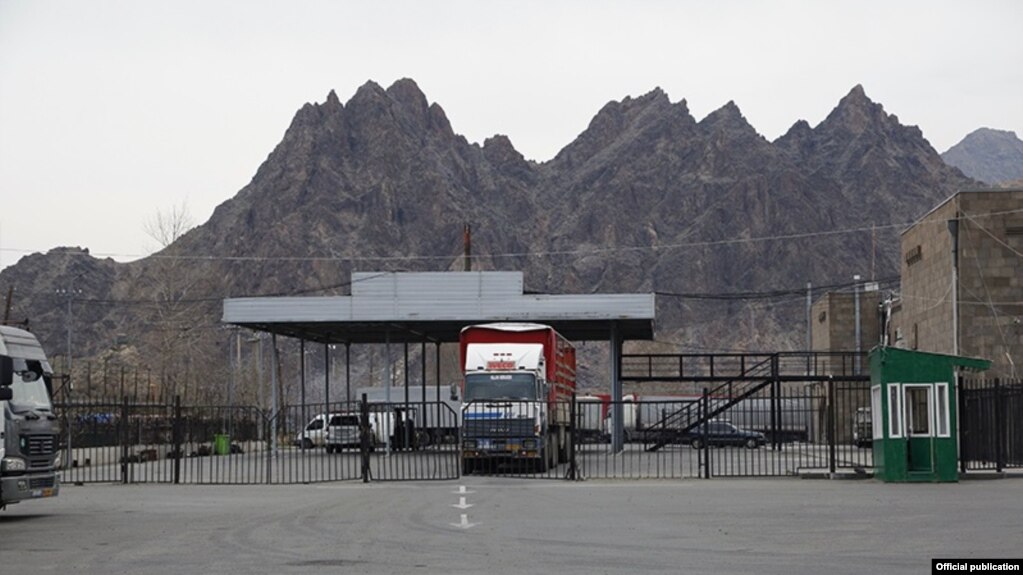
Despite a firm rejection from his office earlier this week, Prime Minister Nikol Pashinyan signaled that he would be ready to hand over control of a road in Syunik that would connect Azerbaijan to Nakhichevan—the so-called corridor—to a foreign entity.
During a press conference on Wednesday Pashinyan confirmed that the United States has made proposals regarding the opening of the transit routes the South Caucasus.
When asked by a reporter whether a specific proposal had been received from the U.S.concerning the road in Syunik, Pashinyan responded, “Yes, we have received proposals from the United States.” He claimed, however, no discussions on this matter can take place without taking into account the principles of Armenia’s territorial integrity and sovereignty.
The issue caused further speculation when the U.S. Ambassador to Turkey told reporters that the U.S. wants to lease the road—the same stretch being defended by Baku to become the so-called “Zangzur Corridor”—for 100 years and have an American company manage the flow of traffic of goods.
So how does Pashinyan think a scheme to lease a strategic road to a third country would work? Especially if that country is the U.S.—a staunch adversary of Iran, which share its only land border to Armenia at Syunik.
Pashinyan cited Pashinyan cited the examples of the Zvartnots airport, the South Caucasus railway, the water system, and Haypost, saying none of these “outsourced” entities have impacted Armenia’s territorial integrity.
“Both the railway, the airport, and the water system continue to be the property of Armenia. For example, the creation of a company that will attract investments is being discussed, because you can imagine what a huge investment potential the “Crossroads of Peace” project has,” Pashinyan said, revealing that talks about developing the area were already underway.
“We speak about the railway, highways, but in this context we are also talking about pipelines, power lines, telecommunication cables, and this is an economy that must be managed and created. And according to our logic, it should and can be the property of Armenia, we are talking about managing that economy and implementing certain functions within it,” Pashinyan added.
In addressing the U.S. lease offer specifically, Pashinyan explained that under Armenian law, such arrangements fall under the concept of “development rights.” He clarified that any infrastructure developed under this framework would become or remain state property after the expiration of the contract—in this case a proposed 100-year lease.
Speaking more broadly about Armenia’s role in regional logistics, Pashinyan underscored that Armenia has expressed willingness to take certain steps to simplify transport-related procedures as part of the “Crossroads of Peace” project. He added that competition among countries to attract transit of goods and energy flows is increasing, and Armenia must offer attractive conditions to international investors.
“It is surprising that some in Armenia present the reopening of railways through Armenian territory as a tragedy, while the real tragedy is that there is currently no functioning transit railway crossing Armenia,” he said.
“If Armenia were – and I am convinced it will be – a hub for international freight transit, it would become a significant factor of national security,” Pashinyan concluded.
Despite a rather muted statement from his office, evidently the road—or corridor—through Syunik was a main topic of discussion when Pashinyan met with President Ilham Aliyev of Azerbaijan in Abu Dhabi last week.
The U.S. proposal articulated days after the Abu Dhabi meeting has caused concern within opposition circles and other Pashinyan critics, who believe that that government is willing to sacrifice its strong relations with Iran, which unequivocally has opposed the idea of a “corridor.”