
October 06, 2026
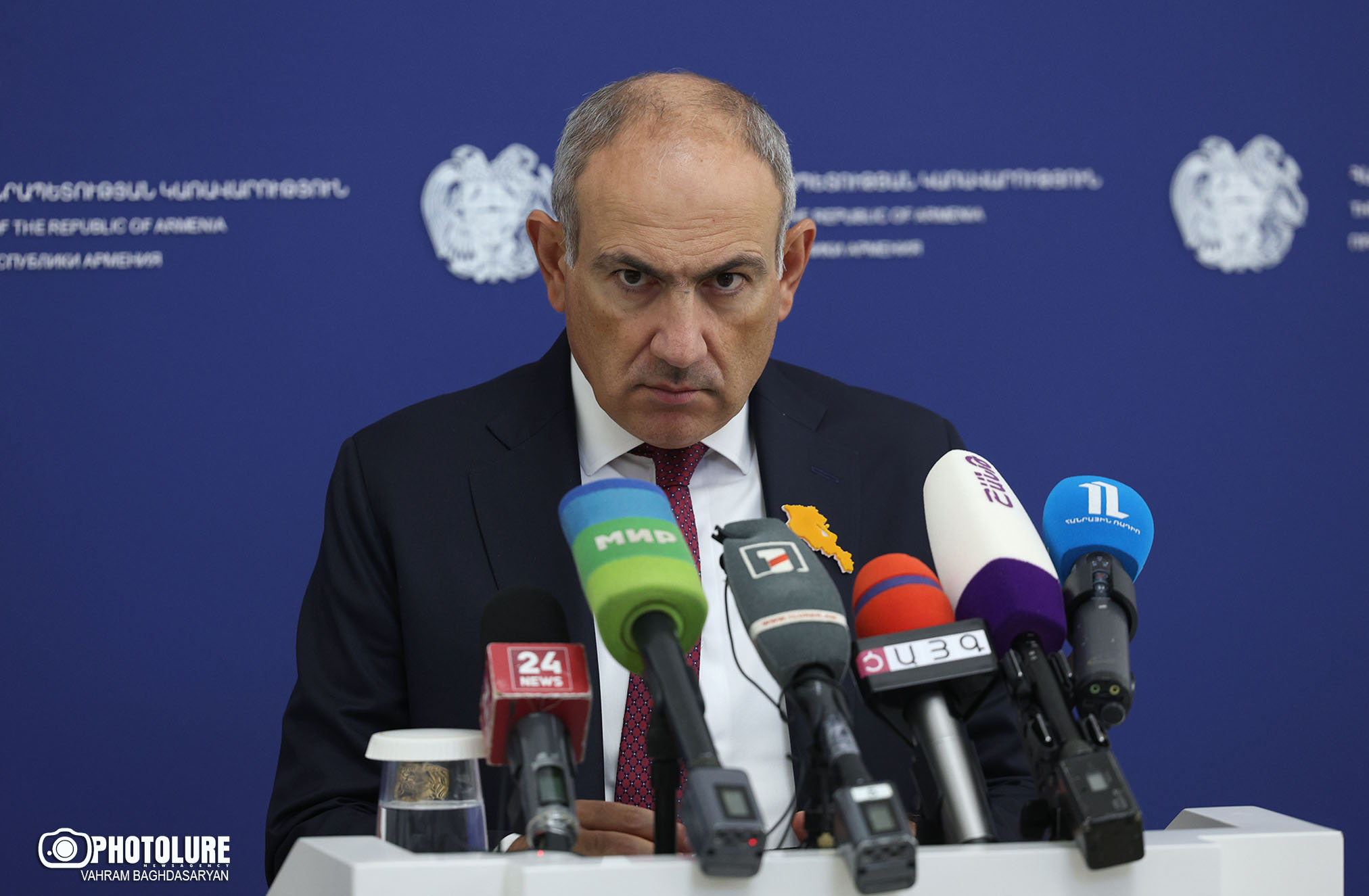
(Horizon Media / YEREVAN) – Nikol Pashinyan used a wide-ranging press briefing Thursday to outline several significant policy shifts, including plans to expand trade with Azerbaijan, reconsider Armenia’s energy strategy, seek changes to Russian control of the country’s railway system and postpone pension indexation until 2028.
Pashinyan said Armenia could soon begin exporting goods to Azerbaijan, although he did not identify which products would be involved. Trade since the opening of limited commercial channels has largely flowed in the opposite direction, with Azerbaijan supplying gasoline and diesel fuel to Armenia. The government has previously said the two sides exchanged lists of potential goods for bilateral trade.
He also raised the prospect of future electricity imports and exports with Azerbaijan. Responding to Azerbaijani President Ilham Aliyev’s remarks about possible power transmission lines through Armenia to Nakhchivan under the TRIPP initiative, Pashinyan said that rapidly expanding artificial intelligence infrastructure could significantly increase Armenia’s electricity needs.
His remarks marked a notable shift from earlier government assertions that Armenia possessed surplus electricity. Pashinyan said planned AI facilities are forcing the authorities to reassess the country’s energy strategy, while insisting that the long-term objective remains “100% energy independence” through solar generation and energy-storage facilities. At the same time, he left the door open to electricity trade with Azerbaijan, Turkey, Iran and Georgia.
Pashinyan also confirmed that Yerevan wants changes to the Russian concession management of Armenia’s railway network, which is operated by South Caucasus Railway. Rather than seeking a confrontation with Moscow, he said the government favours a negotiated arrangement that could include Russia selling all or part of its concession rights. The issue has gained urgency as Yerevan argues that the current structure could obstruct Armenia’s integration into wider international transport networks, particularly because of sanctions-related complications.
On domestic economic policy, however, Pashinyan confirmed that pension indexation, one of his election campaign promises, will not begin before January 1, 2028. He also indicated that the government does not consider raising the 75,000-dram minimum wage a priority, saying it would instead focus on extending universal health insurance to workers earning up to 200,000 drams.
The briefing also came as Pashinyan reshuffled his security team, replacing Security Council Secretary Armen Grigoryan with former parliament speaker Alen Simonyan. Pashinyan insisted the dismissal was not prompted by dissatisfaction with Grigoryan’s work, describing such changes as normal political decisions. He acknowledged that Grigoryan rejected an offer to continue serving in the Prime Minister’s Office.
Taken together, the announcements point to an increasingly rapid reorientation of government policy on energy, transport and economic relations with Azerbaijan, while major domestic commitments, including pension increases and improvements to minimum wages, remain deferred. The government is pressing ahead with regional integration initiatives whose long-term economic and security implications have yet to be clearly presented to the public.

















Subscribe to our newsletter
