
Pashinyan intends to intensify pressure on church, analyst says
- (0)
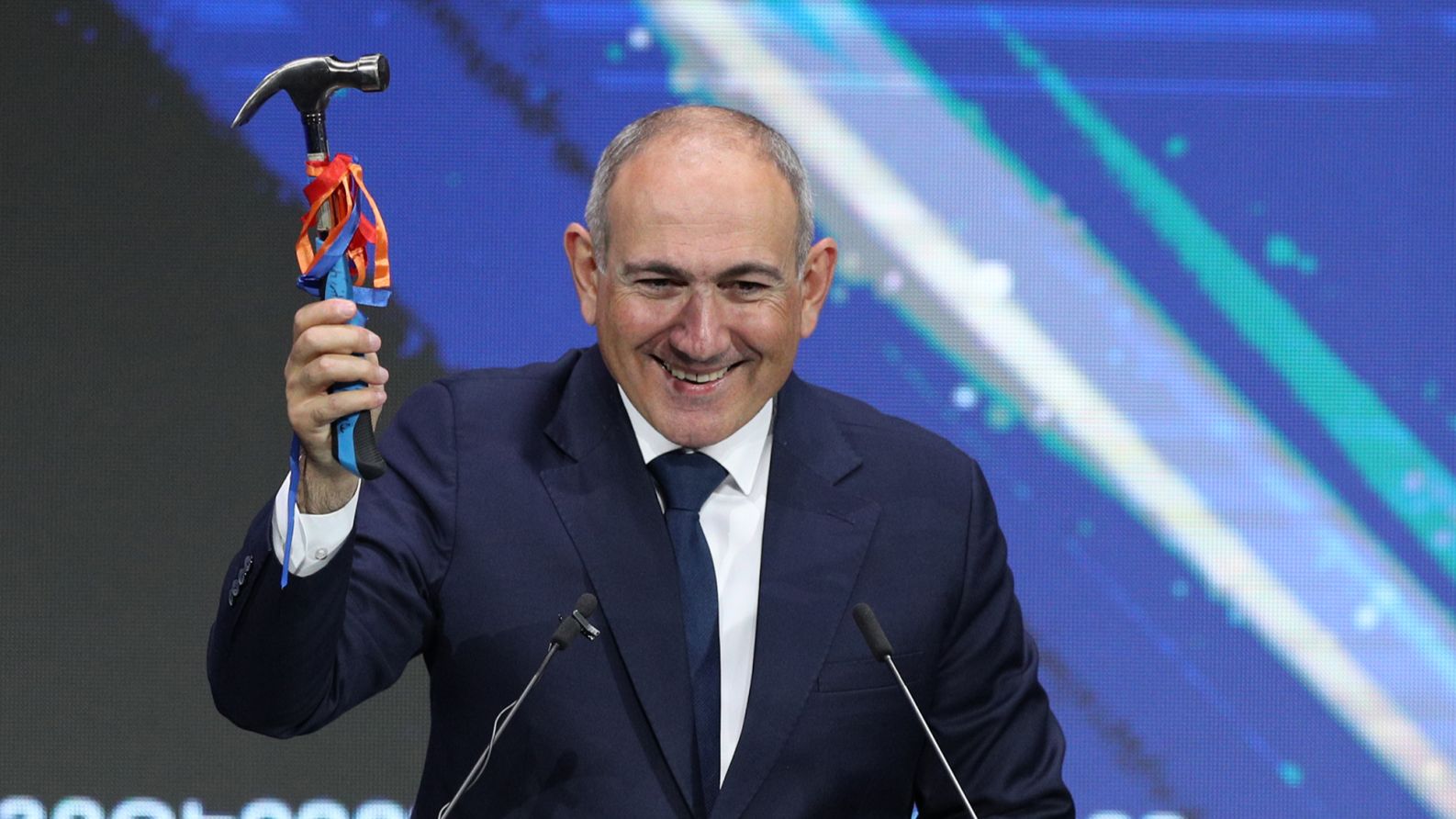
Political analyst Suren Surenyants has accused Armenian Prime Minister Nikol Pashinyan of planning to exert more pressure on the Armenian Apostolic Church amid ongoing tensions between the government and religious leaders.
In a social media post on Friday, Surenyants said that more than five months after his campaign against the church leadership, Pashinyan has acknowledged that the public is indifferent to allegations about the personal life of Catholicos Karekin II.
Pashinyan recently questioned why no one in Armenia asks whether Karekin II has a daughter and whether someone who has taken a vow of celibacy can lead the church if they have children. Surenyants argued that the prime minister’s comments show that his push for “spiritual renewal” lacks popular support.
Despite public indifference, Surenyants said Pashinyan remains intent on pursuing his goal, citing the prime minister’s recent statement that “Ktrich Nersisyan is not a Catholicos, and the Armenian Apostolic Church has no Catholicos today.”
According to Surenyants, the statement raises serious concerns about state overreach into church affairs. “By using his official position to inquire into the personal lives of clergymen, the prime minister is violating both the right to privacy and the principle of secular governance,” he wrote.
Surenyants also warned that the prime minister’s claim contradicts Article 17 of Armenia’s constitution, which upholds the church’s autonomy. “The status of the Armenian Apostolic Church and its Catholicos is determined solely by ecclesiastical law. The head of state has no authority in these matters,” he said.
The analyst cautioned that Pashinyan’s remarks could signal plans for a tougher approach toward the church. “By framing public indifference as a problem to be ‘corrected’, the authorities may resort to stronger pressure, including new fabricated criminal cases against clerics and attempts to place the church under control,” he wrote.
Surenyants stated that the Armenian leadership’s actions reflect “an unconstitutional agenda shaped by political, not public, demand,” warning that such interference threatens the church independence, the stability of constitutional institutions and the traditional balance between church and state in Armenia.