April 02, 2026
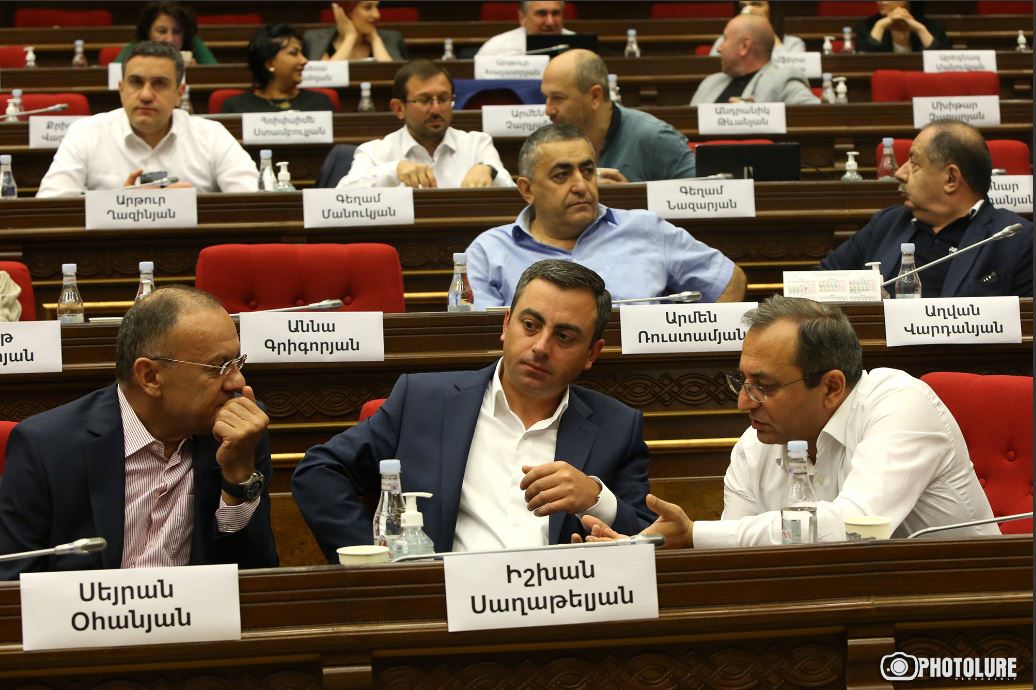
(HORIZON WEEKLY) — Armenia’s National Assembly convened an extraordinary session to debate proposed amendments to the Electoral Code that would significantly tighten requirements on election observation missions, prompting sharp criticism from the opposition and raising concerns over democratic backsliding and the consolidation of political control.
The draft legislation, authored by MPs from the ruling Civil Contract Party, seeks to impose stricter rules on observer neutrality and expand disclosure obligations regarding funding sources. Presenting the bill, ruling party MP Arusyak Julhakyan argued that existing legislation lacks clear enforcement mechanisms when observers violate political restraints, insisting that the amendments merely clarify and expand current rules.
However, the opposition Hayastan (Armenia) Alliance has strongly rejected this framing, describing the initiative as overtly anti democratic and boycotting the discussion altogether. ARF member and Hayastan faction MP Artsvik Minasyan accused the government of rushing through sweeping electoral changes without consultation, transparency, or consensus.
Speaking to journalists in parliament, Minasyan noted that the draft was circulated only a day before the extraordinary session and had not been discussed with domestic observation groups, opposition forces, independent civil society actors, or international institutions such as the Venice Commission or the OSCE Office for Democratic Institutions and Human Rights. According to him, organizations that provided impartial assessments during recent local government elections were entirely excluded from the process.
Minasyan characterized the bill as a deliberate attempt to engineer loyal, government-aligned observation missions while sidelining independent voices. He warned that under the proposed rules, observers whose assessments include criticism of any political force could be stripped of accreditation under the guise of counterpropaganda. In his words, the initiative amounts to an effort to sanitize elections from scrutiny rather than ensure fairness.
The ARF MP went further, framing the amendments as part of a broader campaign to legitimize what he described as pre-scripted and tightly controlled elections. He argued that the government has repeatedly violated both the spirit and procedure governing amendments to the Electoral Code, particularly by excluding the opposition from meaningful participation.
Concerns were also raised about the implications for media freedom. Minasyan cautioned that similar standards could be used to revoke journalists’ accreditation, noting that investigative reporting could easily be reclassified as political interference. He described this as an attempt to impose comprehensive oversight and discipline over both observers and the press.
According to the opposition, the cumulative effect of these changes is the transformation of elections into a process fully subordinated to the ruling authorities, with international actors either accepting official reassurances at face value or remaining conspicuously silent. Minasyan called on domestic observer organizations, independent media, and civil society groups to speak out publicly and resist what he described as the erosion of democratic safeguards.
The bill was adopted at first reading under a 24-hour procedure, with a second extraordinary session expected to finalize the amendments. The ARF and the Hayastan faction have vowed to continue opposing the initiative and to mobilize against what they see as a dangerous precedent for Armenia’s electoral system.
















Subscribe to our newsletter