
October 06, 2026
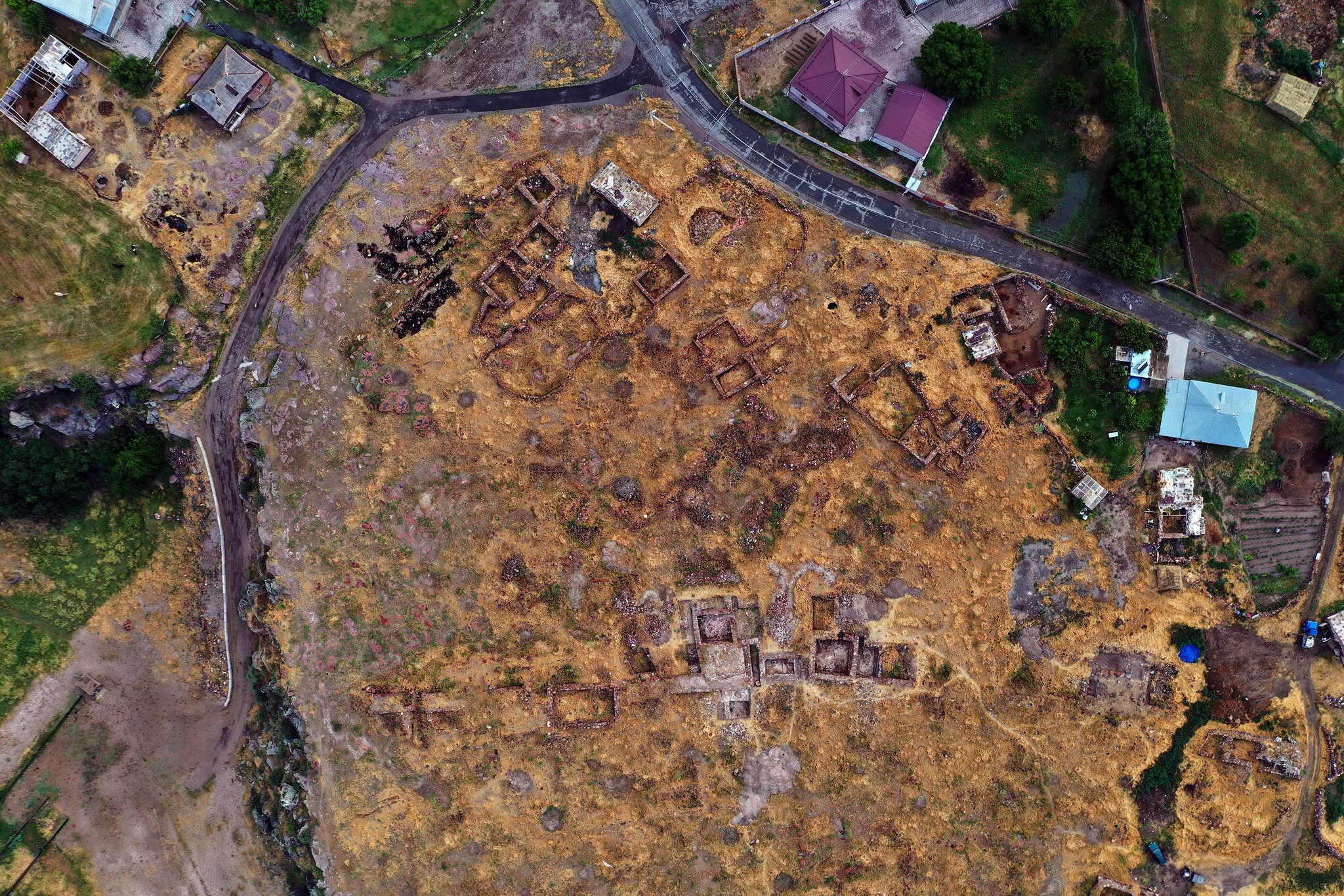
(Horizon Media / YEREVAN) — A joint Armenian-Italian archaeological expedition has concluded its 2026 field season at the Shamiram site in Aragatsotn Province, unveiling discoveries that significantly alter our understanding of the region’s ancient past.
Conducted from late May through late June, the collaborative mission focused on decoding the chronology of the fortified rocky plateau. The site boasts a continuous human footprint spanning from the Late Bronze Age through the medieval period.
The most striking revelation of the season emerged from Tomb 3, a monumental burial complex dating back to the Late Bronze Age. Archaeologists unearthed a central stone chamber encircled by concentric stone rings.
Inside, the team discovered a rich array of funerary offerings, including bronze weapons, metal and obsidian arrowheads, and the ritually sacrificed remains of a horse. Researchers note these findings offer invaluable insights into the burial customs and social status of local elites during the Late Bronze Age.
Beyond the burial grounds, the expedition successfully exposed Shamiram’s pre-Urartian phases. Working behind one of the fortress towers, the team discovered a Middle Iron Age room bearing traces of fire, built over an even older burial that predates the fortress walls entirely.
This specific sequence provides a rare, undisturbed window into how localized Iron Age communities functioned and transformed just prior to the sweeping expansion of the Urartian Kingdom across the region.
Simultaneously, investigations into the site’s massive fortifications revealed the sheer scale of ancient military engineering. The team exposed a well-preserved megalithic tower measuring roughly 8.5 by 8.5 meters, alongside evidence that the fortress gates were later rebuilt during the Hellenistic period.
With fieldwork concluded, the joint mission is shifting to laboratory analysis of the recovered artifacts, a phase co-financed by Italy’s Ministry of Foreign Affairs to further illuminate Shamiram’s enduring legacy in the Armenian highlands.

















Subscribe to our newsletter