April 02, 2026
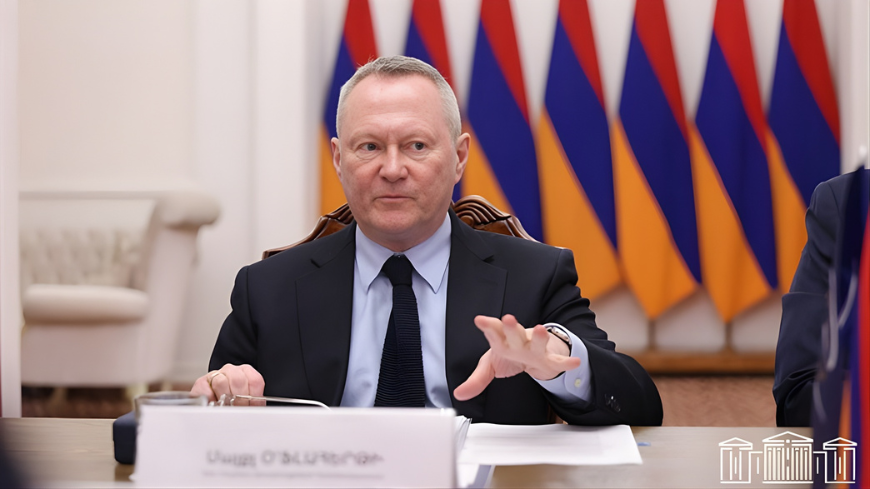
(Horizon Weekly / YEREVAN) – The Commissioner for Human Rights of the Council of Europe, Michael O’Flaherty, has called on Armenia to build on progress in non-discrimination, combating violence against women, and the integration of Armenians forcibly displaced from Artsakh, following his recent visit to the country.
In his statement, the Commissioner acknowledged the Armenian government’s efforts to provide emergency shelter, financial assistance, healthcare and educational access to the more than 100,000 Armenians who forcibly fled Artsakh after Azerbaijan’s September 2023 military aggression. He emphasized the need for sustainable integration policies, including long-term housing, employment opportunities and psychosocial support. He also reiterated that displaced persons retain the right to voluntary, safe, and dignified return, contingent on credible guarantees of security and the protection of their rights.
Yet the overall framing of the issue once again reduced the fate of Artsakh Armenians primarily to an integration challenge within Armenia. The forced displacement followed months of blockade and culminated in a military assault that led to ethnic cleansing. However, the statement placed no emphasis on accountability for Azerbaijan, the right to self-determination of the indigenous Armenian population, or the systematic destruction and appropriation of Armenian cultural and religious heritage now under Azerbaijani control. By focusing largely on post-displacement management, the broader political and legal dimensions of the crisis risk being sidelined.
Equally striking was what the report did not address within Armenia itself. The Commissioner’s remarks made no reference to growing domestic concerns over democratic backsliding, increasing concentration of power in the executive branch, or politically motivated arbitrary detentions. Nor did the statement engage with any criticism regarding the government’s confrontational posture toward the Armenian Apostolic Church, including the government’s unconstitutional interference in church affairs.
At a time when Armenia faces profound internal and external pressures, a comprehensive human rights assessment might reasonably be expected to address both the humanitarian consequences of the Artsakh displacement and the broader state of democratic governance. While integration of displaced Armenians is undeniably urgent, limiting the conversation to social policy risks obscuring deeper questions, not only about justice and accountability for the forced exodus, but also about the resilience of democratic institutions within Armenia itself.















Subscribe to our newsletter