From Martyrdom to Muzzling: Armenia’s 1,700-Year Christian Continuum
- (0)
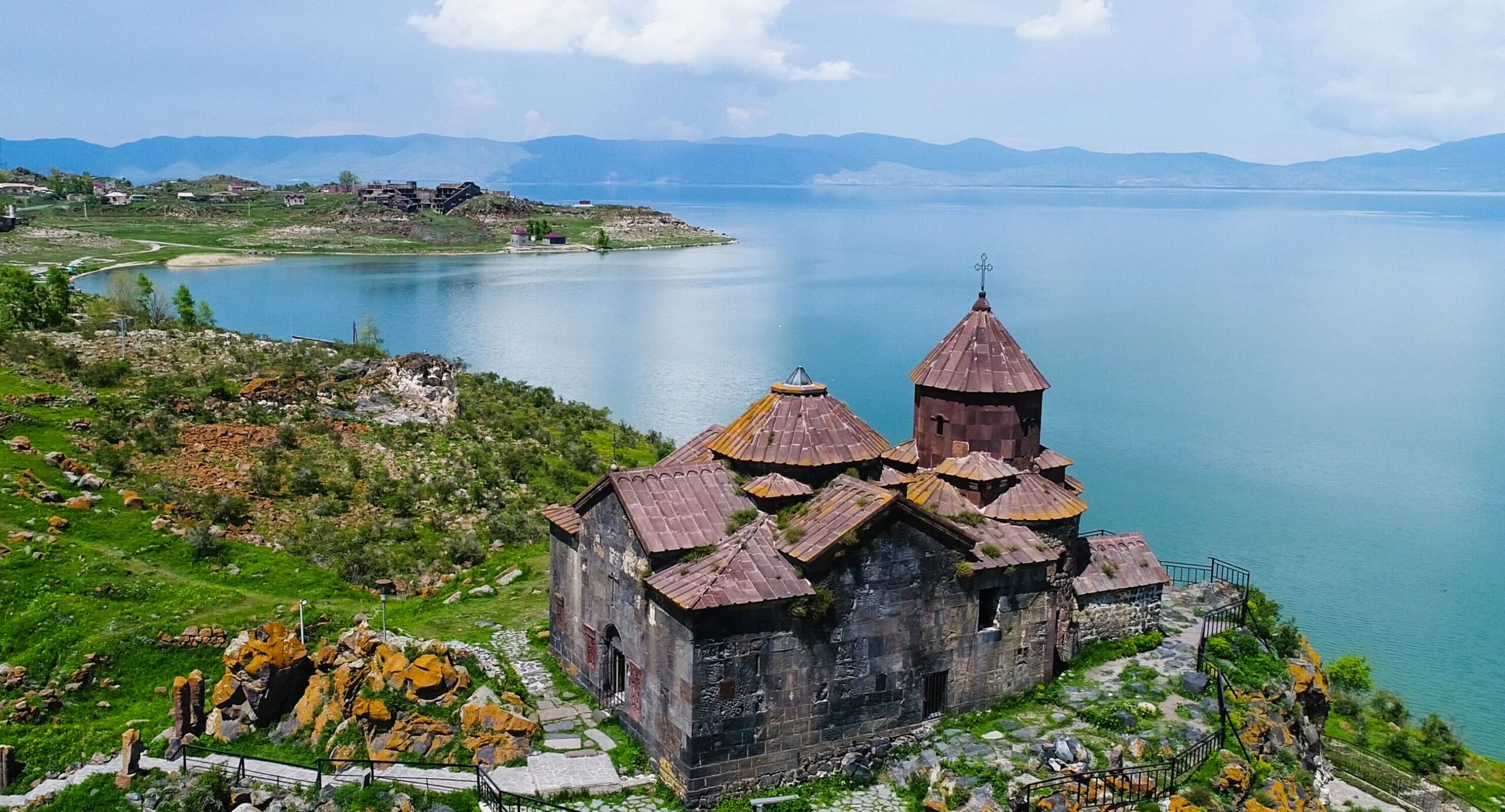
Persecution once defined Armenia’s faith; today its echoes resound as the state seeks to silence the Church that birthed its identity
By Ara Nazarian, PhD
For Armenians, Christianity is not merely a creed but the spine of national survival. When King Tiridates III adopted Christianity in 301 A.D., Armenia became the first Christian state, centuries before Europe’s conversion. Through invasions, deportations, and genocide, the Armenian Apostolic Church preserved a scattered nation’s language, schools, and moral memory.
That continuum of endurance is now being tested from within. Prime Minister Nikol Pashinyan’s government has opened an unprecedented confrontation with the Church, jailing archbishops, threatening the Catholicos of all Armenians, and seeking to brand the Mother See of Etchmiadzin as a political rival. The irony is bitter: the same institution that once defied emperors and sultans must now defend itself against the government of the very republic it helped sustain.
The parallels between ancient and modern persecution are haunting. In the fourth century, Christian Armenia survived waves of Zoroastrian and Persian repression; in 1915, Ottoman forces destroyed nearly two million Armenians, targeting intellectuals and clergy first. In both eras, faith itself was perceived as the threat, a loyalty beyond the reach of the state.
Today’s repression wears bureaucratic clothes: audits, illegal eavesdropping, police summons, televised smear campaigns. Yet its goal is the same: to subordinate conscience to political convenience. Since 2023, several bishops who spoke against concessions of borderland villages have been arrested or placed under investigation, while state media accuses Etchmiadzin of “foreign meddling.” Human rights experts briefed members of Congress that the Armenian government has been detaining Christian clergy without legal basis as part of a broader crackdown ahead of the June 2026 parliamentary elections.
Such framing re-casts faith as backwardness, a trope familiar to Armenians who lived under Soviet atheism. The current regime’s rhetoric about “modernization” thus functions less as reform than as de-Christianization of public life.
The most symbolic rupture came when Pashinyan attended a service celebrated by a defrocked priest, violating canon law and prompting condemnation from the Mother See. For believers, it was an unmistakable message: the state will decide which shepherds may preach.
Behind the spectacle lies a deeper fear of the Church’s unbought influence. Polls by the Arar Foundation show that roughly 70 percent of Armenians trust the Church, more than any political institution. In a nation still reeling from the 2020 war and the 2023 ethnic cleansing and loss of Artsakh, Etchmiadzin remains the one voice able to unify across class and region. Its credibility exposes the government’s moral deficit.
By seeking to muzzle that voice, Yerevan risks replicating the same dynamic that once doomed empires larger than itself: confusing control with stability. The Church’s moral dissent is not sedition; it is a mirror held to power.
Beyond theology, the Church plays a pivotal role in shaping Armenia’s intellectual and artistic identity. Its monasteries at Tatev, Haghpat, and Geghard are UNESCO World Heritage sites; its liturgical music shaped Komitas Vardapet’s national revival; its schools educated reformers and scientists alike.
To weaken that institution is to erode the nation’s cultural scaffolding. Freedom House notes that since 2022, Armenia’s ratings for civil and religious freedom have declined. Church-run charities now report difficulties in registering their programs; youth clergy formation has slowed amid increased official scrutiny. The cumulative effect is a soft strangulation, not outright bans but administrative attrition that gradually sidelines faith from civic life.
Western governments have so far treated Armenia’s internal church conflict as a domestic matter. But for a country hailed as a budding democracy in a volatile region, the erosion of ecclesial independence is a strategic alarm.
The Christian Solidarity International has begun documenting “patterns of intimidation” against clergy; as have others. Yet diplomatic reticence prevails, largely because Pashinyan’s administration presents itself as pro-Western amid Russian decline.
If left unchallenged, the muzzling of Armenia’s Church will mark the first successful state capture of a historic Christian institution within an ostensibly democratic U.S. partner. That precedent would reverberate beyond the Caucasus, emboldening illiberal regimes to neutralize moral authorities under the guise of reform.
Despite arrests and propaganda, Armenia’s faithful continue to rally around Etchmiadzin. Candlelight vigils outside the Mother See and diaspora demonstrations testify that the spiritual chain uniting homeland and diaspora remains unbroken.
Catholicos Karekin II’s recent sermon in Vagharshapat invoked St. Gregory the Illuminator’s defiance before pagan kings: “He who silences the truth cannot escape its echo.” That echo now resounds across a global Armenian community unwilling to trade its spiritual inheritance for political fashion.
For observers abroad, the lesson is universal. Democracies do not decay overnight; they hollow out when rulers dismantle the moral institutions that remind them of limits. Armenia’s Church, with all its human flaws, has served precisely that role for seventeen centuries.
If the world’s oldest Christian nation allows its Church to be domesticated by politics, it will not simply lose a religious institution; it will lose the living bridge between its martyr past and its moral future.
Ara Nazarian is a member of the Armenian National Committee of America and a faculty member at a University in New England.
Related Articles

March 30, 2026