February 24, 2026
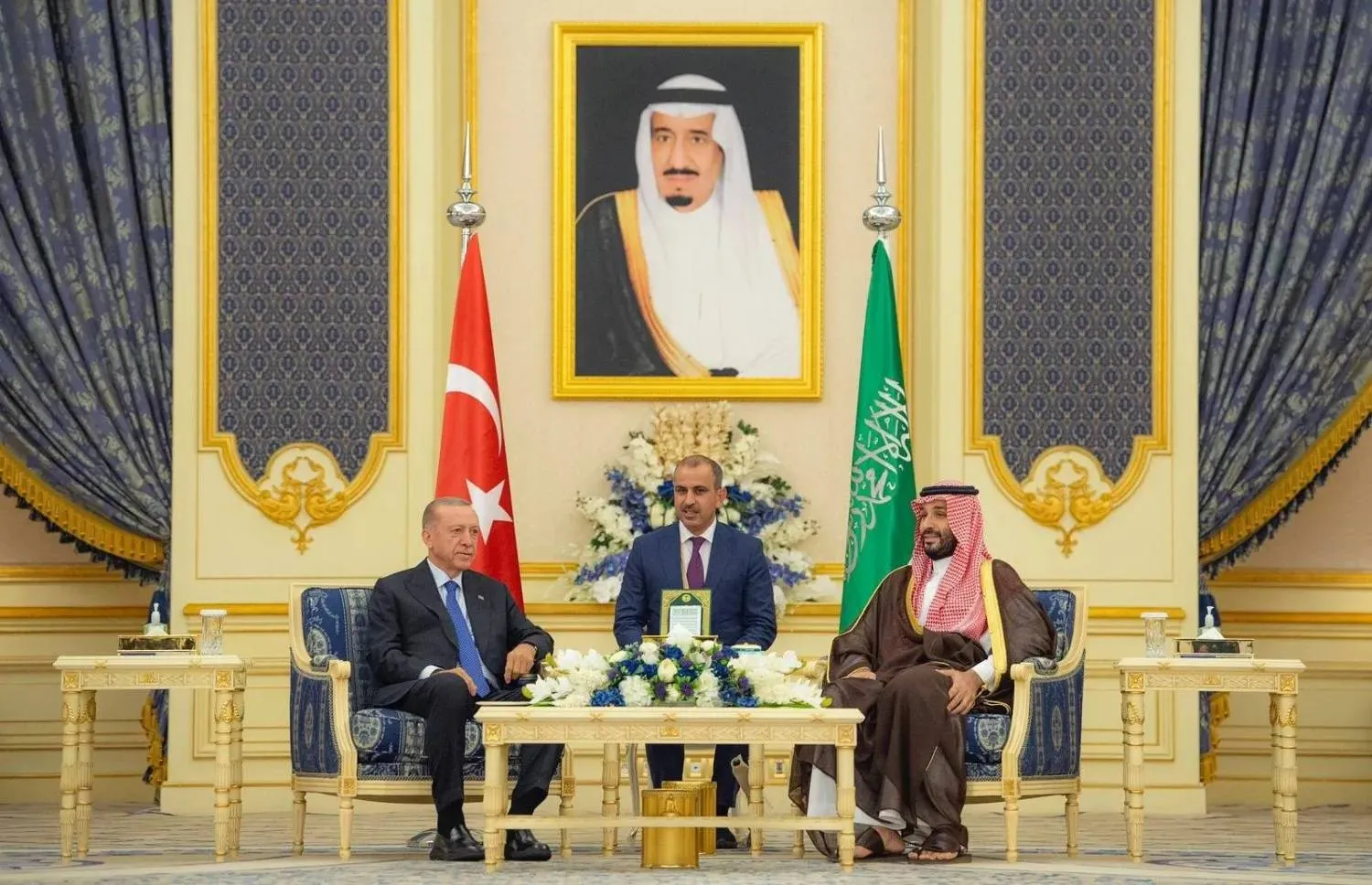
(Horizon Weekly) — In a landmark visit to Riyadh on February 3, 2026, Turkish President Recep Tayyip Erdogan and Saudi Crown Prince Mohammed bin Salman reinforced a sweeping realignment between Ankara and Riyadh that transcends traditional bilateral interests and could reshape regional geopolitics at a critical juncture in the Middle East.
Escorted by a high-level Turkish delegation, including senior ministers and business leaders, Erdogan’s talks with the Saudi leadership focused on expanding cooperation across strategic sectors from renewable energy to defence, and from regional security to post-conflict reconstruction.
“Turkey and Saudi Arabia are two friendly countries with deep historical ties … and our relationship carries strategic significance for the peace, stability, and prosperity of our region as a whole,” Erdogan told Asharq Al-Awsat in an extensive interview during the visit, underscoring the broader diplomatic ambitions behind the trip.
Just a few years ago, relations between Ankara and Riyadh were strained by deep mistrust, most notably after the 2018 killing of Saudi journalist Jamal Khashoggi in Istanbul, which plunged ties into crisis. Since rapprochement efforts began in 2021 and accelerated in 2022, both capitals have pursued a careful reset, setting aside past grievances to channel cooperation toward shared interests.
The February meeting reflects the latest phase of that thaw. Erdogan’s message to the Crown Prince that Turkey is “determined to take relations … to a higher level” points to a new strategic partnership rather than a simple diplomatic welcome.
Concrete outcomes of the visit included agreements on renewable energy investment, particularly a Saudi-financed programme to build large-scale solar projects in Turkey, and plans to deepen defence cooperation. These sectors are not just economic; they are foundational to both nations’ visions of strategic autonomy and influence in a rapidly shifting regional order.
Beyond bilateral accords, Riyadh and Ankara are coordinating consultations on key regional flashpoints. Erdogan cited Palestine and Syria as priorities, signalling a shared agenda on issues where both countries have significant leverage and overlapping interests.
That alignment has deeper implications: the Middle East is navigating a complex transition as old rivalries ease and new alliances form. Türkiye’s increasing engagement with Gulf states, Saudi Arabia, the United Arab Emirates, Egypt, and others, reflects a broader Turkish strategy to reorient its diplomacy toward economic integration and conflict mediation rather than confrontation.
For Washington, Moscow, and capitals across the region, the Turkish-Saudi axis presents both opportunities and challenges. A closer Ankara-Riyadh partnership strengthens a bloc of influential regional actors with shared incentives to stabilize post-conflict Syria, counterbalance Iranian influence, and assert economic leadership independent of external powers. Analysts say this could shift the balance in negotiations from security to reconstruction and economic frameworks, potentially altering decades-old geopolitical fault lines.
















Subscribe to our newsletter

