Azerbaijan hosts conference promoting “western Azerbaijan” narrative as concerns grow over politicized claims
- (0)
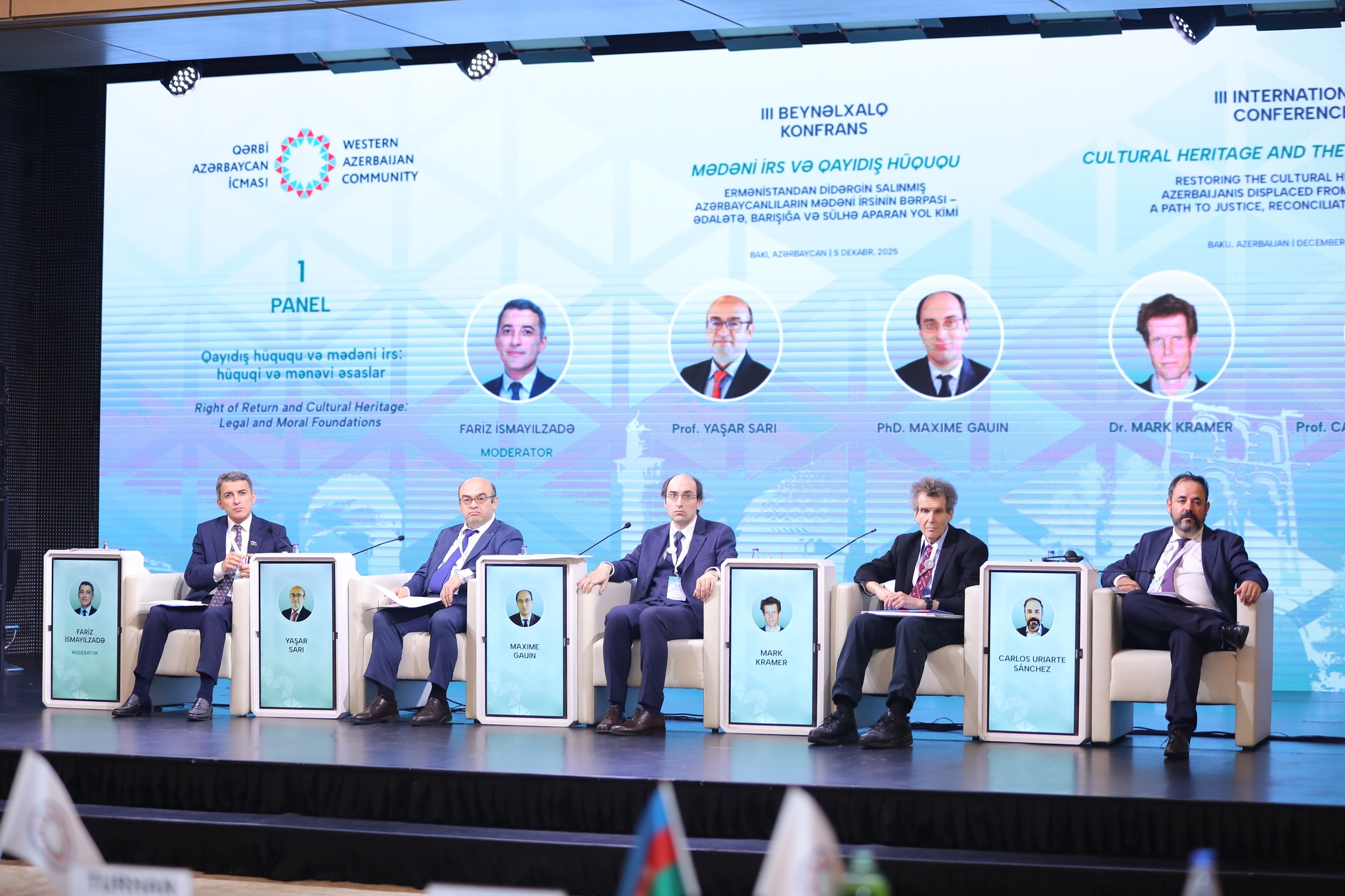
(Horizon Weekly) – Baku hosted the third international conference of the so-called “western Azerbaijan” Community, an event widely seen as part of Azerbaijan’s ongoing state-sponsored campaign to advance its narrative that Azerbaijanis were displaced from Armenia and hold a collective right to return. The gathering brought together about 100 foreign guests from more than 60 countries, alongside Azerbaijani officials, academics, and parliamentarians, underscoring the significant state resources invested in promoting this political agenda.
The conference opened with a video praising the activities of the “western Azerbaijan” Community and highlighting the attention the issue has received from former president Heydar Aliyev and current president Ilham Aliyev. Adalat Valiyev, a senior official in the Presidential Administration, delivered President Aliyev’s formal message to participants, further emphasizing the state’s central role in shaping and amplifying the narrative.
In his remarks, community chairman and Azerbaijani MP Aziz Alakbarli claimed that the organization’s mission is to secure the peaceful and dignified return of Azerbaijanis allegedly expelled from Armenia over the past two centuries. He urged the international community to endorse this framing, despite the absence of credible historical or legal foundations for the sweeping claims presented. Alakbarli also asserted that recognizing this supposed right of return is essential for Armenian Azerbaijani coexistence, a position critics argue is aimed at politically pressuring Armenia rather than fostering genuine reconciliation.
Speakers invited from abroad echoed Baku’s positions. Turkish MP Samil Ayrim described the narrative of mass deportations as “a severe crime against humanity” and accused Armenia of becoming a monoethnic state, while reaffirming Türkiye’s unconditional support for Azerbaijan. Seven foreign participants were later granted honorary membership in the “western Azerbaijan” Community for publicly supporting the cause.
Panels throughout the conference focused on legal, cultural, and political dimensions of the narrative, featuring speakers from Türkiye, the United States, South Africa, Italy, Lithuania, Egypt, and various Azerbaijani institutions. Presentations ranged from alleged destruction of Azerbaijani cultural heritage in Armenia to calls for international mechanisms that would compel Armenia to accept a return process. The discussions consistently aligned with the Azerbaijani government’s long standing efforts to retroactively construct claims against Armenia in the context of ongoing negotiations.
The event concluded with the adoption of a final document reaffirming the community’s stated objectives and thanking participants for supporting what organizers described as a just cause.
The “western Azerbaijan” narrative is being advanced at a time when the Azerbaijani leadership continues to deny the right of return to the 120,000 Armenians of Artsakh who were forcibly displaced during and after the 2023 blockade and military assault. While Baku promotes the idea of Azerbaijani return to Armenia as a prerequisite for peace, it has taken no steps to allow the return of the Armenians it displaced from their homeland.
At the same time, Armenia’s Prime Minister Nikol Pashinyan recently stated that Artsakh Armenians will not be returning to Artsakh, drawing widespread criticism within Armenia and the diaspora. His remarks stand in stark contrast to the assertive and well funded campaign Azerbaijan is carrying out to institutionalize its “western Azerbaijan” narrative.
For many analysts, the juxtaposition is striking: as Azerbaijan expands its diplomatic and academic efforts to entrench its claims and shape international discourse, Armenia’s own leadership has distanced itself from asserting the rights of its displaced population. Critics warn that this imbalance risks further undermining the rights of Artsakh Armenians while enabling Azerbaijan to advance historical reinterpretations that serve its political objectives.