ARF Western US Diaspora Conference concludes: A beginning, not an end
- (0)
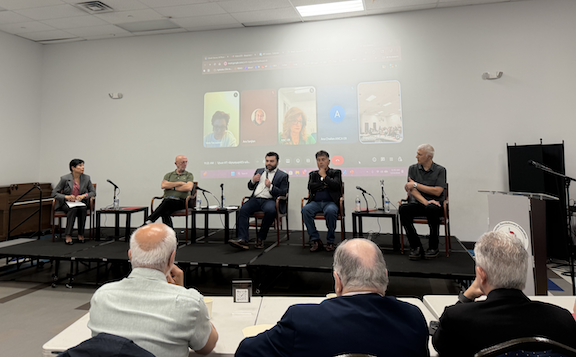
LOS ANGELES – The ARF Western Region convened its Diaspora Conference at the Beshir Mardirossian Youth Center in Burbank, California, over the weekend of March 14–15. The two-day internal working conference brought together distinguished diaspora scholars, educators, community leaders, and ARF members for a structured dialogue dedicated to one purpose: honest and substantive reflection on the diaspora’s present realities and future direction.
The conference did not seek to produce declarations or headlines. Participants engaged across nine thematic sessions covering the historical characteristics of the diaspora, Armenia-Diaspora political dynamics, Armenian education and language, diasporic identity and culture, the Armenian Cause in the 21st century, and the possible goals of diasporic nation-building itself.
What emerged most clearly was that the Armenian diaspora cannot be understood only as a sentimental extension of the homeland, nor merely as a loose collection of communities trying to preserve memory and identity. The discussions pointed instead to a more demanding and complex reality: if the diaspora is to remain meaningful, it must be approached as a multilayered transnational network, self-aware, and evolving, with responsibilities that go beyond institutional maintenance.
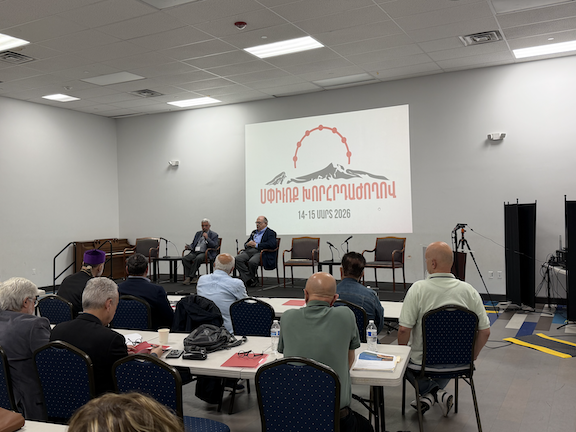
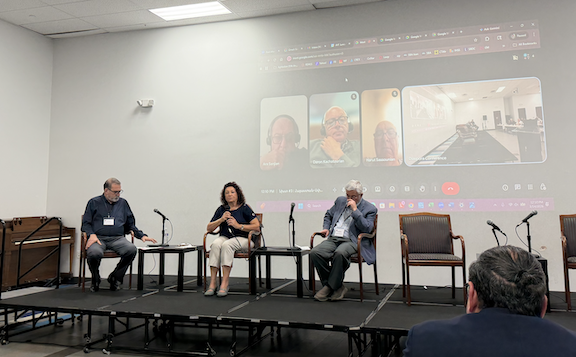
This was visible in the very structure of the conference. Education was discussed not simply as a pedagogical issue, but as a question tied to language continuity, identity formation, and long-term communal resilience. Youth was examined not only as a demographic category, but as the site where questions of belonging, leadership, and future commitment will ultimately be decided. Discussions on the Armenian Cause were not limited to inherited formulas but opened the door to preliminary rethinking of mission, scope, and relevance in light of new realities. Crucially, the agenda made clear that these themes are deeply interconnected — a diaspora that weakens in language and culture will eventually weaken in political clarity; one that does not cultivate young leadership will struggle to sustain its institutions.
The final group discussions were especially important in this regard. By dividing participants into working groups around language, identity, educational structures, youth, leadership preparation, and the rethinking of the Armenian Cause, the conference began moving from diagnosis toward possible direction. No final doctrine was announced, and none was expected. But that was precisely the point. The value of the conference lay not in manufacturing artificial consensus, but in helping identify the real questions, tensions, and priorities that require further work.
What made this conference significant was not merely its agenda, but its premise. At a moment when both Armenia and the diaspora are navigating profound and simultaneous transformations — geopolitical, demographic, generational, and cultural — the relationship between the two can no longer rest on inherited assumptions. The fall of Artsakh, the reconfiguration of Armenia’s alliances, the accelerating assimilation of diaspora communities, and the emergence of a generation that relates to Armenian identity on its own terms have all converged into a single urgent question: what does it mean, in 2026, to be part of one Armenian world — and what kind of partnership that world actually requires.”
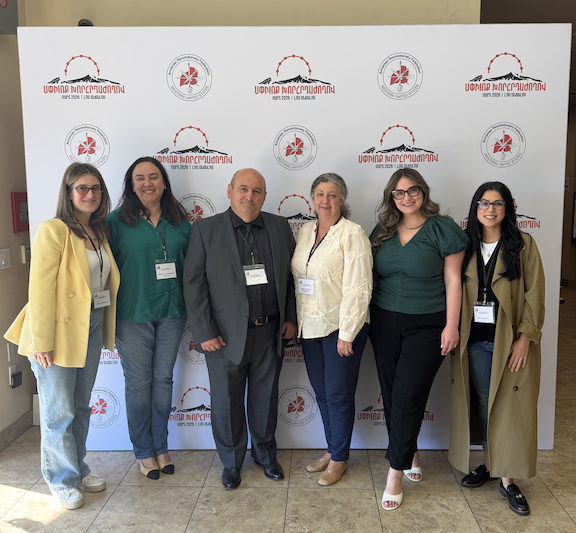
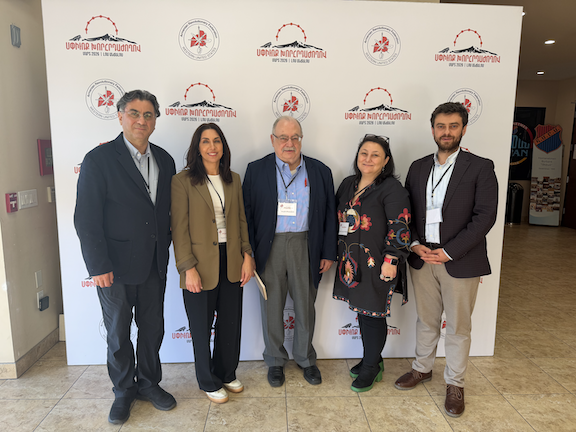
The conference follows directly from the public debate held on March 12 at the Krikor and Mariam Karamanoukian Glendale Youth Center, which explored opportunities for Armenian diaspora nation-building before a wider community audience, and from two preparatory articles published in Asbarez that framed the stakes and the educational agenda of the gathering. Taken together, these three moments — public debate, press preparation, and internal conference — represent a deliberate sequencing: understand before acting, and reflect before declaring.
This conference should be seen as a beginning rather than a conclusion. The issues placed on the table are too large, too layered, and too consequential to be exhausted in one weekend. In the coming period, public articles will be shared that reflect on the major questions and challenges that deserve wider communal consideration. The conversations held over these two days were internal in process, not in purpose — their work belongs to the broader Armenian world. What was discussed in Burbank will not stay in Burbank.