Armenia elected vice-chair of UNESCO World Heritage Committee’s 49th session
- (0)
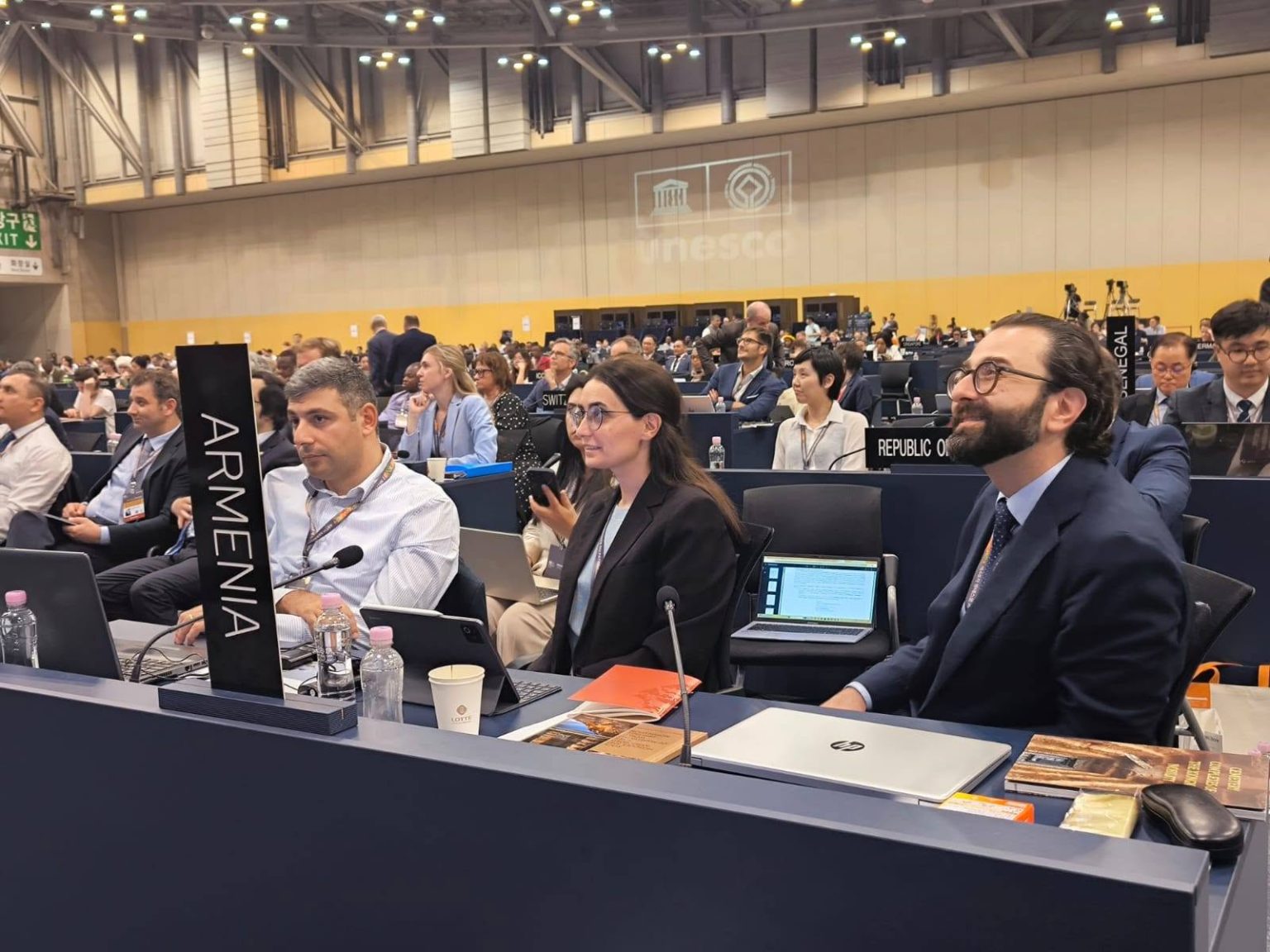
(Horizon Media / BUSAN)—Armenia has been elected one of the vice-chairs of the 49th session of UNESCO’s World Heritage Committee, scheduled to take place in Istanbul from June 27 to July 7, 2027. The election was announced as the Committee concluded its 48th session in Busan, Republic of Korea.
Armenia currently serves as one of the Committee’s 21 member states. Its delegation in Busan was headed by Aram Hakobyan, Armenia’s Permanent Delegate to UNESCO, and included representatives from the ministries responsible for culture and the environment, along with national experts.
During the ten-day gathering, the Armenian delegation participated in discussions concerning new nominations to the World Heritage List and the conservation of already listed cultural and natural properties. The Committee approved the inscription of 25 new sites during the session, while also examining the condition of heritage properties facing environmental degradation, conflict and other threats. The Busan session was held from July 19 to 29.
On the sidelines of the meeting, Hakobyan also participated in an event on the Global Biodiversity Framework, presenting Armenia’s priorities ahead of the 17th Conference of the Parties to the UN Convention on Biological Diversity. COP17 will be hosted in Yerevan from October 19 to 30, 2026.
Armenia’s election to the Committee’s leadership gives the country a more visible role within one of the world’s principal institutions for cultural heritage protection. It also places greater responsibility on Yerevan to raise the fate of Armenian monuments in Artsakh, where independent satellite monitoring has documented the destruction of cultural sites and warned that Armenian churches, cemeteries and other historic structures remain at serious risk of erasure.
UNESCO has repeatedly called for an independent assessment mission to the region, but access has remained unresolved. Against this backdrop, Armenia’s expanding profile within UNESCO stands in uncomfortable contrast to the limited urgency and sustained diplomatic pressure demonstrated by its authorities over the destruction, alteration and Azerbaijani revision of Artsakh’s Armenian heritage.
The vice-chairmanship will therefore be more than a ceremonial appointment. It will test whether Armenia is prepared to use its position to advance meaningful international action for endangered Armenian heritage, not only to participate in decisions concerning the cultural legacy of other nations.
Related Articles

Հոկտեմբեր 05, 2026