Francophonie summit raises Artsakh detainees and refugee issues but omits right of return
- (0)
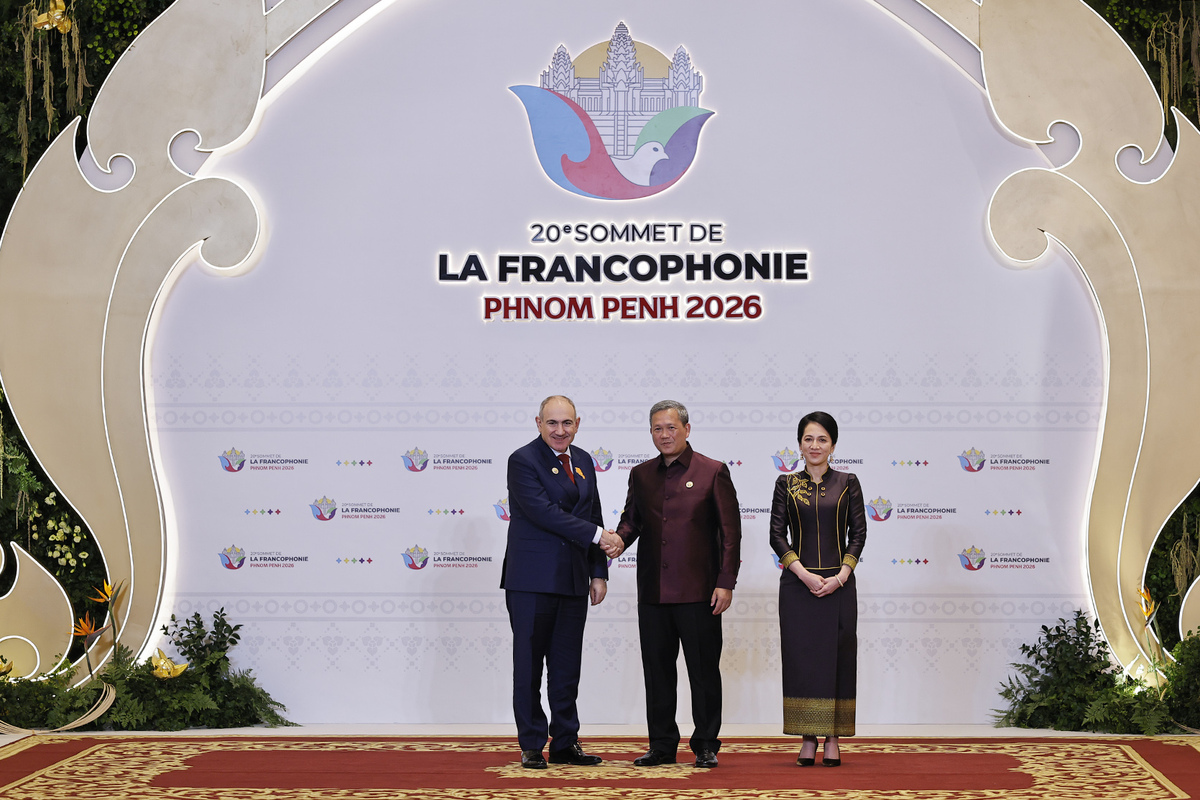
PHNOM PENH — The 20th Summit of the International Organization of La Francophonie (OIF), held on November 15–16 in Cambodia, adopted a resolution addressing several outstanding humanitarian issues stemming from the Armenia-Azerbaijan conflict, including the release of detainees, missing persons and the displacement of Artsakh Armenians. However, the document notably failed to address the right of displaced Artsakh Armenians to return to their ancestral homes.
The resolution, adopted by the heads of state and government of Francophonie member countries, expressed support for the normalization of relations between Armenia and Azerbaijan, welcoming the August 8, 2025 Washington declaration and the initialing of the bilateral peace agreement.
On humanitarian matters, the document emphasized the importance of resolving outstanding issues, including the release of persons held in detention, clarification of the fate of missing persons and cases of enforced disappearances. It identified progress on these questions as an important element in rebuilding confidence between the two countries.
The reference is particularly significant for Armenian prisoners of war, former Artsakh political and military leaders and other Armenians held in Azerbaijan, whose continued detention remains an unresolved issue despite diplomatic efforts toward normalization.
Regarding the more than 100,000 Armenians forcibly displaced from Artsakh following Azerbaijan’s September 2023 military offensive, the resolution welcomed efforts by the Armenian government, supported by international partners, to facilitate their social, economic and cultural integration into Armenian society.
However, the resolution made no reference to their right to return safely and voluntarily to Artsakh, nor did it call for international guarantees to make such a return possible.
This omission is particularly significant in light of the November 17, 2023 order of the International Court of Justice (ICJ), which directed Azerbaijan to ensure that Armenians who fled Nagorno-Karabakh after September 19, 2023, and wished to return could do so safely, without obstruction and expeditiously. The Court also ordered Azerbaijan to protect documents relating to displaced residents’ identity and private property.
The Francophonie resolution’s approach to Artsakh contrasts with its treatment of displacement elsewhere in the same document. In addressing tensions between Cambodia and Thailand, the summit explicitly called for conditions allowing displaced populations to return safely, voluntarily and sustainably to their places of origin. No comparable provision was included in the section concerning Armenia.
The omission also marks a difference from the 2024 Francophonie summit resolution, which addressed humanitarian assistance for forcibly displaced Artsakh Armenians and expressed concern over the destruction of Armenian cultural heritage, supporting a UNESCO mission to the region. These cultural heritage concerns were not specifically mentioned in the 2026 resolution’s section on Armenia.
The Armenian Foreign Ministry’s account of the latest summit highlighted international recognition of the normalization process, regional cooperation and the government’s efforts to integrate displaced Artsakh Armenians. It did not raise the absence of language addressing their return.
The distinction between integration and return remains central to the unresolved Artsakh question. While providing housing, employment and social assistance to displaced families is necessary, integration into Armenian society does not extinguish their rights concerning their homes, property and historical communities in Artsakh.
The resolution’s wording also raises questions about the diplomatic priorities of Prime Minister Nikol Pashinyan’s government. While the document explicitly endorses the government’s peace and regional connectivity agenda, including the Crossroads of Peace initiative and the TRIPP transport project, it contains no corresponding commitment to advancing the return of displaced Artsakh Armenians.
The Francophonie summit also reaffirmed its support for border delimitation based on mutual recognition of sovereignty and territorial integrity under the 1991 Alma-Ata Declaration and welcomed efforts to reopen the Armenia-Türkiye border.
Although the resolution preserves international attention on Armenian detainees and other outstanding humanitarian concerns, its treatment of displaced Artsakh Armenians remains limited to their integration in Armenia. The absence of an explicit reference to their return leaves a fundamental issue unresolved as the Armenian government continues to advance normalization with Azerbaijan.