Pashinyan hosts prayer breakfast on religious freedom amid escalating crackdown on Armenian Church
- (0)
YEREVAN — Armenia’s second Republic of Armenia Prayer Breakfast opened in Yerevan on October 2, bringing together government officials, diplomats and religious figures from more than 30 countries for discussions that prominently include freedom of religion and the protection of Christian communities.
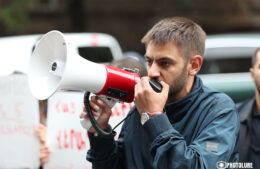
The gathering, hosted with the participation of Prime Minister Nikol Pashinyan, comes against the striking backdrop of his government’s escalating confrontation with the Armenian Apostolic Church. In recent months, authorities have pursued criminal proceedings involving senior clergy, while Pashinyan and his ruling Civil Contract party have openly challenged the Church’s leadership and pressed for changes to its internal governance. The Mother See of Holy Etchmiadzin has described the campaign as unconstitutional interference, political retribution and persecution directed against the Church, its clergy and Catholicos Karekin II.
The contradiction is particularly pronounced because freedom of religion or belief is one of the Prayer Breakfast’s central themes. While Pashinyan presents Armenia as a venue for international dialogue on religious liberty, his government remains locked in a dispute over the autonomy of the country’s national Church. The Supreme Spiritual Council said in September that state institutions had subjected clergy and Church structures to pressure, discriminatory administrative practices and interference that infringes upon constitutional guarantees of religious freedom.
Representatives of both historic sees of the Armenian Apostolic Church are nevertheless participating in the gathering. Bishop Daniel Findikyan represents the Mother See of Holy Etchmiadzin, while Bishop Mesrob Sarkissian represents the Catholicosate of the Great House of Cilicia.
Their participation carries additional significance following last year’s inaugural Prayer Breakfast, where Findikyan publicly raised the imprisonment of Armenian clergymen and participants called attention to religious-freedom concerns in Armenia.
President Vahagn Khachaturyan is also participating in this year’s gathering. International guests include Paula White-Cain of the White House Faith Office and Asif Mahmood, chair of the U.S. Commission on International Religious Freedom.
Beyond religious freedom, the October 2–3 program includes discussions on the survival of Christian communities in the Middle East, the Armenian Quarter of Jerusalem and Christian heritage in the Holy Land, Christian tourism and pilgrimage, ethical approaches to finance, and the relationship between faith and artificial intelligence.
The program also includes an official dinner hosted by Pashinyan and a visit to the Mother See of Holy Etchmiadzin, an institution his government has increasingly sought to challenge in both its leadership and internal affairs. The juxtaposition leaves one of the gathering’s central themes difficult to ignore: Armenia’s government is seeking international visibility as a defender of religious dialogue at the same time that its confrontation with the Armenian Apostolic Church has become one of the country’s most serious Church-state disputes.