Pashinyan brands Catholicos “vile,” cites Artsakh prayers as one reason for removal in parliament outburst
- (0)
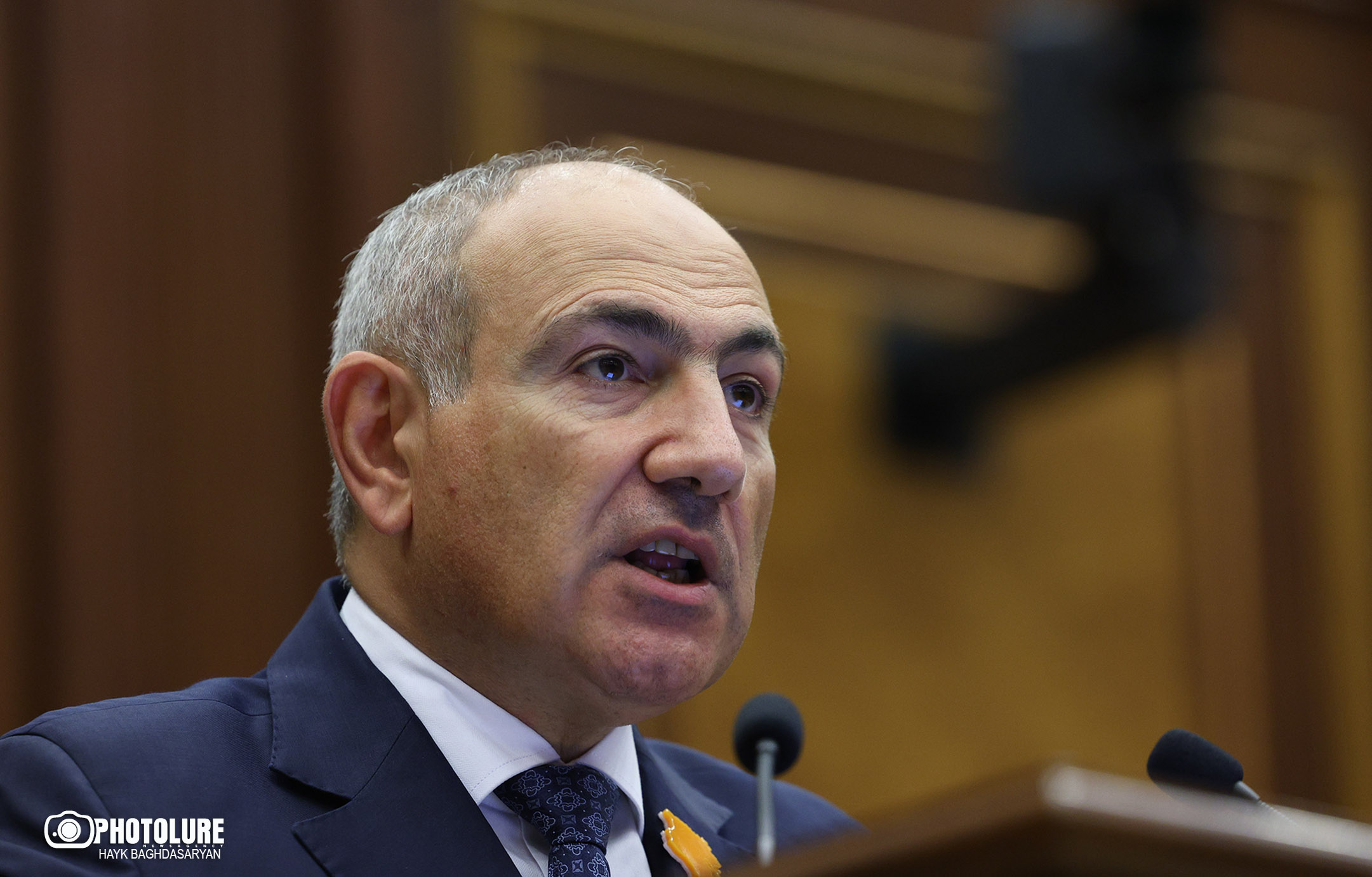
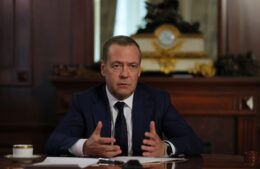
(Horizon Media / YEREVAN) — Nikol Pashinyan intensified his government’s confrontation with the Armenian Apostolic Church on Monday, launching a highly personal attack on Catholicos Karekin II from the floor of parliament and openly citing the Church’s continued references to Artsakh as one of the reasons the Armenian spiritual leader should be removed.
While presenting his government’s 2026–2031 program, Pashinyan repeatedly referred to the Catholicos by his baptismal name, Ktrij Nersissian, and called him “vile.” The remarks triggered an angry reaction from opposition lawmakers, who pounded their desks and chanted “Vehapar” in support of the Catholicos.
Pashinyan again focused on allegations concerning Karekin II’s private life, accusing him of violating his vow of celibacy and portraying his continued leadership of the Church as illegitimate. His comments, delivered in graphic terms from the parliamentary podium, further blurred the line between political criticism and personal attack in the government’s widening campaign against the Mother See.
More significantly, Pashinyan for the first time directly cited the Church’s continued prayers for Artsakh as one of the grounds for seeking the Catholicos’ removal.
He criticized clergy who, during Divine Liturgy, pray for the preservation of the Republic of Artsakh, claiming that such references turn the Armenian Apostolic Church into “an institution of war propaganda.”
“This is one of the reasons why the de facto head of the Armenian Apostolic Church should retire,” Pashinyan said.
The statement gave new weight to opposition claims that the confrontation with Karekin II is not simply about Church governance or celibacy, but also about the Mother See’s refusal to abandon the issue of Artsakh and its continued advocacy for the rights of the forcibly displaced Artsakh Armenian population.
Strong Armenia parliamentary leader Narek Karapetyan said Pashinyan had effectively “shown his cards,” arguing that the prime minister had now acknowledged what the opposition had maintained for months: that Artsakh is a central factor in the campaign against the Catholicos, while other allegations are being used as political leverage against the Church.
Karekin II has previously rejected claims that references to Artsakh encourage renewed conflict, saying the Church is praying for justice and for the rights of the Artsakh Armenian people.
Pashinyan also announced that, on his instructions, a report is being prepared on what he described as a “systemic crisis” inside the Armenian Apostolic Church. He did not disclose who is preparing the report, what legal authority it would carry, or what role the government believes it has in assessing the internal affairs of a constitutionally separate religious institution.
Opposition lawmakers challenged Pashinyan over that point directly, questioning the legal basis for state interference in Church affairs. The prime minister responded by accusing the Church itself of entering politics, citing previous calls by Church leaders for his resignation.
Tensions rose again toward the end of the session as Pashinyan continued to refer to Karekin II by his baptismal name. Members of the Strong Armenia faction eventually walked out of the chamber en masse in protest.
The Mother See of Holy Etchmiadzin had not immediately responded to Pashinyan’s latest remarks.
Related Articles
October 05, 2026