
October 06, 2026
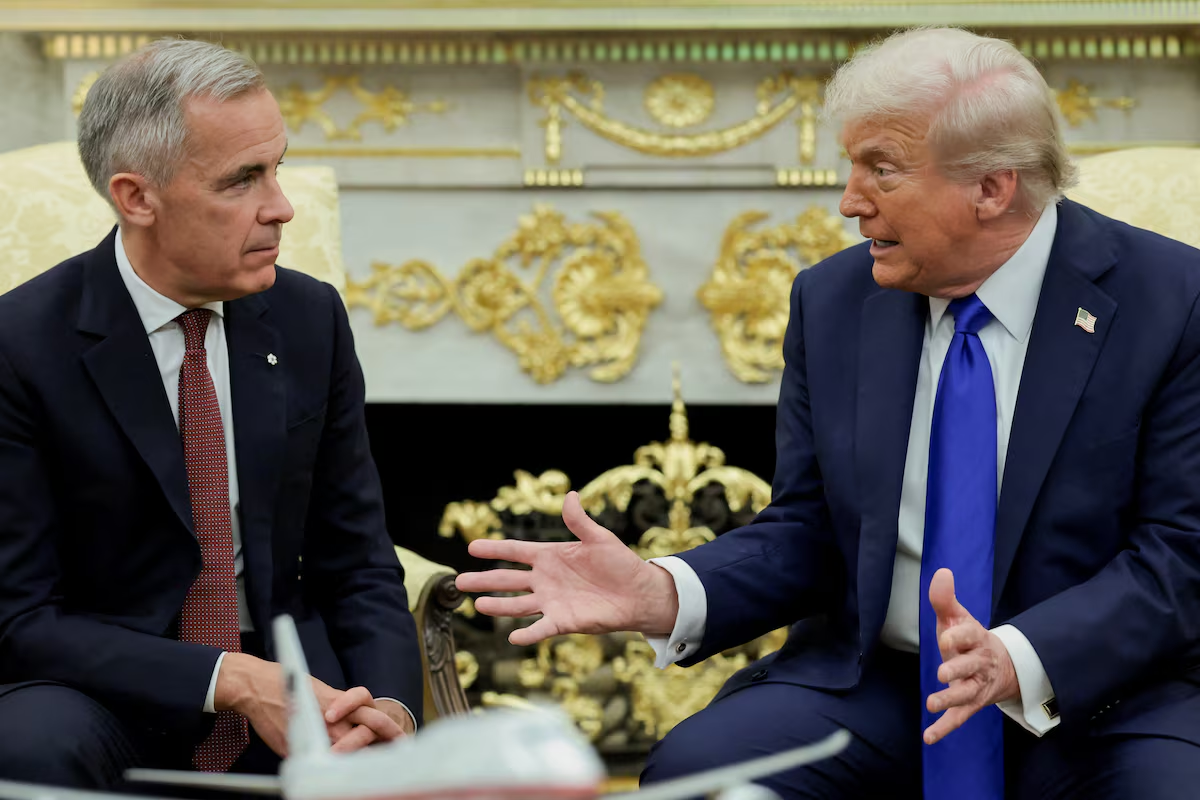
(Horizon Media / OTTAWA) — Canada and the United States are engaged in last-minute negotiations aimed at averting a new 50% U.S. tariff on roughly US$20 billion worth of Canadian goods, with the measures scheduled to take effect at 12:01 a.m. Wednesday, August 19.
Prime Minister Mark Carney spoke by telephone with U.S. President Donald Trump on Monday afternoon about the ongoing negotiations, Carney’s office confirmed Tuesday. Ottawa provided no details of the conversation. Carney had earlier described the negotiations as intense and sensitive and declined to discuss their substance publicly.
Canada-U.S. Trade Minister Dominic LeBlanc and Canada’s chief trade negotiator, Janice Charette, have been in Washington for talks with senior Trump administration officials. On Monday, they met for nearly two hours with U.S. Trade Representative Jamieson Greer and Commerce Secretary Howard Lutnick.
The threatened tariffs would affect a range of Canadian exports, including wine, furniture, dairy products, cement, clothing, fishing rods and hockey equipment. Unlike several previous U.S. tariff measures, the new duties would apply even to Canadian products that qualify for preferential treatment under the Canada-U.S.-Mexico Agreement, or CUSMA. The affected goods represent about five per cent of Canadian exports to the United States.
Existing U.S. tariffs on Canadian-made vehicles have emerged as one of the principal obstacles in the negotiations. Reuters reported, citing industry sources familiar with the talks, that the two governments have discussed reducing the U.S. tariff on Canadian vehicles from 25% to 15%, with possible further reductions based on the amount of North American content in each vehicle.
The two sides, however, remain divided over how to calculate that content. Washington wants tariff reductions to reflect only U.S.-made components, while Canada is seeking recognition of Canadian and Mexican components as well.
Other longstanding disputes are also part of the negotiations. U.S. officials have raised concerns over Canada’s dairy supply-management system, retaliatory Canadian tariffs and decisions by several provinces to remove American alcohol from store shelves. Ottawa, meanwhile, is seeking relief from U.S. tariffs affecting Canadian steel, aluminum, softwood lumber and vehicles.
Canadian business groups have warned that the new 50% tariffs could result in job losses and business closures, particularly among smaller exporters that rely heavily on access to the U.S. market. Nearly 72% of Canadian goods exports went to the United States last year.
The dispute comes as Washington and Ottawa are also confronting uncertainty over the future of CUSMA. Canadian officials have indicated that, should the new tariffs take effect, options under consideration include support for affected Canadian industries and potentially suspending broader bilateral trade negotiations.

















Subscribe to our newsletter