
September 16, 2026
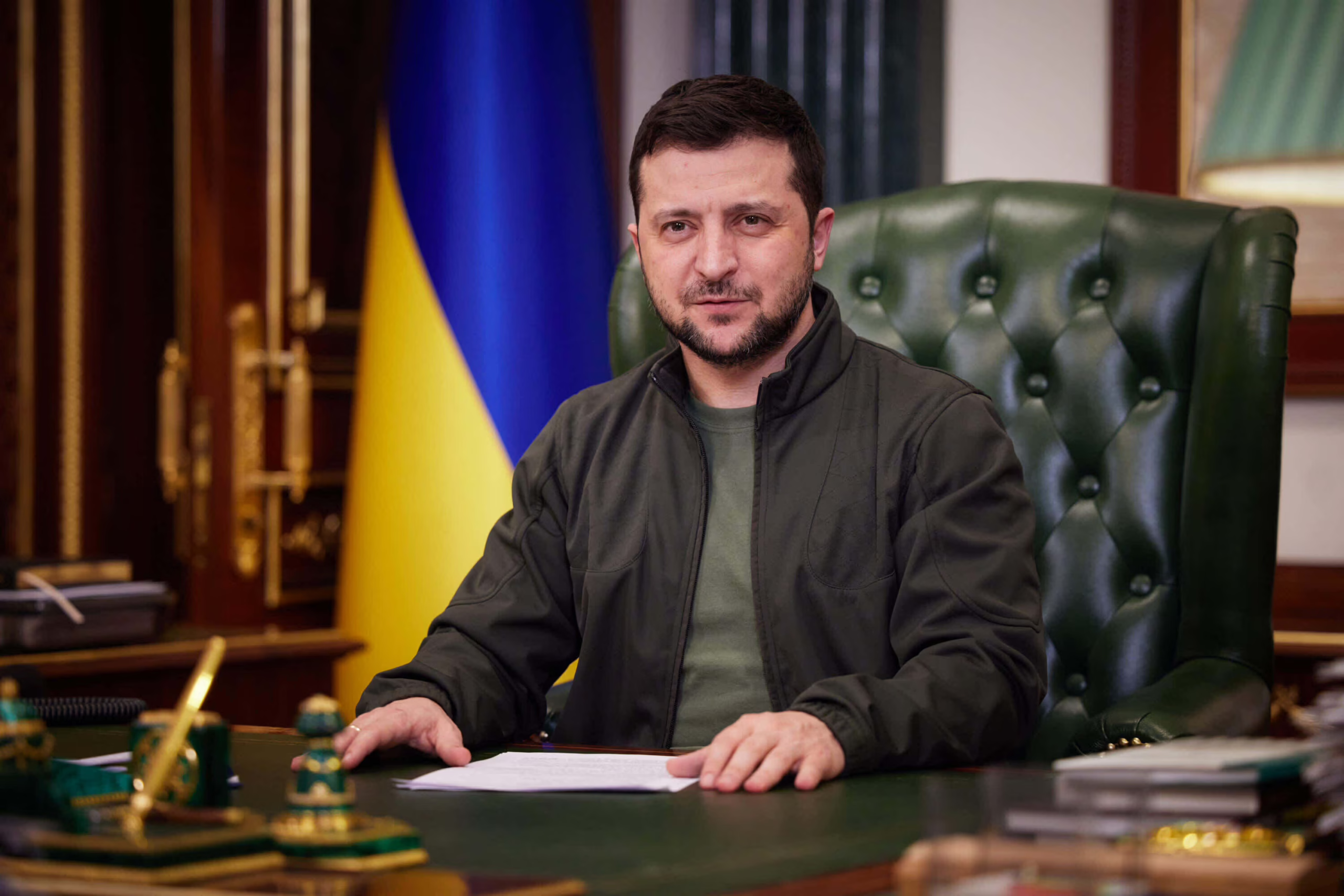
(Horizon Media / YEREVAN) – Ukrainian President Volodymyr Zelenskyy has publicly expressed support for Armenia, arguing that the Armenian people alone have the right to determine their country’s future amid increasing pressure from Moscow.
In a statement published on X, Zelenskyy said Russia has become more direct in its messaging toward neighboring states and pointed to recent comments directed at Armenia as an example.
“Russia is now threatening its neighbouring countries more openly than before,” Zelenskyy wrote, adding that the remarks made about Armenia extend beyond the country itself and reflect a broader challenge facing states in the region.
The Ukrainian leader called for greater international support for countries facing external pressure, specifically naming Armenia, Moldova, the Baltic states and Azerbaijan. He also urged European nations to find ways to support the people of Georgia, describing the issue as a shared European responsibility.
His comments come amid renewed calls from Russian officials for Armenia to clarify its geopolitical orientation. In recent weeks, Russian President Vladimir Putin and other senior figures have urged Yerevan to decide whether it intends to deepen integration with the European Union or remain fully committed to the Eurasian Economic Union (EAEU).
The issue was also raised during the May 29 meeting of the Supreme Eurasian Economic Council in Astana, where the leaders of Russia, Kazakhstan, Belarus and Kyrgyzstan adopted a statement encouraging Armenia to hold a referendum on whether to pursue closer ties with the European Union or continue its participation in the EAEU.
At the same time, Russian officials have warned that Armenia’s continued movement toward Europe could affect its access to Russian natural gas at preferential prices. Moscow has also introduced a series of trade restrictions on Armenian exports, including bans affecting Jermuk mineral water, flowers and certain alcoholic beverages, while additional limitations have been placed on agricultural products such as tomatoes, cucumbers and strawberries.


















Subscribe to our newsletter
