The Karabakh Movement at 38: A national awakening that reshaped Armenian consciousness
- (0)
By Sevag Belian
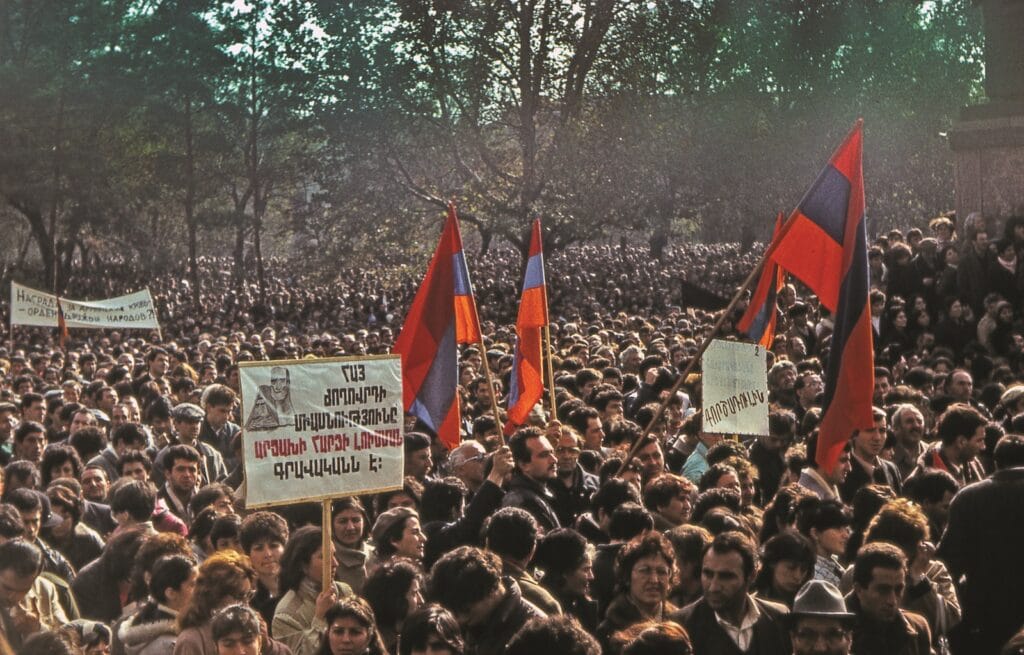
Thirty-eight years ago, in February 1988, the Karabakh Movement emerged as one of the most consequential socio-political awakenings in modern Armenian history. What began as a demand for the reunification of Artsakh with Soviet Armenia quickly evolved into a broader national revival that reshaped Armenian political consciousness in Armenia, in Artsakh, and throughout the diaspora.
In Yerevan and Stepanakert, the mass demonstrations broke decades of imposed political silence. For a society long constrained under Soviet rule, the movement restored a sense of agency. Armenians experienced the power of collective civic action, openly invoking the principles of self-determination, national rights, and historical justice. The reappearance of the Armenian tricolour and the revival of national discourse signalled not only a political shift but a psychological transformation. The movement became a formative moment for a generation that would go on to lead Armenia toward independence in 1991.
For Armenians in Artsakh, the movement was existential. It was rooted in the conviction that security, identity, and survival were inseparable from political status. The struggle that followed entrenched a resilient, self-reliant ethos within Artsakh’s society and reinforced a profound attachment to ancestral land.
Across the diaspora, the events of 1988 redefined the relationship with the homeland. Communities that had long centred their activism on genocide recognition and cultural preservation redirected their energy toward state-building, humanitarian support, and political advocacy for Armenia and Artsakh. The movement narrowed the psychological distance between a once-Soviet republic and a globally dispersed nation, fostering a renewed sense of shared destiny.
While the conflict that emerged from the Karabakh Movement has brought both achievement and deep tragedy, its socio-political legacy endures. It reawakened national consciousness, reconnected a people to sovereignty, and instilled a lasting belief in collective responsibility. Thirty-eight years later, the movement remains a defining chapter in the Armenian experience — not only for what it sought to achieve, but for how it reshaped the Armenian mind and sense of nationhood worldwide.
Related Articles

October 09, 2026