October 14, 2026
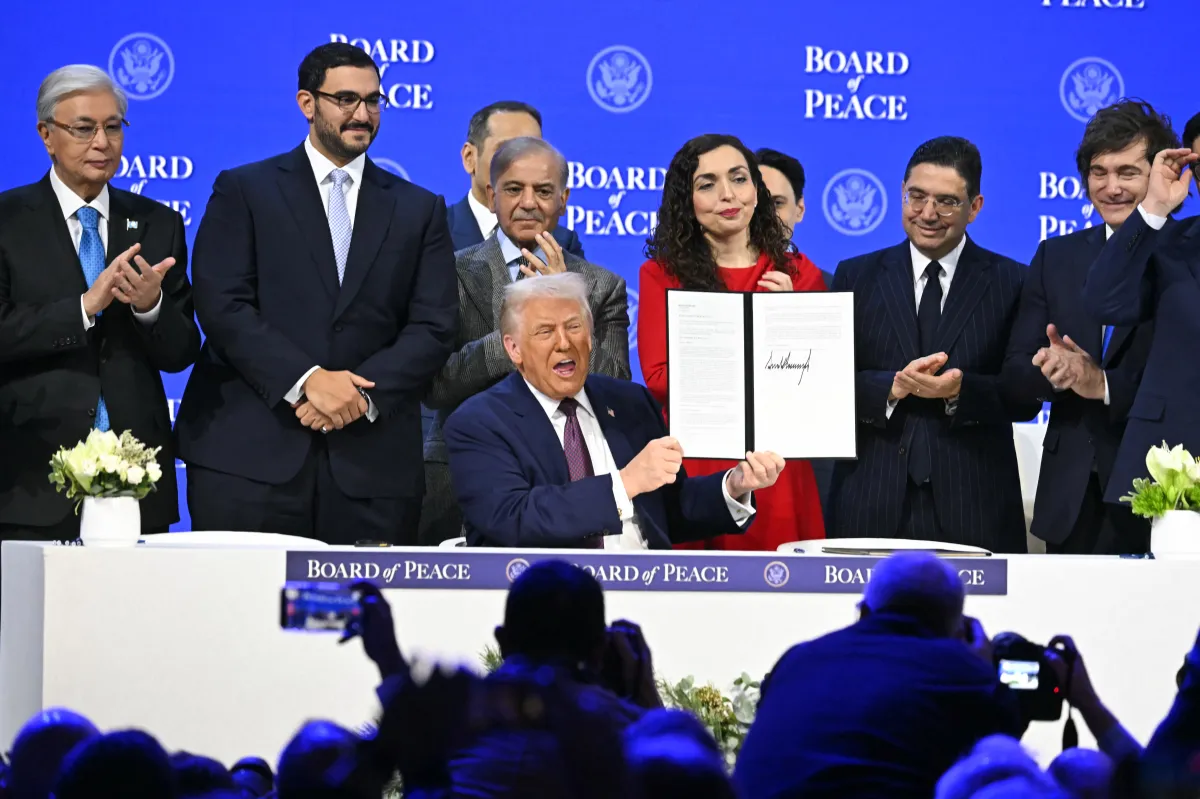
(Horizon Weekly) – Donald Trump’s newly unveiled Board of Peace is emerging as one of the most controversial diplomatic experiments of 2026, drawing cautious reactions from traditional allies and raising questions about the future of the United Nations. Presented by Trump as a bold new vehicle to resolve conflicts and finance reconstruction efforts starting in Gaza, the body is structured around a powerful Trump chairmanship and a billion‑dollar buy‑in for permanent membership, giving it the feel of an exclusive geopolitical club rather than a classic multilateral institution.
Launched around the Davos meetings with fewer than a few dozen countries formally on board, the initiative quickly grabbed headlines for what critics see as a “privatized UN” model in which a single political leader wields unusual authority over global‑level decisions. The Board’s charter, initially rooted in a UN Security Council mandate focused on Gaza, has since been interpreted by Trump and his advisers as a license to expand into conflicts worldwide, turning what was conceived as a targeted mechanism into a parallel peace and reconstruction architecture. That shift has deepened unease in diplomatic circles, where many fear the organization could compete with, rather than complement, existing UN structures.
Canada has responded with measured distance, aligning more closely with European skepticism than with Washington’s enthusiasm. Ottawa has so far avoided committing to full membership, voicing support for rebuilding Gaza and broader peace efforts but signalling that any new mechanism must reinforce, not erode, the UN-centred rules‑based international order Canada routinely champions.
At UN headquarters, diplomats are working to draw a bright line: the Board of Peace may be useful when it operates strictly within Security Council authorizations, but it does not replace the UN’s legal authority, peacekeeping machinery, or humanitarian agencies. The real test will come if more powerful states shift money and political attention away from UN programs and toward Trump’s board. For now, the Board of Peace stands as a high‑profile, highly personalized experiment in parallel diplomacy—one that could either fade into the background of Trump’s foreign‑policy branding or, if widely embraced, begin to reshape how global conflict resolution is organized.














Subscribe to our newsletter