October 06, 2026
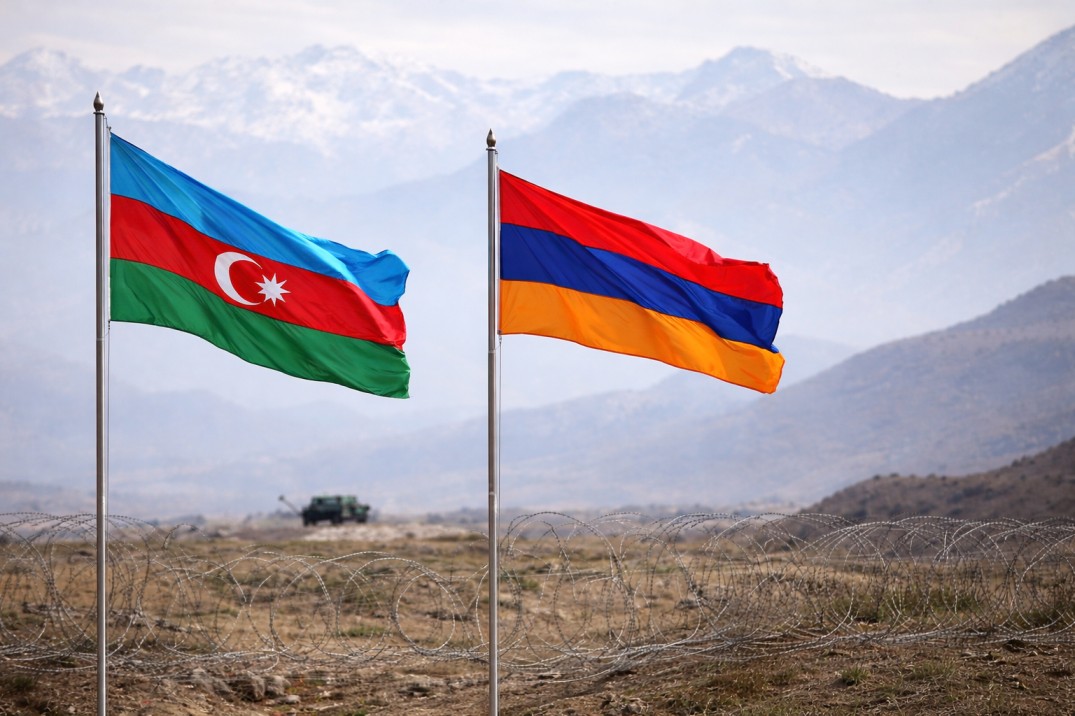
In late December, Azerbaijan’s foreign minister, Jeyhun Bayramov, outlined Baku’s vision for advancing the peace process in 2026, presenting it as evidence that normalization with Armenia is within reach and that the South Caucasus is entering a post-conflict era. Much of the international coverage echoed this optimism. Yet the ease with which Azerbaijan now defines the language, pace, and horizon of peace raises a more fundamental question. What kind of peace is being proposed, and for whom is it meant to endure?
The current process cannot be understood outside its political context. Armenia approaches negotiations not as an equal party, but as a defeated and heavily pressured state whose leverage has steadily eroded since 2020, and even more so after the forced depopulation of Artsakh in 2023. The core conflict was not resolved through negotiation or law, but through force, followed by diplomatic normalization. Law did not constrain violence; it followed it.
This matters because peace achieved through coercion privileges stability over justice and closure over accountability. It shifts the burden of adjustment onto the weaker side. In Armenia, this has produced a discourse that frames this sort of peace as inevitable and without alternative. While rooted in exhaustion and fear of renewed war, this language also narrows political imagination, delegitimizing debate over terms, rights, and long-term security. Peace becomes a moral imperative, regardless of conditions.
This dynamic is compounded by Azerbaijan’s internal political logic. Analyses grounded in the concept of ontological insecurity suggest that the Azerbaijani leadership derives legitimacy from the continual reproduction of Armenians as an existential adversary. In this framework, conflict is not an anomaly but a stabilizing mechanism. Military victory transforms, rather than ends, confrontation, making ongoing pressure and symbolic escalation politically useful.
External actors offer little correction. Russia’s collapse as a security guarantor has left Armenia exposed, while European engagement has focused on monitoring and connectivity rather than hard guarantees. Most troubling is what peace discussions exclude: the rights of displaced Armenians from Artsakh, accountability for forced displacement, and inclusive participation by civil society and affected communities.
Peace built on fear, silence, and erasure is fragile. Armenia must resist equating the absence of war with the presence of peace. A durable settlement must be grounded in law, credible security arrangements, and social legitimacy. Peace cannot be an agenda dictated by the stronger party. It must be a shared political project rooted in dignity, security, and agency.
















Subscribe to our newsletter