Russia continues to dominate Armenia’s trade portfolio despite steep drop in turnover
- (0)
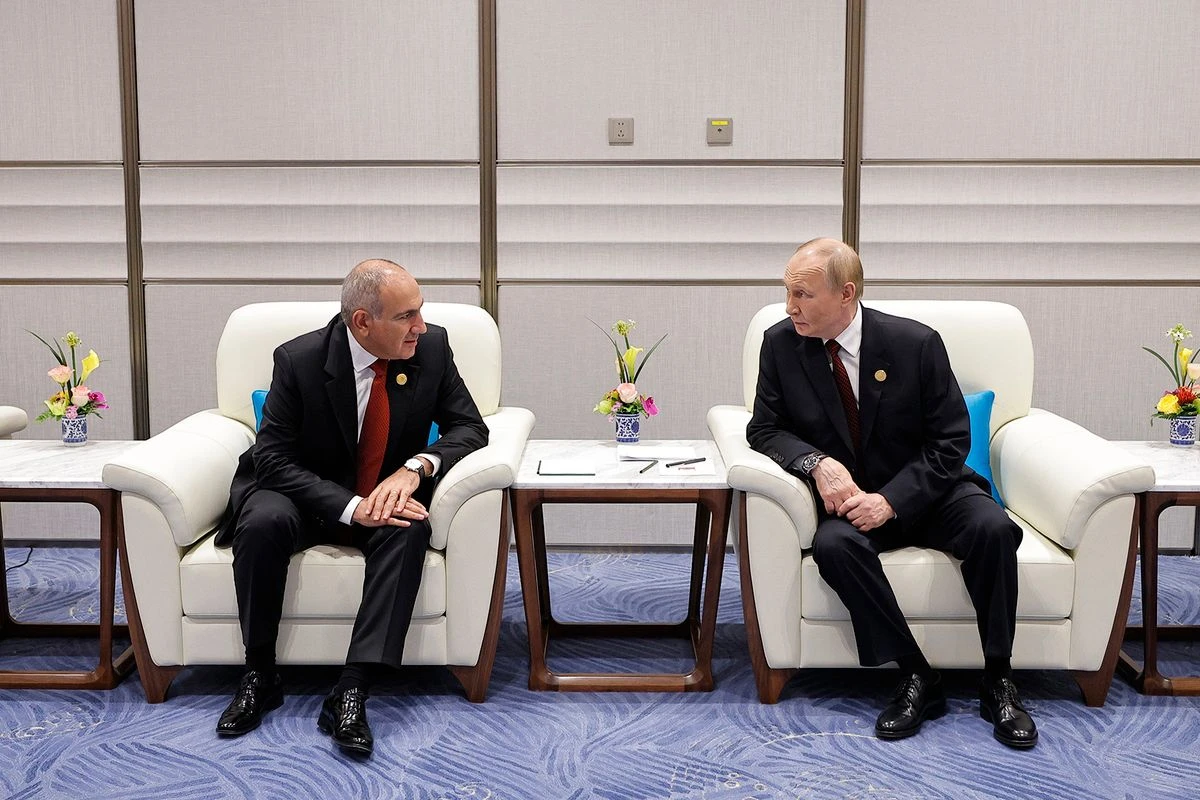
(Horizon Weekly) – Russia remained Armenia’s leading trading partner in 2025 even as bilateral trade volumes declined sharply, according to newly released figures from Armenia’s Statistical Committee.
Data for the January–November period show that total trade between Armenia and Russia fell to $6.7 billion, a nearly 50 percent decrease from the previous year. Despite the contraction, Russia still represented more than one-third (35.5 percent) of Armenia’s total foreign trade. China ranked a distant second with 12.5 percent, followed by the European Union at 11.8 percent.
The decline had been anticipated by Russian officials. Deputy Prime Minister Alexei Overchuk previously warned that Russian firms were becoming increasingly cautious about doing business with Armenia, citing unresolved political frictions between Moscow and Yerevan. Speaking to reporters, Overchuk confirmed that trade turnover in 2025 would fall significantly, estimating it at approximately $6 billion, down from $15.4 billion the previous year.
Economic observers in Armenia link the downturn primarily to a shift in trade patterns involving precious metals. Armenia had played a central role in facilitating large-scale exports of Russian gold and diamonds to international markets, particularly the United Arab Emirates. That activity drove a dramatic surge in Armenian exports to the UAE in 2024, but exports declined sharply in 2025, falling to $1.7 billion over the same reporting period. Customs data further indicate that Armenia’s gold exports declined fourfold in the first half of the year, with locally mined gold accounting for only a small share of the total.
The earlier surge in trade with Russia followed Moscow’s 2022 invasion of Ukraine and the subsequent Western sanctions regime. Armenian companies capitalized on those restrictions by re-exporting Western-made goods to the Russian market. That trade remained significant in 2025, including $332 million worth of mobile phone exports in the first six months alone.
The economic shift is unfolding against a backdrop of widening political differences. Prime Minister Nikol Pashinyan has moved to deepen Armenia’s engagement with the European Union, most notably through legislation adopted in April 2025 calling for the start of an EU accession process. Russian officials have responded by reiterating that EU integration is incompatible with continued participation in the Eurasian Economic Union, warning of potential economic consequences. While Yerevan insists it does not plan to leave the EEU, Armenian leaders have acknowledged that a strategic choice will eventually be unavoidable.