
September 16, 2026
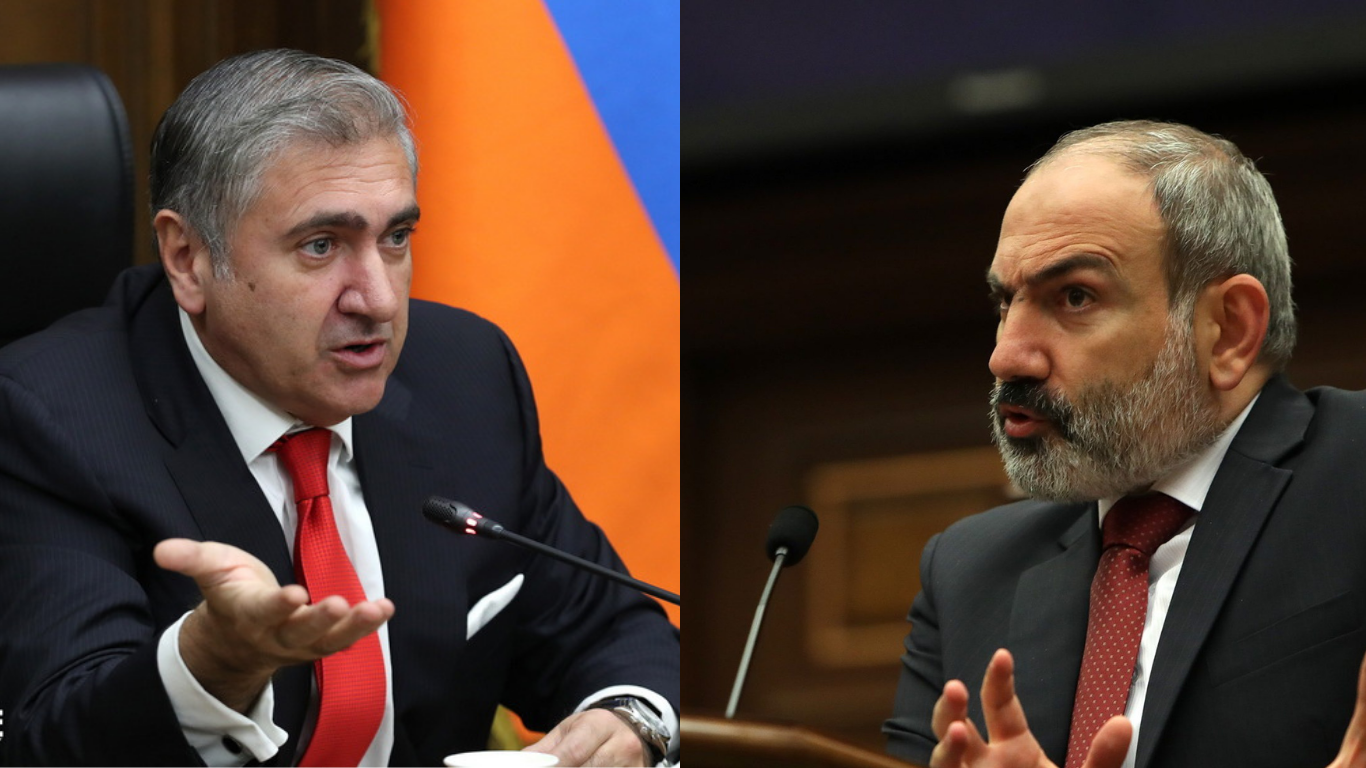
(Horizon Weekly) – During a parliamentary briefing, Artur Khachatryan, an MP from the “Armenia” faction, delivered a forceful critique of Prime Minister Nikol Pashinyan’s newly released documents on the Nagorno-Karabakh negotiations, arguing that the published material is deliberately incomplete and fails to reflect the actual substance of diplomatic discussions.
Khachatryan specifically challenged the government’s portrayal of the Key West process. Instead of presenting the actual document, he said, the government circulated “a random assortment of phrases allegedly provided to Pashinyan by Levon Ter-Petrosyan’s 2008 campaign headquarters, an informal compilation with no official provenance.”
According to Khachatryan, the real Key West understandings painted a far different picture than what Pashinyan is now attempting to promote. Under those terms, all territories within the former Nagorno-Karabakh Autonomous Region that were under Armenian control were to be recognized under Armenian sovereignty, and Azerbaijan lodged no territorial claims. The Lachin Corridor shared the same legal status as Nagorno-Karabakh and was regarded as part of Armenia. All regional transportation links were to be reopened.
He further clarified that, in return, Armenia would provide Azerbaijan with a corridor explicitly described in the negotiations, but the land and airspace of that corridor remained under Armenian jurisdiction. “Azerbaijan was essentially granted the right to lay asphalt, nothing more,” he said. “That was the actual arrangement.”
The Armenian government recently uploaded a curated set of documents to its official website, presenting them as a comprehensive archive of pre-2020 negotiation records, including internal memos and public materials.
While the government insists that this release demonstrates a commitment to transparency, the highly selective nature of the documents tells a very different story. By choosing only those files that reinforce its preferred narrative and conspicuously omitting materials that contradict Pashinyan’s post-2020 justifications, the administration appears more interested in retroactively sanitizing its record than in offering the public a complete and honest account of the peace process.
This tactic is not new: since 2020, the government has repeatedly framed the negotiation history in a way that shifts responsibility onto previous Armenian leaders while minimizing its own catastrophic misjudgments. Presenting partial records as “the full truth” allows Pashinyan to claim openness while manipulating the very historical record he claims to unveil.
Khachatryan’s comments underscore a broader concern shared by many analysts: without the release of complete, original, and unaltered documents, the government’s initiative amounts to little more than a controlled narrative exercise, one that risks deepening mistrust at a moment when the Armenian public deserves clarity, not another round of political misdirection.















Subscribe to our newsletter
