Gegham Manukyan exposes Pashinyan’s lies on Artsakh negotiations
- (0)
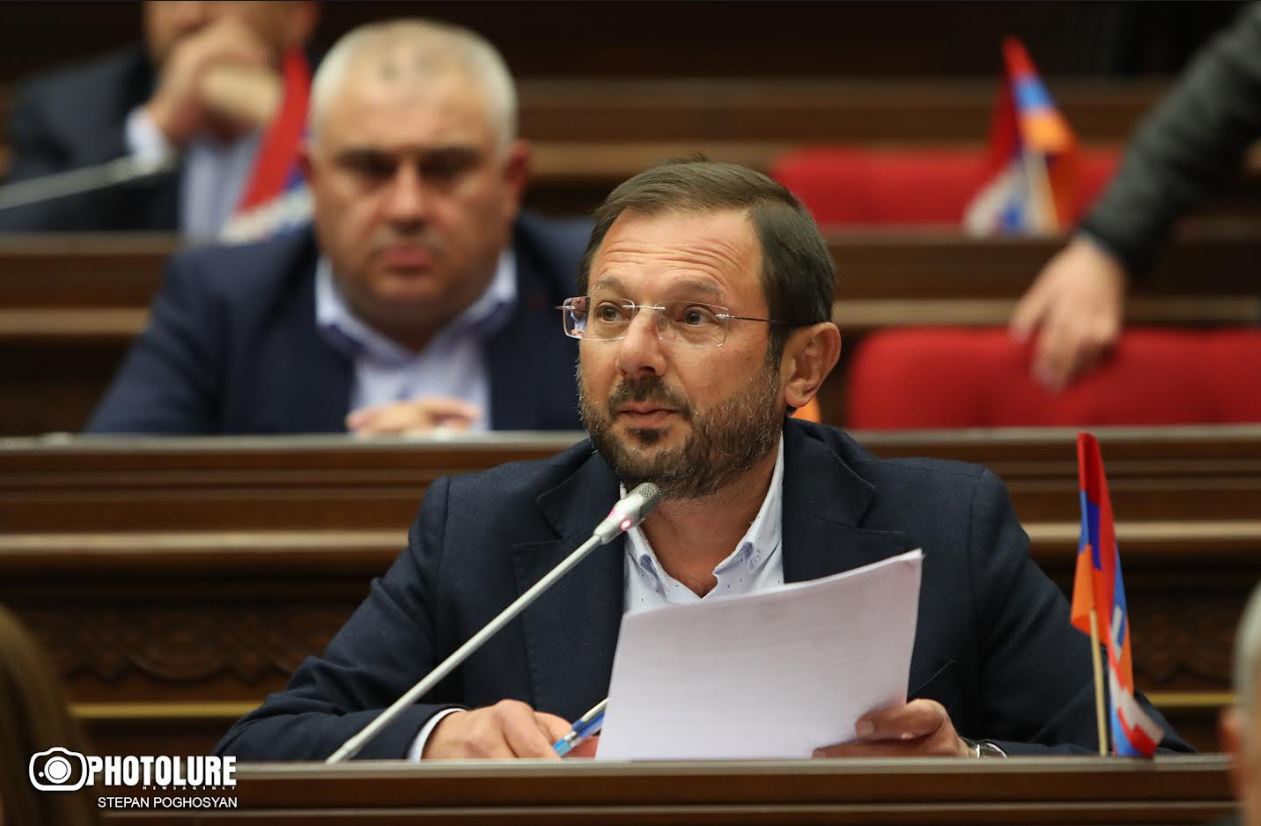
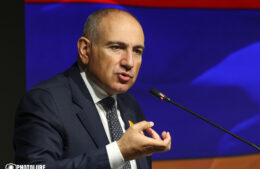
(Horizon Weekly) – In a strongly worded message broadcast live on Facebook, Gegham Manukyan, member of the ARF-D Supreme Body of Armenia and MP of the “Armenia” parliamentary faction, stated unequivocally that Prime Minister Nikol Pashinyan is once again misleading the public by selectively publishing documents related to the Artsakh negotiations. According to Manukyan, Pashinyan’s latest disclosure, presented as an act of transparency, was instead another deliberate attempt to manipulate public opinion.
Manukyan noted that despite claims from the government, the full set of diplomatic records was not released. Most of the documents shared by Pashinyan were already publicly available. Only one, the 2019 OSCE Minsk Group proposal, had not been previously published, despite years of demands from the opposition. He stressed that every available document, including the newly published 2019 proposal, clearly refers to a final status decision based on the will of the people of Artsakh. This directly contradicts Pashinyan’s narrative that previous negotiations had framed Artsakh as part of Azerbaijan.
“Pashinyan would not be Pashinyan if he did not lie and manipulate here as well,” Manukyan said, highlighting what he described as a pattern of falsifying the historical record.
One of the most notable omissions, he continued, was the Key West document, which outlines a process through which Artsakh would join the Republic of Armenia. There was no mention of ceding Meghri or creating a Meghri corridor. Instead of releasing this document, the government circulated a draft once printed in Pashinyan’s own newspaper years ago, a proposal that had been rejected at the time. Manukyan argued that the authorities are now using this discarded draft to fabricate the idea that the question of yielding Meghri had been part of the negotiations.
“All the documents make it clear that Artsakh was going to be Armenian,” Manukyan emphasized. “Yet in 2019 Pashinyan rejected a viable proposal. In 2020, again in 2022, and ultimately in 2023, Artsakh was stripped of its Armenian identity under these very authorities.”
Manukyan’s remarks add to the growing criticism of the government’s approach to Artsakh diplomacy. His comments underscore what many analysts view as an ongoing effort by Pashinyan’s administration to retroactively justify politically damaging decisions by rewriting the history of negotiations. For Manukyan, the selective release of documents is not transparency. It is another attempt to evade responsibility for decisions that have reshaped the fate of Artsakh and Armenia.
On December 2, in what critics describe as a superficial attempt to appear transparent, Pashinyan’s government disclosed a set of documents relating to the Artsakh negotiation process.