Tatoyan attacks Kocharyan and Sargsyan
- (0)
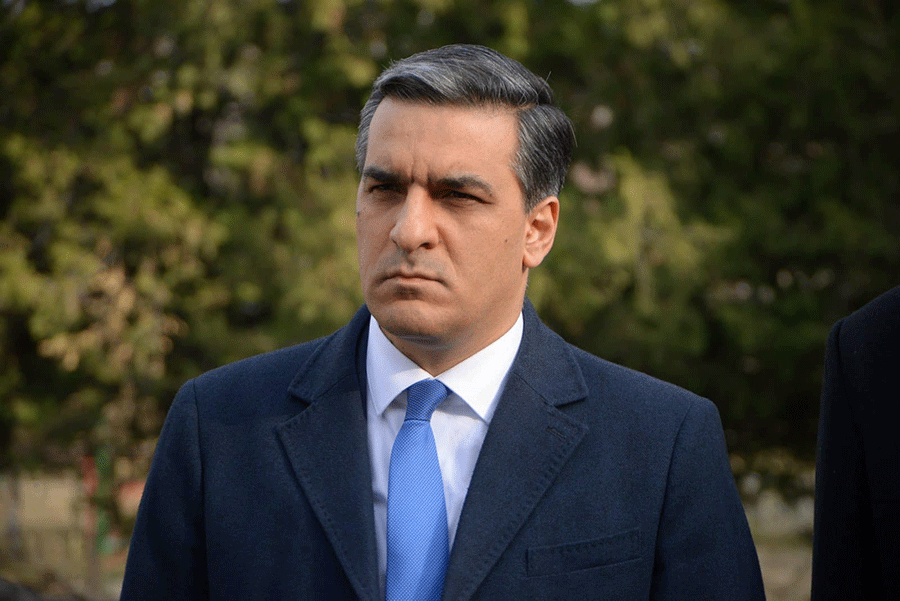
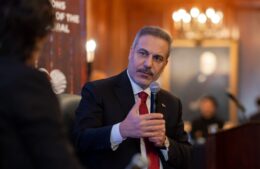
(Horizon Weekly) – A newly launched opposition group led by former Human Rights Defender Arman Tatoyan has entered Armenia’s political stage with sharp warnings for former Presidents Robert Kocharian and Serzh Sargsyan. But while Tatoyan’s remarks captured headlines, they also prompted fresh skepticism about his political calculus and the broader implications of his rhetoric.
Tatoyan argued this week that if Kocharian or Sargsyan participate in the 2026 parliamentary elections, their presence alone would strengthen Prime Minister Nikol Pashinyan’s chances of remaining in power. According to him, Pashinyan would once again use their controversial public reputations to rally support for the ruling Civil Contract party. “If you really want Pashinyan to lose, do not enter the race,” Tatoyan urged, suggesting that any contest involving the former leaders would automatically favor the prime minister.
It is an attention-grabbing claim, but one that rests heavily on Tatoyan’s own assumptions. Armenia’s political landscape has shifted significantly in recent years, and voter attitudes toward both the current and former leaderships remain complex and fluid. Whether Pashinyan would “always win” against his predecessors is far from certain, particularly amid ongoing national crises, deep political fatigue, and growing public disillusionment.
Tatoyan, once a senior official during Sargsyan’s administration and later an outspoken critic of Pashinyan’s post-war policies, insisted that if the ex-presidents ignore his appeal, they risk unwittingly serving the government’s interests. His warning, however, was immediately challenged by Armenian Revolutionary Federation leader Ishkhan Saghatelyan. He dismissed Tatoyan’s remarks as adopting Pashinyan-style rhetoric, suggesting the new initiative may be misdiagnosing both the opposition landscape and the electorate.
Kocharian’s bloc finished second in the 2021 elections, and the former president has already confirmed his intention to run in 2026, arguing that no one individual can prevent the emergence of alternative opposition forces. Sargsyan, meanwhile, has not announced his plans, reiterating instead that real political change may come from public mobilization or a parliamentary vote of no confidence.
Tatoyan’s new movement, Wings of Unity, formally launched in October and includes former State Revenue Committee head Davit Ananian among its early members. Whether this fledgling group will gain traction remains to be seen. Its sharp opening salvo has certainly sparked debate, but it has also raised questions about whether framing the opposition’s future around the presence or absence of two former presidents is a viable political strategy, or merely an oversimplification of Armenia’s far more complicated reality.
For now, Tatoyan’s warning hangs in the air, but the political field he seeks to influence is still in motion. Armenia’s opposition forces are recalibrating, new actors are emerging, and public sentiment is increasingly shaped by events rather than personalities. Whether Tatoyan’s theory holds will depend less on his cautionary appeals and more on how the country’s fractured political currents evolve in the months ahead.
Related Articles

September 22, 2026