New two-volume history chronicles Armenian Church under Soviet rule
- (0)
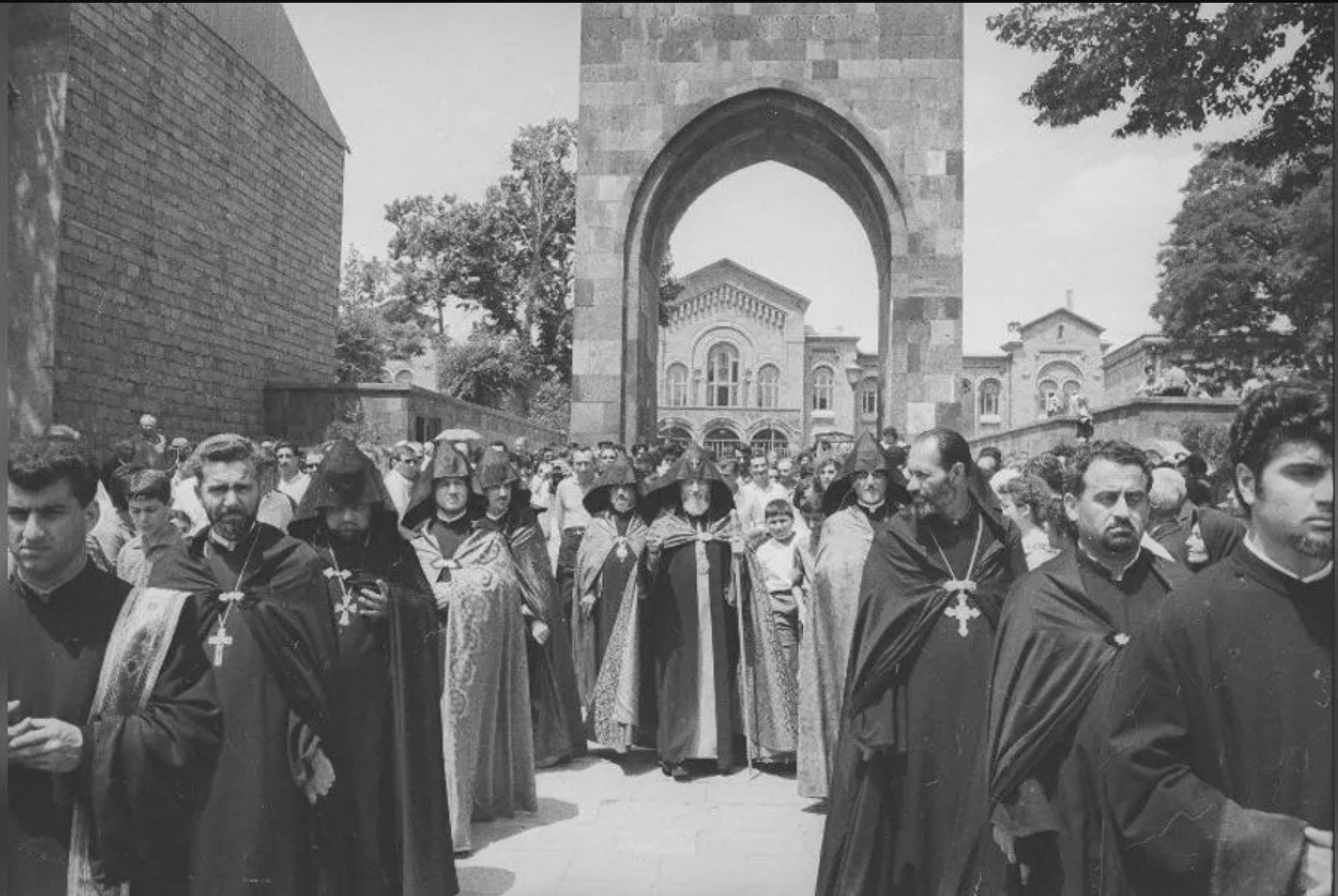
The Gomidas Institute has announced the publication of Catholicos and Commissar: The Armenian Church Under the Soviet Regime, a landmark two-volume history by British historian Felix Corley. Spanning nearly 1,600 pages, the study is the most comprehensive account to date of how the Armenian Apostolic Church endured, adapted and ultimately re-emerged as a pillar of Armenian national identity during the Soviet era.
Drawing on rare archival documents, memoirs and interviews, Corley charts the tumultuous relationship between the Soviet state and one of the world’s oldest Christian traditions. The work captures both the ruthless strategies of repression employed by the Kremlin and the subtle tactics of resilience deployed by church leaders to keep faith alive across seven decades of dictatorship.
Volume I: From Revolution to Purge
The first volume traces the story from the upheavals of 1917 through the devastation of Stalin’s Great Terror. After the Bolshevik Revolution, church lands were seized, schools shuttered and clergy persecuted. By 1938, Catholicos Khoren had been murdered and almost every parish across Soviet Armenia was closed. Yet, after World War II, Stalin permitted the election of a new Catholicos, Gevorg VI, whose carefully managed cooperation with the regime allowed the church to regain limited visibility.
Related Articles
October 09, 2026