Ken Khachigian’s Memoir is a Master Class in Advocacy and Perseverance
- (0)
BY DR. KATHERINE FUNDUKIAN
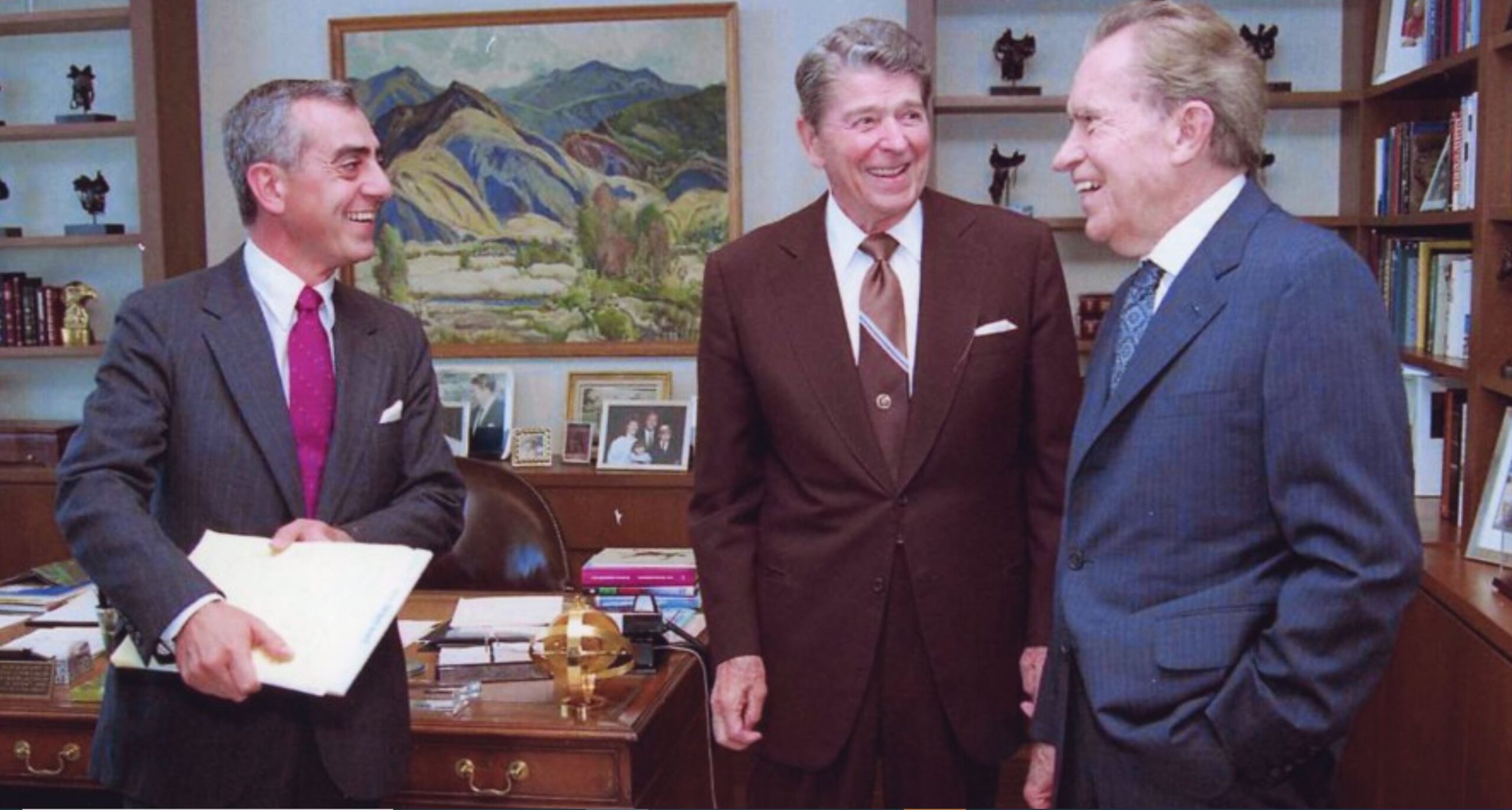
At a time when Armenia needs allies around the world and advocates who are in the room where global events are shaped, speechwriter Ken Khachigian’s memoir, “Behind Closed Doors: In the Room with Reagan and Nixon,” is a reminder that we have had such prominent people. Ken Khachigian lived and shaped history with arguably two of the most influential US leaders of the mid to late 20th Century: Richard Nixon and Ronald Reagan. While very different in style, these two American presidents agreed on one person in whom they trusted implicitly: Ken Khachigian.
Ken Khachigian, the son of farmers in Visalia, grew up listening to the stories whispered by the adults in the room about those who escaped the genocide. They were first person accounts of resilience. His memories are filled with vague stories of survival and loss – and the nagging feeling that he should have asked more questions when he’d had the chance.
An excellent student and capable statesman in his own right, having been elected class president every year during high school, Ken forged his own path in his second year at Columbia Law School when, in 1967, he contacted Richard Nixon’s law office to volunteer on his “improbable comeback to the presidency.” That cold call – and ensuing in-person Khachigian continued working with Nixon after both departed the White House in 1974. During this period, he settled his young family in southern California and provided invaluable support to Nixon, assisting him in writing two books and preparing him for the pivotal Frost Nixon interviews. He was also actively working on George Deukmejian’s gubernatorial bid. So, when Ronald Reagan asked him to join his team during the final seven weeks of the 1980 campaign, Khachigian was torn. While an incredible opportunity, it would also uproot his family and necessitate withdrawing from his many commitments. Here, and in instances throughout the book, Khachigian drew upon his values when faced with tough decisions. He countered with an unusual offer by crafting a job description that allowed him to stay in California and travel, as needed, to support the presidential candidate.
Khachigian developed a strong relationship with both Ronald and Nancy Reagan, based on trust and loyalty. The Reagans had come to trust Khachigian’s insights and ability to authentically fashion Reagan’s thoughts into well-developed speeches. In the book, Khachigian refers to himself as the “Word Donkey.” However, that “Word Donkey” soon became the “Fireman,” able carve a path forward for Reagan first, during the most tenuous moments of the 1980 campaign, and then whenever firestorms erupted during either of Reagan’s two terms in the Oval Office. Reagan’s historic question of the 1980 debate with Jimmy Carter, “Are you better off today than you were four years ago?” haunts presidential debates and campaigns to this day.
When President Reagan was accused of anti-semitism after accepting an invitation from German Chancellor Kohl to visit the Bergen-Belson concentration camp, Khachigian reframed the trip with a different historical lens. He was inspired by the 70th Commemoration of the Armenian Genocide held at Arlington Cemetery. “The music and the prayers in Arlington jolted me with reminders of my heritage and brought back those plaintive memories from my childhood. In 1915 there was a Bergen-Belsen in the Syrian desert that history had forgotten, and the pain and suffering endured by the victims and the survivors of the Armenian Genocide suddenly made my mission very real…” The resulting speech is considered “the best speech of his [Reagan’s] career.”
Ken Khachigian’s strength and talent were honed by his deep connection to his Armenian roots, with the education and opportunities afforded in the United States. In his own words, he was “jarbig.” His success required unwavering dedication, initiative, and perseverance. He overcame challenges and remained loyal to his friends during the most difficult of times. His gift in telling the stories and framing the historical lens of events shaped conversations behind and in front of closed doors. Ken Khachigian demonstrates, through his hard work and his accomplishments, the potential so many of us (Armenian, children of immigrants, afforded an excellent education) can and should seize.attempt when his first letter went unanswered – shaped Khachigian’s brilliant career.
Related Articles
October 09, 2026