Why Armenia Needs Realism and Serious Debate, Not Personal Attacks
- (0)
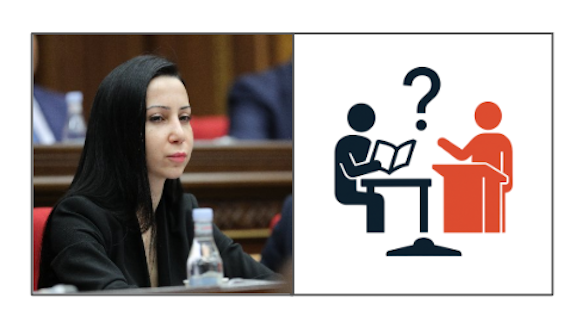
Answering Member of Parliament Maria Karapetyan’s Attack on Armenian Scholars
BY RAFFY ARDHALDJIAN
Maria Karapetyan, a leading voice in Armenia’s ruling Civil Contract party and often described as one of its ideologues, recently wrote a Facebook post criticizing two Armenian scholars: Dr. Arman Grigoryan and Dr. Arthur Khachikian. Instead of engaging with their ideas, she accused them of hiding behind Western academic authority to disguise contempt for their own nation.
As she put it: «Պրոֆեսորներ Խաչիկյանն ու Գրիգորյանը Հայաստանի և նրա ժողովրդի կամ թեկուզ նրա մի մասի նկատմամբ իրենց արհամարանքը հաճախ փորձում են թաքցնել արևմտյան ակադեմիական շրջանակների գիտական դիրքորոշումների հետևում»
“Professors Khachikian and Grigoryan often try to hide their contempt toward Armenia and its people, or at least part of its people, behind the scientific positions of Western academic circles.”
This is not criticism of ideas. It is a personal attack on motives and character.
It is worth remembering who is being criticized. Karapetyan holds a Bachelor’s degree in linguistics and a Master’s degree in Peace Studies from the University of Roma Tre. Dr. Arman Grigoryan holds a Ph.D. in Political Science from Columbia University and an M.A. in International Relations from the University of Chicago (my alma mater), where he studied directly under John Mearsheimer, one of the world’s foremost realist theorists. Dr. Arthur Khachikian holds a Ph.D. in International Relations from Stanford University, with his doctoral research focused on great power politics. These are not outsiders who “hide” behind Western names. They are Western-trained scholars who bring decades of serious research into Armenia’s debates.
In her post, Karapetyan writes that realism is a theory about “especially great powers” and that Mearsheimer “simply has no theory about small states.” Yet in the same piece she cites his 1993 article, titled “The Case for a Ukrainian Nuclear Deterrent,” which argues how a vulnerable state like Ukraine should survive against a great power. You cannot dismiss Mearsheimer as irrelevant to small states while relying on his advice to one.
What is most troubling is that Karapetyan herself appeals to Mearsheimer’s authority instead of making or addressing an argument. She never specifies which part of (in this case) Dr. Grigoryan’s arguments is illogical or unsupported by evidence. Which of his claims was “mechanistically” applied to Armenia in a way that should not have been? The devil is in the details, yet Karapetyan chooses to stay on the surface.
In the larger context, much of Armenia’s foreign policy debate is in fact about great power rivalry, including the West, Russia, and others, and about what motivates them. In that sense, realism is not only relevant but essential to our national discourse.
Most strangely, she then brings in Jeffrey Sachs, writing: “They also quote Jeffrey Sachs, to whom Khachikian and Grigoryan refer as well…” She quickly admits that Sachs “is not a realist at all,” yet highlights his view that Armenia, Azerbaijan, and Georgia should “stand behind one another” and make the South Caucasus into a crossroads. But Sachs is a development economist, not a realist or a specialist in small-state security. Citing him adds little beyond prestige. His hopeful vision of cooperation, however admirable, does not resolve the harsh dilemmas Armenia confronts, nor the realist context that Dr. Grigoryan and Dr. Khachikian have tried to highlight in their interviews.
Today many in Armenia’s national discourse see themselves as partisan, taking sides in the bitter political fights of the day, even while the nation is still in post-war crisis. I do not come from the same ideological schools as scholars like Dr. Grigoryan and Dr. Khachikian, but I am a strong advocate for rigorous debate. Some of us do not take a rigid binary view in these discussions. We try instead to contemplate the shades of grey that Armenia and the nation now face. Informed opinions are shaped through dialogue, debate, and genuine intellectual give-and-take. This kind of exchange is too often absent in today’s Armenian politics.
Armenia faces existential challenges that demand rigorous analysis, not political theater. When politicians question scholars’ patriotism rather than their arguments, they impoverish national discourse at precisely the moment when sophisticated thinking is most crucial. Dr. Grigoryan and Dr. Khachikian have dedicated their careers to understanding how small states navigate great power competition. Their expertise, earned through decades of research at world-class institutions, with publications in top journals and a solid citation record, deserves engagement, not personal attacks.
If politicians like Maria Karapetyan prefer to score cheap points through flawed arguments and personal criticism, drawn from “linguistic or peace schools education” rather than serious training in international relations, it deserves to be challenged with facts and sound reasoning. The scholars that Karapetyan attacks have never hidden behind anybody’s authority; they have advanced their own arguments and substantiated them.
As a small nation, Armenia’s future depends on realism, serious debate, and working with each other, not on personal attacks. We need to foster a culture where disagreements sharpen our thinking rather than divide us.
Raffy Ardhaldjian is a Fletcher School graduate and advisor to tech companies, public institutions, and NGOs. In his spare time, he writes about strategic topics spanning Armenia and the Armenian diaspora.