What you need to know so far about the Armenian elections
- (0)
(Horizon Weekly / YEREVAN) — Armenia’s next parliamentary elections are scheduled to take place on June 7, 2026, following a decree signed by President Vahagn Khachaturyan. With just months remaining, the country’s political landscape is rapidly taking shape, as both ruling and opposition forces position themselves for what is expected to be one of the most consequential elections in recent years.
Against the backdrop of mounting public dissatisfaction, concerns over democratic backsliding, and growing concentration of power in the hands of the current government, opposition forces are intensifying efforts to challenge Prime Minister Nikol Pashinyan’s continued rule.
Opposition camp: alliances, negotiations, and strategic calculations
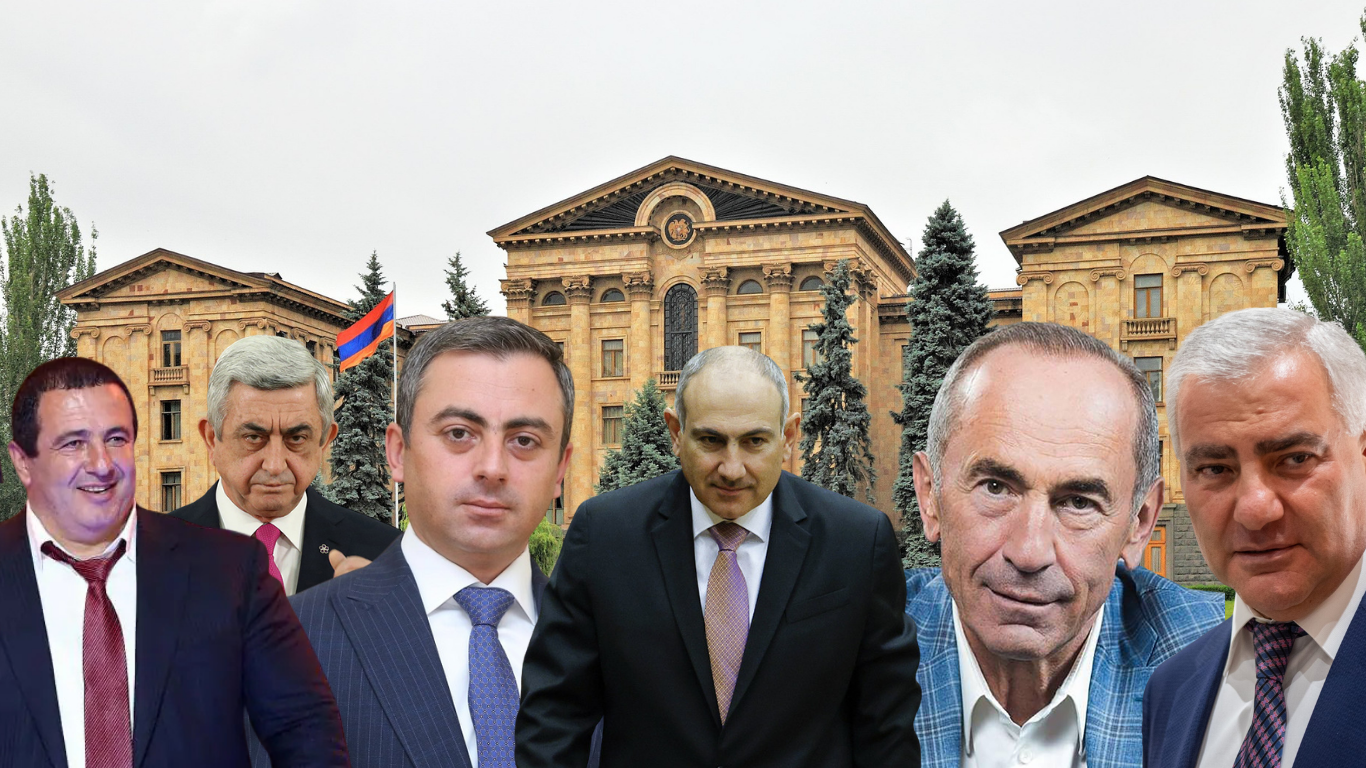
A central pillar of the opposition remains the “Armenia” Alliance, led by former president Robert Kocharyan and anchored by the Armenian Revolutionary Federation (ARF). The alliance is inclined to maintain its current format while remaining open to the inclusion of new political forces and independent figures. Discussions are ongoing to expand the alliance to strengthen public trust and electoral competitiveness.
ARF leaders have reaffirmed their commitment to participate in the elections through a broad coalition, emphasizing unity, national values, and institutional stability. Negotiations are primarily focused on consolidating opposition forces around a realistic, coherent political platform rather than on fragmented individual campaigns.
Kocharyan has indicated that leadership decisions within the alliance will be based on surveys, with the primary goal of maximizing electoral support. He has also stressed that any opposition force entering parliament must rule out cooperation with the ruling Civil Contract party.
Emergence of new political forces
A significant development in the opposition field is the rise of the “Strong Armenia” party, which was founded by the political movement of businessman Samvel Karapetyan. The party plans to participate independently and present itself as a new political alternative built around economic reform and technocratic leadership.
Although Karapetyan himself is ineligible to run due to dual citizenship, the movement is expected to announce Narek Karapetyan as its prime ministerial candidate. The party emphasizes economic revival and professional governance, while keeping some distance from established political blocs.
Meanwhile, former National Security Service chief Artur Vanetsyan, former Yerevan mayor Hayk Marutyan, and former Human Rights Defender Arman Tatoyan have all announced plans to participate independently, signalling continued fragmentation within parts of the opposition field.
Serzh Sargsyan and the Republican Party
The Republican Party, led by former president Serzh Sargsyan, has not yet made a final decision on whether to participate. Internal discussions are ongoing, and party leaders have acknowledged the difficulty of forming a unified opposition front.
At the same time, Republicans have not abandoned their impeachment agenda against Pashinyan, arguing that institutional and street-level mobilization must go hand in hand in challenging the government.
Gagik Tsarukyan and political consolidation
Another major center of opposition activity is forming around Prosperous Armenia leader Gagik Tsarukyan. Several political forces have announced their intention to cooperate with him, viewing his platform and organizational capacity as a potential unifying axis.
Tsarukyan’s political program, “A Proposal to Armenia,” focuses on social cohesion, economic development, and merit-based governance. While the exact format of his participation remains undecided, consolidation efforts around his leadership are intensifying.
Extra-parliamentary opposition and calls for unity
Extra-parliamentary opposition forces, including the Armenian National Congress, continue to argue for a unified or semi-unified opposition front capable of challenging Civil Contract’s dominance.
Various models have been proposed, including joint committees to select leadership and candidates, but disagreements over political direction and leadership continue to slow progress.
Despite public declarations of commitment to unity, competition among opposition forces remains a major obstacle to full consolidation.
Ruling party: confidence amid growing public skepticism
The ruling Civil Contract party plans to participate independently and has begun finalizing its candidate list. Party leaders express confidence in securing another electoral victory and even expanding their parliamentary majority.
However, this confidence is increasingly questioned by critics, who point to shrinking political pluralism, pressure on institutions, selective law enforcement, and growing executive dominance as signs of democratic regression.
Several prominent figures have already been excluded from Civil Contract’s candidate list, reflecting internal power consolidation and stricter party control.
Electoral code and parliamentary thresholds
Under Armenia’s electoral code, political parties and alliances are required to meet established vote thresholds in order to gain representation in parliament. Parties running on their own must receive no less than 4 percent of the nationwide vote, while electoral blocs are subject to higher requirements, ranging from 8 to 10 percent depending on the number of member parties.
The National Assembly is composed of a minimum of 101 deputies, with additional seats added when necessary under the electoral system. At least three political forces are guaranteed entry into parliament, even if the third-ranked party or alliance fails to meet the formal threshold.
Parliamentary mandates are distributed in proportion to each party’s share of the national vote. In addition, four seats are specifically designated for national minorities, including Assyrians, Kurds, Russians, and Yazidis. The Electoral Code also includes gender balance requirements. Party lists must be structured so that no less than 33 percent of candidates in leading positions belong to each gender.
These rules play a decisive role in shaping electoral strategies. Smaller parties often face pressure to join alliances, while larger blocs must carefully weigh whether coalition formats strengthen or weaken their overall appeal.
Foreign influence, EU support, and regional pressures
The election campaign is unfolding amid growing concerns about foreign interference and external influence.
The Armenian government has requested assistance from the European Union to counter alleged hybrid threats and disinformation. While officials describe this cooperation as technical support for democratic processes, opposition figures warn that it could be used to justify tighter political controls and limit dissent.
At the same time, remarks by Turkish Foreign Minister Hakan Fidan have sparked controversy. In commenting on regional normalization and upcoming elections, Fidan implicitly praised Pashinyan’s “constructive role” and noted his leading position in polls. Many observers interpreted this as a tacit endorsement of the current government by Ankara.
Opposition leaders argue that such statements reinforce fears that regional powers view the current administration as politically convenient, even when its policies undermine national interests and sovereignty.
A high-stakes election for Armenia’s future
With less than four months remaining, Armenia is approaching a decisive political moment. Opposition forces agree that the June elections will determine not only the next government, but also the country’s democratic trajectory, institutional integrity, and national direction.
While efforts toward consolidation continue, much will depend on whether opposition actors can overcome personal and organizational rivalries in favour of a shared national agenda.
For the ARF and its allies, the emphasis remains on building a principled, broad-based coalition rooted in patriotism, social justice, and state-centred governance.
As campaigning intensifies, voters will be asked to weigh promises of stability and reform against growing concerns over democratic backsliding, governance failures, and declining public trust.
The June 7 elections are shaping up to be not merely a contest of parties, but a defining test for Armenia’s political future.