Ապրիլ 02, 2026
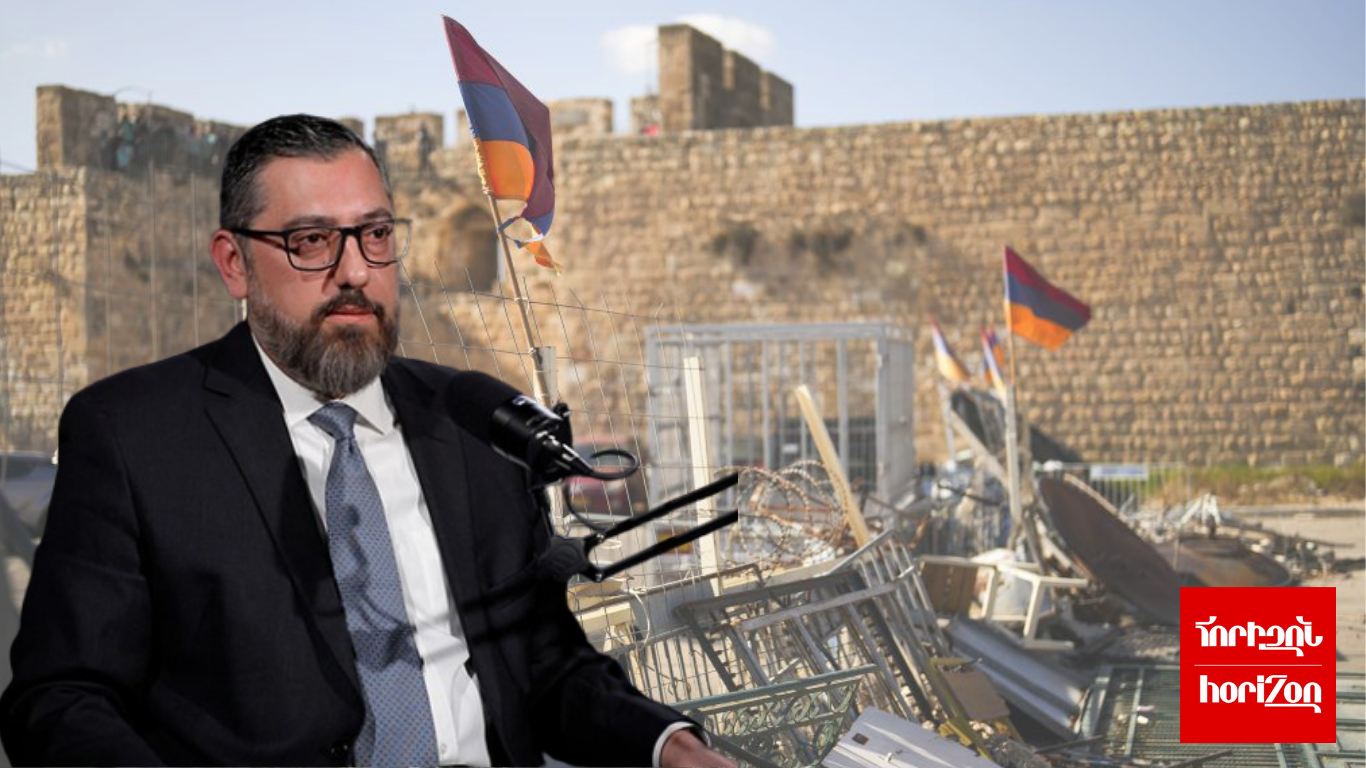
Q: Mr. Kerkonian, can you give us a clear picture of what is really happening right now in the Armenian Quarter of Jerusalem, particularly with the Cow’s Garden property, and how the local community and church leadership are navigating this complex and fast-changing situation?
A: First, let me say how deeply I appreciate your interest in this issue. What is unfolding in the Armenian Quarter is not a routine dispute—it is a crisis of historic magnitude. It will shape the future of the Armenian presence in Jerusalem and, in many ways, the future character of Jerusalem itself. The centuries-old Armenian community, one of the oldest continuous Christian communities in the world, is now confronting an existential threat. The struggle over the Cow’s Garden—the Armenian Garden—is at the heart of that challenge.
Today, Armenian Jerusalemites are standing firm against a purported land deal that would have transferred control of a strategically vital parcel to outside actors. Had it proceeded, this deal would have immediately compromised Armenian access to their own religious, cultural, and communal institutions within the Old City. The property at issue is not peripheral; it is the single largest open tract in the Old City and occupies one of the most elevated and sensitive positions along the Mount Scion ridge. Its loss would have fractured the territorial continuity of the Armenian Quarter in a way that could not be undone.
The Armenian Quarter is one of the four historic quarters recognized under the Status Quo governing Jerusalem. It sits at a geopolitical and cultural crossroads, between the Christian and Jewish Quarters, and its continuity is essential not only to the survival of the Armenian Patriarchate and community, but to the broader stability of a region already marked by volatility. The Armenian presence has long served as a moderating and stabilizing force in the Old City; weakening that presence risks unsettling a delicate balance that has endured for centuries.
Today, the Armenian community and the Armenian Patriarchate stand united to nullify the purported 98-year lease that threatens to sever more than 10,000 square meters of historic Armenian land from the Quarter. Their efforts constitute a defence of continuity, identity, and the integrity of one of Jerusalem’s foundational communities.
Q: How did this controversial land deal come about in the first place? What do we now know about the lease agreement that was signed with the Israeli investor, and why has it been deemed illegitimate by the Armenian Patriarchate’s General Assembly?
A: The origins of this land deal are now much clearer than they were when it first surfaced. What we know today is that the purported lease was never properly authorized under the governing rules of the Armenian Patriarchate. Under the Bylaws of the Brotherhood of St. James, which function as the internal constitutional framework of the Patriarchate, any long-term lease of immovable property requires the explicit approval of the Patriarchate’s General Assembly. That approval is not discretionary; it is a mandatory condition for validity.
In this case, no such approval was ever obtained. The agreement was negotiated and signed without the knowledge, deliberation, or affirmative vote of the Brotherhood. When the details finally emerged, it became evident that the lease extended far beyond Cow’s Garden itself. It encompassed additional parcels surrounding the Armenian Quarter and sought to transfer control of more than 10,000 square meters to an Israeli company that, as subsequent investigation revealed, is owned by a UAE-based entity with opaque beneficial ownership.
Upon reviewing the facts, the Patriarchate’s General Assembly concluded that the purported lease was ultra vires—executed without lawful authority—and therefore null and void. Their decision reflects both the legal and institutional principle that the Brotherhood cannot be bound by a transaction that bypassed its own constitutional procedures, especially one implicating such strategically significant property in the heart of the Old City.
In short, the lease was deemed illegitimate by the General Assembly because it was never validly approved, it violated the Patriarchate’s internal laws, and it sought to transfer control of critical historic land to entities whose interests and ownership remain unclear.
Q: You have played a key role in coordinating the legal response to this crisis. Could you walk us through the steps that have been taken, both legally and diplomatically, to challenge the deal and to safeguard the integrity of the Armenian Quarter?
A: The response to this crisis has been both extensive and coordinated, reflecting the seriousness of what is at stake. When the issue first came to light, we moved quickly to assemble an international legal team and deployed to Jerusalem to conduct a comprehensive fact-finding mission. Our goal from the start was twofold: to initiate a robust legal challenge to the purported lease, and to ensure that the Armenian Quarter—its institutions, land, and community—received the diplomatic protection that such a historic crisis warrants.
Legally, the Armenian community and the Armenian Patriarchate have each brought separate actions before the Jerusalem District Court, pursuing distinct but complementary lines of argument.
The Armenian Community’s case rests on two core principles. First, under the Bylaws of the Brotherhood of St. James, the Patriarchate’s General Assembly must affirmatively approve any long-term disposition of immovable property. That vote never occurred, rendering the purported lease legally void. Second, the Cow’s Garden is widely understood to be waqf property—held in trust for the Armenian community. The Patriarchate, acting as trustee, cannot alienate the property in a manner that undermines the community’s beneficial interest. A lease that strips the community of access, continuity, and control violates the very nature of that trust.
The Armenian Patriarchate’s case advances its own claims, including challenges based on material misrepresentations alleged at the time the agreement was executed. Taken together, these actions form a comprehensive legal challenge to the validity, enforceability, and legitimacy of the purported 98-year lease. Both cases are now actively pending.
On the diplomatic front, a growing number of states have expressed concern over the threat to the Armenian presence in the Old City, a presence that is not merely historical, but essential to Jerusalem’s religious and cultural balance. Keeping the international community informed and mobilized has been critical to ensuring that the situation does not unfold in isolation or in silence.
Finally, the Armenian community itself has maintained a constant physical presence on Cow’s Garden. For nearly two years, young Armenians have manned a mission tent on-site every single day and night, as a peaceful but resolute safeguard against repeated attempts by outside interests to enter or seize the land by force while litigation is pending. These attempts have been repelled, and the community has succeeded in maintaining continuous control of the property throughout this period.
Taken together, the legal, diplomatic, and on-the-ground strategies form a unified response aimed at one objective: safeguarding the integrity, continuity, and future of the Armenian Quarter.


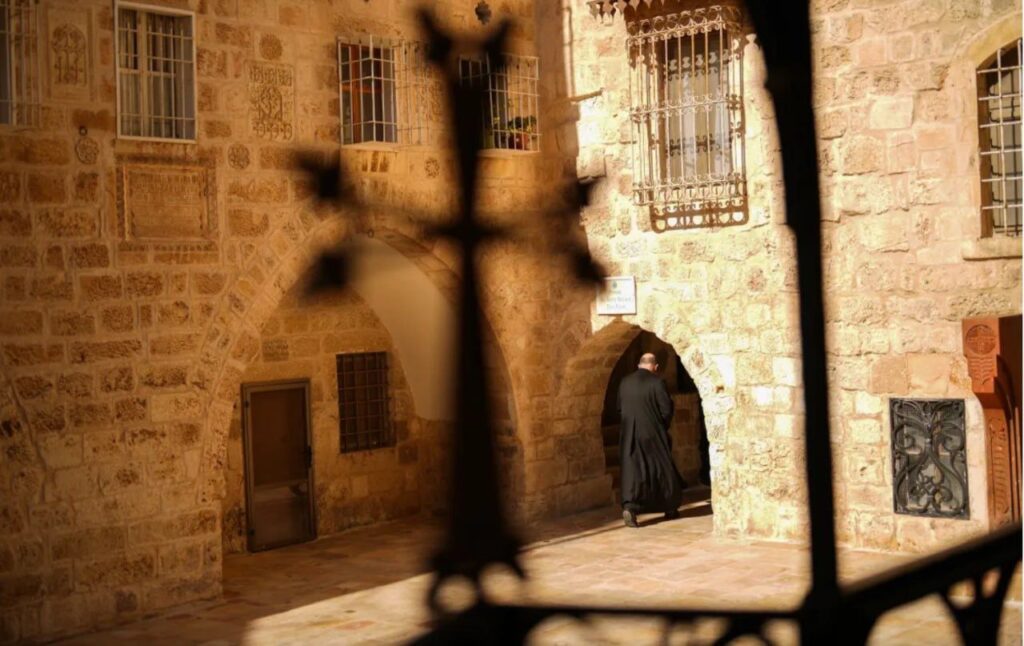
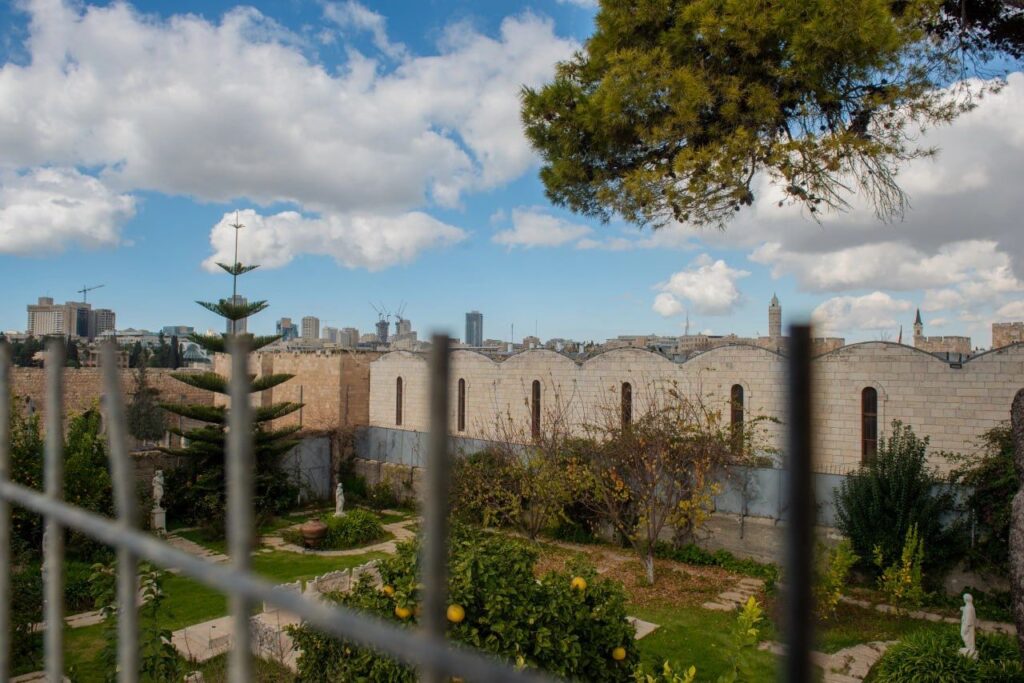
Q: Many observers see this not just as a local real estate dispute but as part of a broader pattern affecting heritage, sovereignty, and minority rights in Jerusalem. From your perspective, what are the larger implications of this case for the Armenian community and for Jerusalem’s multicultural and historic character?
A: The Cow’s Garden dispute cannot be understood as a stand-alone real estate disagreement. It is part of a broader and deeply troubling pattern of pressure placed on Christian and minority communities in the Old City—pressures that increasingly threaten both the Armenian presence and the multicultural equilibrium that has defined Jerusalem for centuries.
For the Armenian community, this case is existential. There is a sustained effort—sometimes overt, often incremental—to erode the Armenian foothold in the Old City. When direct force is constrained by scrutiny, the pressure appears in subtler forms: contested leases, covert land transfers, intimidation, and coordinated encroachments that make daily life for Christian Armenians increasingly difficult and, ultimately, unbearable. The Cow’s Garden affair is simply the latest manifestation of this trend.
This pattern does not affect Armenians alone. Other historic Christian institutions, including the Greek Orthodox Patriarchate and the Latin Church, have also confronted attempts to strip them of property essential to their identity and their centuries-old role in Jerusalem. These cases reveal a consistent strategy: the gradual attrition of non-dominant communities’ rights and holdings through legal maneuvering, commercial pressure, and demographic engineering.
The implications of such efforts reach far beyond the boundaries of the Armenian Quarter. The weakening or removal of the Armenians would create a dangerous power vacuum in one of the most sensitive and contested cities in the world. For centuries, the Armenian Quarter has played a stabilizing role—deeply rooted, non-partisan, and uniquely positioned to maintain equilibrium among competing religious and political actors. If that anchor is eroded, the delicate balance that has long preserved relative calm in the Old City begins to unravel. And in Jerusalem—particularly in its most charged spaces—any vacuum is quickly filled by forces whose agendas may be far more maximalist or destabilizing.
Taken together, these dynamics show why the Cow’s Garden dispute is not merely about land. It is about whether Jerusalem remains a mosaic of living traditions or becomes a place where diversity is tolerated only until it becomes inconvenient. Allowing encroachments on ancient communities to proceed unchecked risks diminishing Jerusalem’s historic character and accelerating volatility in a region already defined by it. The outcome of this case will shape not only the future of the Armenian Quarter, but the future meaning of coexistence in Jerusalem.
Q: Looking ahead, what are the next concrete steps, legal, communal, and international, to ensure the Armenian Quarter’s protection? How can Armenians worldwide contribute to this ongoing struggle to preserve their centuries-old presence in Jerusalem?
A: Looking ahead, several concrete steps—legal, communal, and international—are essential to ensuring the long-term protection of the Armenian Quarter.
Legally, the immediate priority is to see the pending actions before the Jerusalem District Court through to judgment. These cases challenge the purported lease on core substantive and fiduciary grounds, and their resolution will shape not only the future of the Cow’s Garden but the legal landscape governing any future encroachments. The international legal team working on this matter is doing so on a pro bono basis, and their work is complemented by dedicated local counsel who manage the day-to-day litigation and protect the community’s interests on the ground.
Communally, the Armenian community in Jerusalem must continue its constant vigilance. For nearly two years, young Jerusalem Armenians have maintained a daily presence at the Cow’s Garden, preventing unauthorized attempts by outside groups to enter or assert control. This steadfast communal presence remains indispensable as the legal process unfolds.
Internationally, sustained attention and advocacy are critical. This is not a situation that can survive indifference. Governments, churches, cultural institutions, and human rights organizations must remain engaged and vocal. International pressure helps deter unilateral actions on the ground and reinforces that the Armenian Quarter’s fate is not a local administrative issue but a matter of global cultural, religious, and historical significance.
For Armenians worldwide, there are clear and meaningful ways to contribute: First, stay informed. Visibility and awareness themselves are protective in crises involving vulnerable historic communities; this struggle cannot be allowed to fade from public consciousness. Second, use your voice with your own governments. Urging elected officials and foreign ministries to remain attentive to the safety and rights of Christian Armenians in Jerusalem can materially influence diplomatic engagement. Third, support the community directly. Although the international legal team volunteers all of its time pro bono, there are substantial ongoing costs for local lawyers in Jerusalem, diplomatic initiatives, community mobilization, and the physical protection efforts on the ground. Supporting SaveTheArQ—the grassroots organization coordinating these efforts—is one of the most effective ways to ensure that the Jerusalem Armenian community has the resources it needs in this historic struggle. You can donate by visiting givebutter.com/Arq2025.
What is happening today, right now, in the Armenian Quarter of Jerusalem is a fight to preserve a centuries-old presence and a vital cultural anchor in one of the most sensitive and contested cities in the world. Its outcome will depend on sustained legal strategy, communal resilience, and the continued solidarity of Armenians everywhere.














Բաժանորդագրվել