Vance visit advances U.S.–Armenia ties as demonstrators demand action on prisoners
- (0)
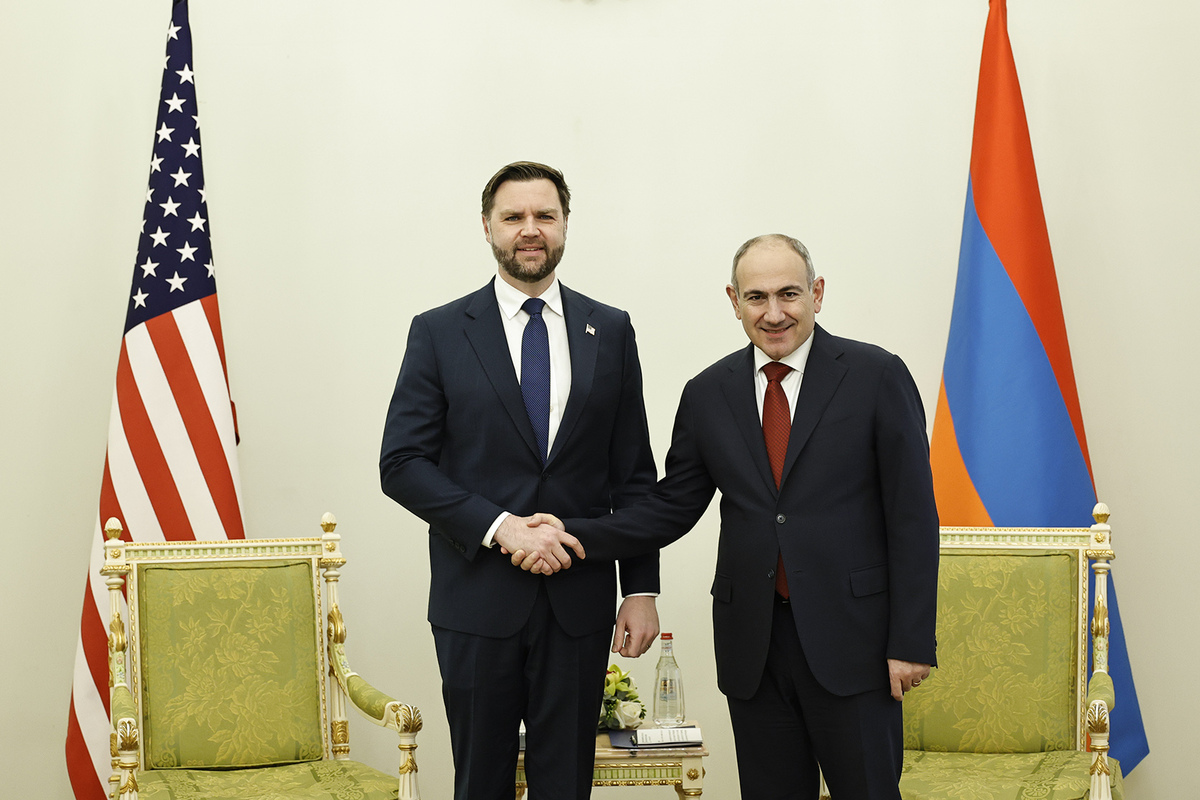
(Horizon Weekly / YEREVAN) – U.S. Vice-President J.D. Vance arrived in Armenia on February 9 for a two-day official visit, announcing several U.S. commitments in the energy and defence sectors and formalizing a framework for peaceful nuclear cooperation between Washington and Yerevan.
During talks with Prime Minister Nikol Pashinyan, the sides signed a joint statement concluding negotiations on a U.S.–Armenia agreement on the peaceful use of nuclear energy. At a joint press conference, Vance said the agreement would underpin up to $9 billion in planned U.S. engagement in Armenia’s nuclear energy sector, beginning with an initial $5 billion tranche and followed by an additional $4 billion.
Vance described the Trump Route for International Peace and Prosperity as a transformative regional project, saying it would unlock new trade, transit, and energy corridors while drawing significant private investment into Armenia. He said the initiative could position Armenia as a regional hub for economic growth.
On defence cooperation, Pashinyan confirmed Armenia’s acquisition of U.S.-made V-BAT drones under a modest $11 million Foreign Military Sales agreement, noting that the purchase follows three years of joint “Eagle Partner” military exercises and marks a step toward deeper defence ties.
The sides also discussed cooperation on critical minerals and rare earth supply chains, as well as ongoing institutional reforms in Armenia. Pashinyan characterized the visit as a milestone in strengthening Armenia–U.S. relations and advancing what he described as unprecedented conditions for regional peace.
Pashinyan briefed Vance on recent discussions with Azerbaijani President Ilham Aliyev, including talks on regional unblocking and Armenia–Turkey normalization, with particular reference to reopening the Gyumri–Kars railway. He also confirmed his participation in the upcoming Peace Council session in Washington on February 19, which will include both Armenian and Azerbaijani leaders.
Outside the venue of the talks, demonstrations accompanied the visit, with protesters holding photographs of Armenians imprisoned in Azerbaijan and calling on Washington to press for their immediate release. Chants demanding accountability and justice were heard as the U.S. vice president met with Armenian officials.
Representatives of the Armenian Apostolic Church, opposition political forces, and civil society organizations separately urged Vice President Vance to raise concerns not only about Armenian captives held in Baku, but also about democratic backsliding inside Armenia. Statements and public appeals stressed what critics describe as growing pressure on opposition figures, arrests of clergy, and attempts to marginalize dissenting voices.
Opposition leaders and human rights advocates called on the United States to use its expanded engagement with Armenia to consistently remind the government of its democratic obligations, warning that Armenia’s status as the region’s only democracy remains fragile and cannot be taken for granted.
Civil society figures emphasized that progress toward regional peace and economic integration must be matched by respect for political pluralism, judicial independence, and freedom of expression at home, as well as sustained international pressure on Azerbaijan to release Armenian prisoners.