Ապրիլ 02, 2026
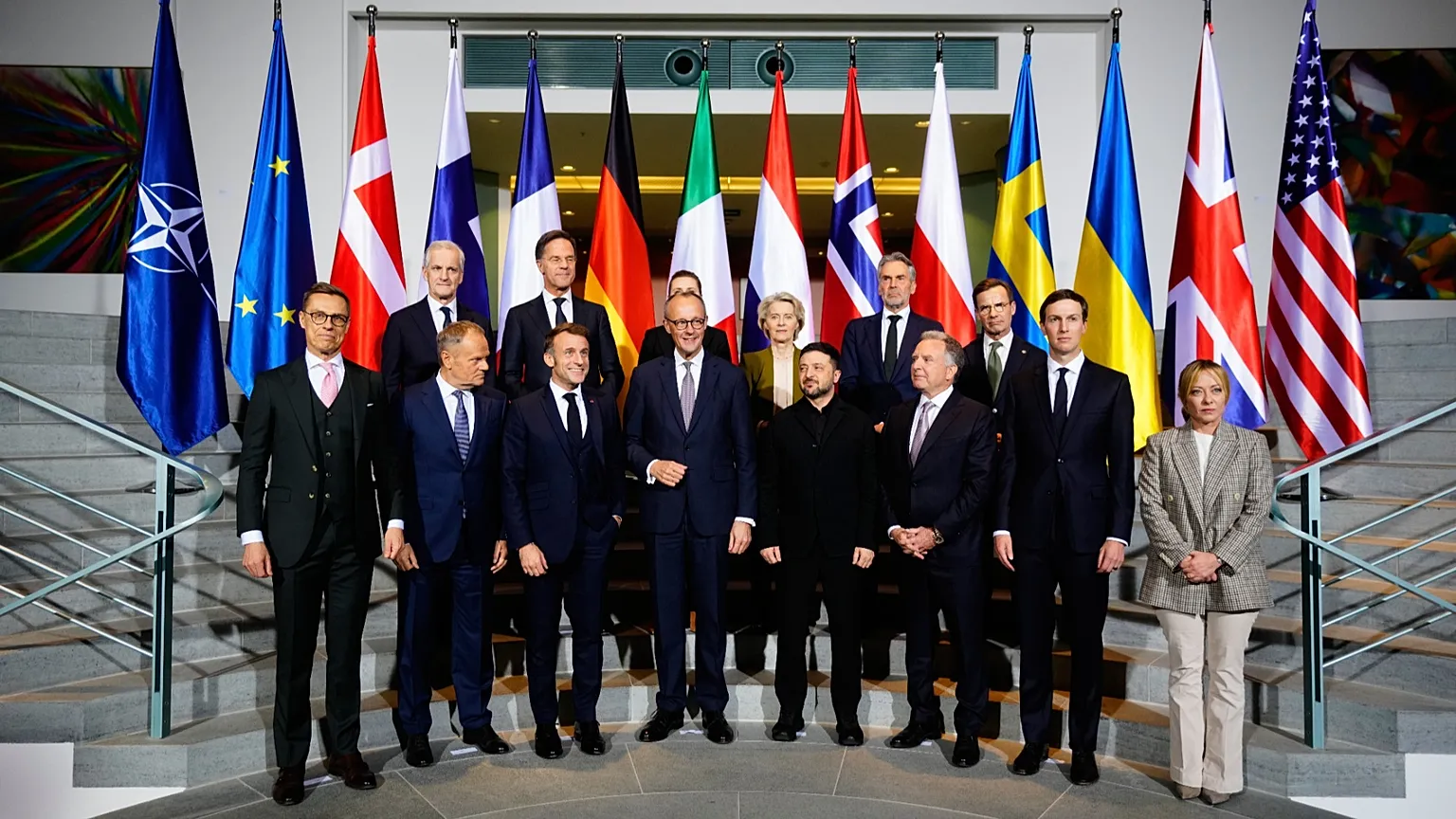
(Horizon Weekly) – Negotiations held in Berlin have resulted in Ukraine, the United States, and European partners reaching agreement on two key documents that are expected to serve as the foundation for a wider ceasefire arrangement, The New York Times reports, citing informed sources.
One of the documents sets out proposed security guarantees, under which Ukraine’s partners would assume legally binding obligations to come to Kyiv’s aid in the event of renewed hostilities. The second document details a coordination framework outlining how US and European forces would work alongside Ukrainian troops to deter any future Russian attempts to seize Ukrainian territory.
According to the report, Washington would formally commit to deploying its vast intelligence resources to oversee compliance with a ceasefire and to identify any Russian troop movements at an early stage.
European countries willing to support Ukraine militarily would position their forces in western Ukraine, well away from the front lines, creating what officials describe as an additional deterrent layer against potential Russian aggression.
Despite progress, negotiators were unable to bridge differences on the most contentious issue: Moscow’s territorial claims over Ukraine’s Donetsk region, the newspaper notes.
Kremlin spokesperson Dmitry Peskov said Moscow has not been briefed on the outcomes of the Berlin discussions and expects the United States to provide information once it is prepared. He reiterated Russia’s opposition to the presence of foreign troops on Ukrainian soil.
Responding to a Bloomberg report that Washington is preparing fresh sanctions should President Vladimir Putin reject the peace proposal, Peskov said such plans are well known in US policy circles. He added that sanctions are counterproductive and undermine any prospects for progress.
Meanwhile, European Commission President Ursula von der Leyen said Europe must now assume greater responsibility for its own security. She announced plans to present two financial support options for Ukraine at the next European Council meeting: one involving the use of frozen Russian assets, and another based on loans funded through the EU budget.
“One thing is absolutely clear,” von der Leyen said. “We must decide at this European Council how Ukraine will be financed over the next two years. The peace of yesterday no longer exists, and we cannot afford to dwell on the past.”
According to Reuters, EU member states are close to reaching an agreement to extend a loan to Ukraine backed by roughly €210 billion in frozen Russian assets held across Europe. Belgium remains the sole holdout, as the majority of those assets—about €185 billion—are held there. Brussels is reluctant to shoulder the full legal and financial risks tied to their use.
As diplomatic efforts continue, fighting on the ground has not subsided. Russian forces carried out drone strikes on civilian infrastructure in Odesa and reported the capture of another settlement in the Dnipropetrovsk region.
Ukraine, in turn, launched drone attacks on an oil refinery and energy facilities in Slavyansk, in Russia’s Krasnodar region, leaving nearly 39,000 residents without electricity and injuring two people.
Photo: Associated Press / EuroNews


















Բաժանորդագրվել