Ապրիլ 02, 2026
BY RAFFY ARDHALDJIAN
Tom Barrack’s recent remarks in New York—proposing 99-year leases and regional economic integration as a path to peace—may sound ambitious. But to many in the region, especially in Armenia, they ring familiar. While not a literal redrawing of maps, this framing carries echoes of historical top-down schemes to reshape the Middle East, evoking the logic—if not the legacy—of Sykes-Picot. That history reminds us: such ideas must proceed with care, inclusion, and full respect for national sovereignty.
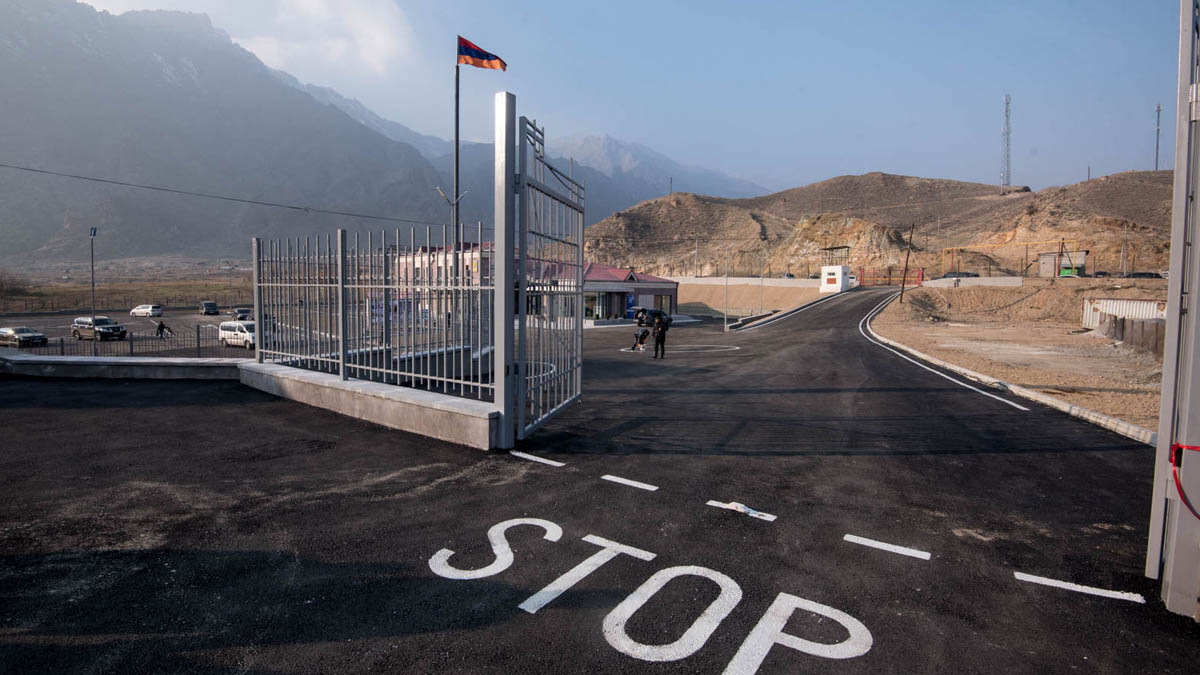
“They are arguing over 32 kilometers of road, but this is no trivial matter. It has dragged on for a decade,” Barrack remarked. To treat the proposed transit route (dubbed a ‘Crossroads of Peace’ by Armenia) as a minor inconvenience is to overlook geopolitical realities on the ground. Armenia’s historic homeland has been reduced over centuries to a landlocked sliver surrounded by adversaries. That’s not a joke. Blockades—by land and even air—have been used for decades to pressure Armenia into concessions.
Barrack, now serving as U.S. Ambassador to Turkey, should be reminded that Armenia is not a “tribe,” and its geopolitical concerns do not stem from a “tribal point of view.” Armenia is a civilization rooted in the Armenian Highland for millennia—long before the arrival of the very tribes he may be referencing. Such language oversimplifies a complex region. A more informed, respectful approach to Armenia and its neighbors would better serve his diplomatic mission.
All other variables held constant—and speaking purely hypothetically—if we are entertaining ideas about long-term leases, here’s a thought: Could Ambassador Barrack consider proposing that the United States lease a small portion of one of Turkey’s Black Sea ports for 100 years, to serve as a secure maritime outlet for Armenia’s landlocked economy? Not as a gift, but as part of a broader regional compact—one that might cost less than a few days’ worth of missiles in today’s raging wars. With such a foundation, Armenia could gain vital access to maritime trade, while Azerbaijan could receive a transit corridor of its own—assuming all sides adhere to mutually agreed terms. Of course, this is merely “thinking out loud,” just as Barrack was during his interview—I hold no authority over these decisions.
If Turkish officials see Armenia as a crucial part of the so-called Middle Corridor (a trade route connecting Turkiye with Central Asia), they should also see Armenia as a sovereign country—not just a “vilayet.” If they are serious, then they should show that seriousness.
If regional integration is truly the goal, then the conversation must move beyond a narrow focus on the Zangezur transit route. What’s needed is the comprehensive unblocking of all regional communications—north, south, east, and west. This includes reciprocal rights of passage from Armenia to the Black Sea—whether through Georgia or via a transit path to a leased Turkish port—transit via Azerbaijan to Russia (including onward connections to Georgia’s port of Poti), and secure access to Iran. Peace requires rights-of-passage arrangements grounded in mutual benefit and equal terms—not corridors designed to serve the interests of a single actor.
In parallel, it is only reasonable for Armenia, Azerbaijan, and Turkiye to also consider signing a trilateral non-aggression pact, ideally with external security assurances from credible international stakeholders. If corridor guarantees are being discussed, then credible assurances of non-aggression must also be on the table. This again, is merely “thinking out loud”.
In such a conceptual framework, all parties give something and gain something. It would allow Armenia to breathe, to reconnect, and—more importantly—for its people to begin rebuilding trust in regional diplomacy. Otherwise, why should the sovereign nation of Armenia—a continuous civilization on the Armenian Highland for millennia—enter into a one-sided agreement that binds it for 99 years?
Absent such balanced arrangements, proposals like Ambassador Barrack’s may appear less like diplomacy and more like real estate ventures layered atop the geopolitical wounds of small nations.
Barrack, himself of Lebanese descent, surely understands that Armenians—like Lebanese, Syrians, and Jews—have long been part of the region’s great trading civilizations. Bold visions are welcome, but real peace demands more than ideas. It requires reciprocity and an honest recognition of each nation’s present-day needs. Armenia’s needs—and its future—must be part of any credible regional vision. After all, if “e pluribus unum”—a phrase Barrack invoked in his interview—is to mean more than rhetoric, it must begin with respect for the dignity and aspirations of all nations involved.
Raffy Ardhaldjian is a Fletcher School graduate and advisor to tech companies, public institutions, and NGOs. In his spare time, he writes about strategic topics spanning Armenia and its global diaspora.
















Բաժանորդագրվել