Riyadh Summit 2026: Arab and Islamic ministers demand end to Iranian aggression and regional escalation
- (0)
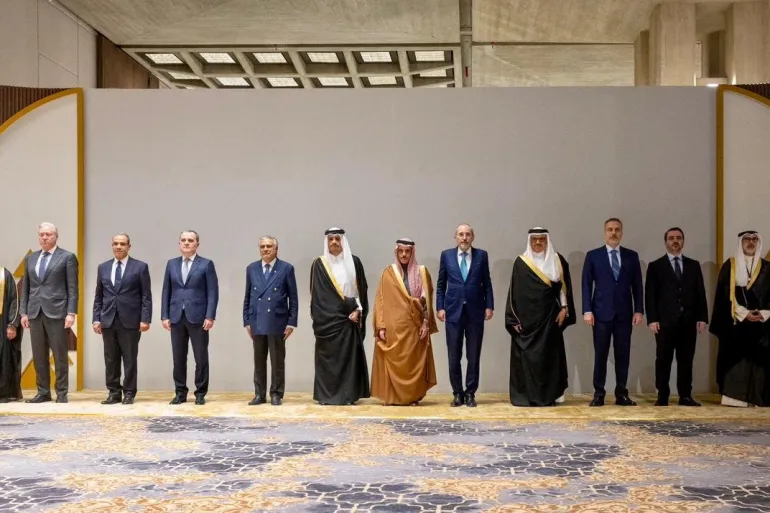
(Horizon Weekly) – Foreign ministers from 12 Arab and Islamic nations issued a high-stakes joint statement following a consultative meeting in the Saudi capital, demanding an “immediate and unconditional” halt to Iranian attacks on regional states.
The summit, held on March 18, 2026, brought together top diplomats from Saudi Arabia, the UAE, Qatar, Bahrain, Kuwait, Oman, Egypt, Jordan, Lebanon, Pakistan, Türkiye, and Azerbaijan. The meeting was convened in response to a surge in ballistic missile and drone strikes targeting critical civilian and energy infrastructure across the Gulf and neighbouring territories.
In their collective communiqué, the ministers strongly condemned what they described as “deliberate attacks” on residential areas, airports, desalination plants, and oil facilities. They explicitly warned that the future of diplomatic relations with Tehran hinges entirely on its respect for national sovereignty and the principle of non-interference.
“These actions cannot be justified under any pretext,” the statement noted, while reaffirming the right of all affected states to defend themselves under Article 51 of the UN Charter.
The group also addressed the escalating threat to global trade, urging Iran to refrain from any measures that could obstruct international navigation in the Strait of Hormuz and the Bab al-Mandab. With the regional conflict entering its fourth week, ministers expressed grave concern about disruptions to global energy supplies and the potential for a wider humanitarian crisis.
Beyond the direct threats from Iran, the ministers reaffirmed their support for Lebanon’s stability and territorial integrity. They condemned Israeli military expansionism in the region and backed the Lebanese government’s efforts to ensure that all weaponry remains under the exclusive control of the state.
The Riyadh meeting signals a significant shift toward a unified regional “deterrence policy.” While leaders maintained that diplomacy remains the preferred path, they emphasized that continued escalation would be met with “necessary legitimate measures” to safeguard regional security.