New judge assigned to case against Catholicos Karekin II and six senior clergymen
- (0)
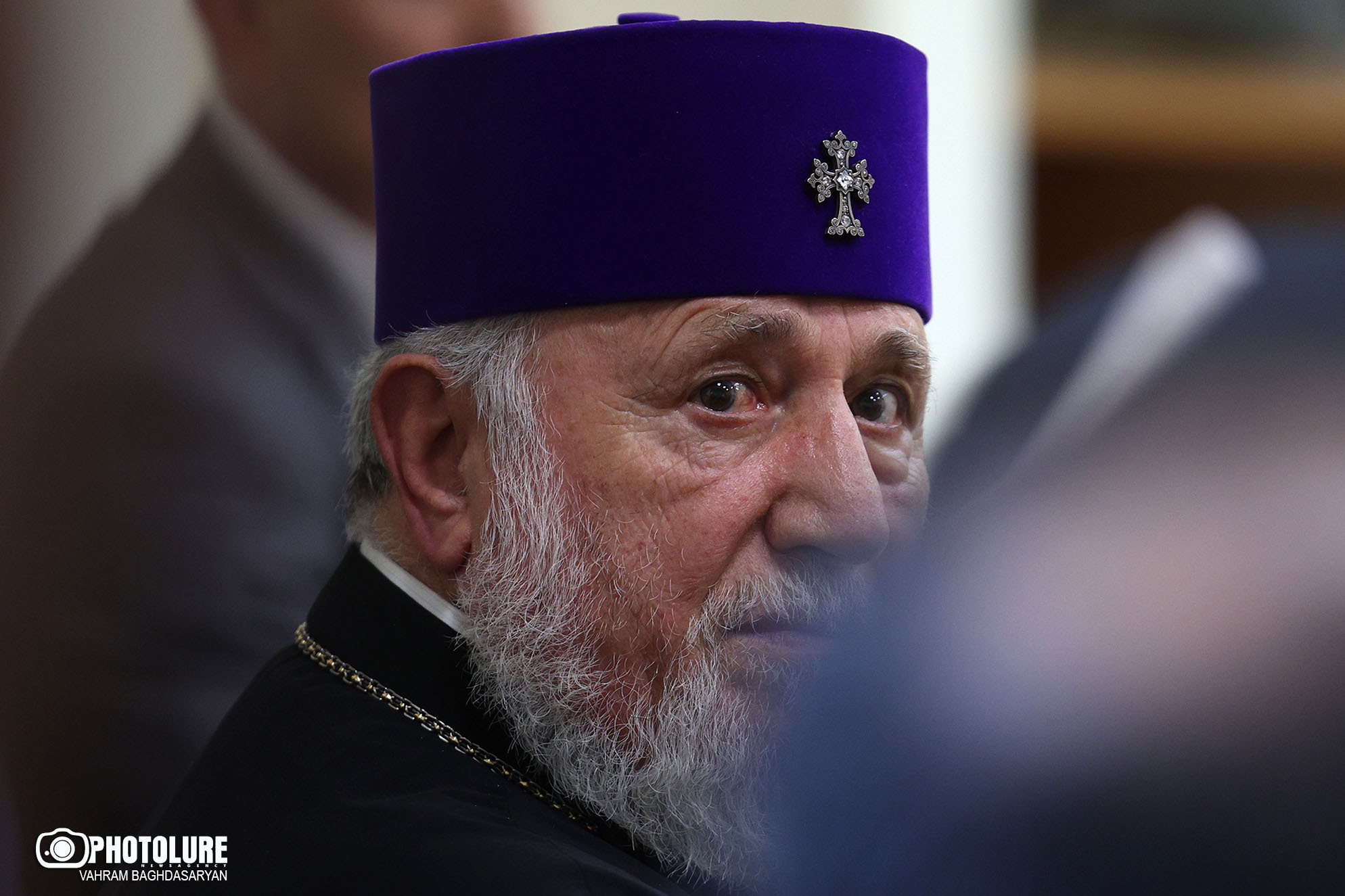
(Horizon Media / YEREVAN) — The criminal case against Catholicos Karekin II and six senior clergymen of the Armenian Apostolic Church, launched amid the Armenian government’s ongoing campaign against the Church and its leadership, has been assigned to a new judge.
According to Armenia’s Datalex judicial information system, the case will now be heard by Serzh Rushanyan, a judge of the Armavir Regional Court. The 29-year-old judge has not yet scheduled a new hearing.
Rushanyan was appointed to the bench in 2023. Before becoming a judge, he worked at Armenia’s Ministry of Justice and, from 2017 to 2020, served as president of the Justice and Rule of Law non-governmental organization.
Datalex has also published the explanation of Judge Hakob Manukyan, who withdrew from the case last week over concerns that his previous professional relationship with one of the Catholicos’ lawyers could raise questions about his impartiality.
Manukyan said that while studying at the Academy of Advocates in 2021, Ara Zohrabyan, now representing the Catholicos, was president of the Chamber of Advocates and chaired its Qualification Commission. Zohrabyan issued Manukyan’s attorney’s licence following his oral examination.
The judge said those circumstances could create reasonable doubts about his impartiality and could call into question both the objectivity of the proceedings and the fairness of any future judicial decisions. He therefore recused himself in the interests of justice.
The case against Karekin II and the six clergymen stems from an internal Church dispute involving Bishop Gevorg Saroyan, one of the bishops who joined the government’s campaign against the Catholicos.
Karekin II removed Saroyan from his post, but a secular court later ordered his reinstatement. The Mother See of Holy Etchmiadzin refused to comply and subsequently defrocked Saroyan, maintaining that questions of ecclesiastical appointment, discipline and clerical status fall within the Church’s canonical authority and are not subject to interference by state courts.
The criminal proceedings effectively turn that refusal into a prosecutable offence, bringing the state directly into matters of internal Church governance.
The case has become a central element of the government’s broader confrontation with the Armenian Apostolic Church, with judicial and investigative bodies now being used to exert pressure on the Catholicos and the senior clergy over decisions that the Church considers exclusively within its spiritual and canonical jurisdiction.