Ապրիլ 02, 2026
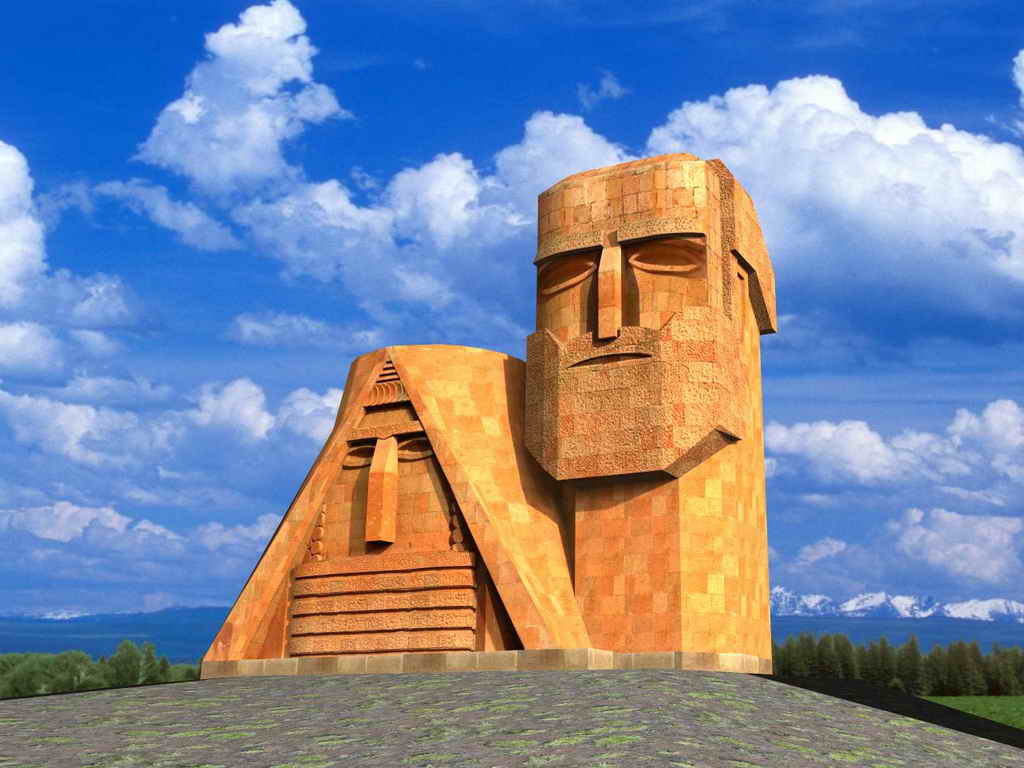
(YEREVAN) – Two years ago, on December 2, 2023, the Parliament of Nagorno-Karabakh established the Committee for the Defence of the Fundamental Rights of the People of Nagorno-Karabakh. The Committee was mandated to safeguard the core rights of the people of Nagorno-Karabakh, foremost among them, their collective right of return to their ancestral homeland.
Nearly two years later, the Committee’s mission remains both indispensable and deeply resonant. The Committee has now released a brief report outlining the conceptual foundations of its mandate, the progress achieved to date, and the emerging opportunities for renewed diplomatic engagement.
Despite formidable challenges, including the indifference of Armenia’s current leadership, the Committee has made measurable progress across legal, political, and diplomatic fronts. Against all odds, it has succeeded in preserving the political identity, legal claims, and collective right of return of the people of Nagorno Karabakh.
Over the past two years, the Committee’s principal collaborators and facilitators have included Christian Solidarity International (CSI), the Armenian National Committee (ANC) worldwide, and a number of Armenian and non-Armenian organizations and individuals from Armenia and the diaspora.
The Committee’s report concludes that the groundwork for the right of return has now been firmly established: the issue remains alive in international discourse, institutional frameworks are active, and the stage is set for renewed national leadership in Armenia to advance the rights of the people of Nagorno-Karabakh with clarity, legitimacy, and resolve.
REPORT
Introduction
On December 2, 2023, the Nagorno-Karabakh Parliament, now operating from Armenia, established an international committee mandated to pursue the defense of the fundamental rights of the people of Nagorno-Karabakh, primary among them the right of return for its forcibly displaced. Nearly two years later, the Committee’s mission remains both indispensable and deeply resonant. Its establishment was not merely institutional housekeeping after the forced exodus of September 2023; it was the formal continuation of a collective political will that has governed Nagorno-Karabakh for three decades and represents a people whose rights, identity, and homeland cannot be erased by war or decree.
This report outlines the conceptual foundations of the Committee’s mandate, presents the advances it made, and evaluates emerging opportunities for renewed diplomatic engagement. Over the past two years, the Committee’s main collaborators and facilitators have been Christian Solidarity International (CSI), the global Armenian National Committee (ANC), as well as a number of Armenian and non-Armenian organizations and individuals from Armenia and the Diaspora.
It concludes that the groundwork has now been fully laid: the issue of the right of return is alive, institutional frameworks are in motion, and following Armenia’s upcoming elections, a new national leadership will be positioned to pick up the pieces and advance the rights of the Nagorno-Karabakh people with clarity, legitimacy, and resolve.
Conceptual Framework of the Committee’s Mandate
1) Institutional Legitimacy
The Nagorno-Karabakh Parliament remains the only democratically elected representative body of the people of Nagorno-Karabakh. Its decision to form the Committee on December 2, 2023, was grounded in democratic legitimacy, continuity of governance, and the need to preserve political agency for a forcibly displaced population.
The Committee’s mandate is explicit: advocate for the safe, voluntary, and collective return of Nagorno-Karabakh Armenians; pursue the right of self-determination as recognized in international law; negotiate with all relevant state and international actors; and seek a system of international administration and protection—under UN or OSCE auspices—supported by an international peacekeeping presence.
2) Historical and Legal Foundations
Nagorno-Karabakh has never been part of an independent Azerbaijani state. Its Armenian identity and autonomous political structures predate modern Azerbaijan by centuries. Under Soviet law, Nagorno-Karabakh was an autonomous region with distinct political status, entitled to exercise the right of self-determination through referendum. On December 10, 1991, the population voted overwhelmingly for independence, a legal act grounded in Soviet constitutional norms.
3) The Principle of Self-Determination
Self-determination is a cornerstone of international law, enshrined in the UN Charter, the International Covenant on Civil and Political Rights, and the Helsinki Final Act. It entitles peoples with a distinct identity and connection to a defined territory to determine their political future free from persecution.
4) The Right of Return
The forced displacement of the entire Armenian population of Nagorno-Karabakh on September 19, 2023, constitutes a textbook case of ethnic cleansing. International law is unequivocal: forcibly displaced persons maintain the right to return to their homeland. This right is affirmed by customary international law, the Universal Declaration of Human Rights, and the International Covenant on Civil and Political Rights. On November 17, 2023, the International Court of Justice ordered Azerbaijan to ensure the “safe, unhindered, and expeditious return” of all Armenians who fled.
Progress and Developments: December 2023 – December 2025
Despite the collapse of local governance in Nagorno-Karabakh and the absence of support from Armenia’s current government, the past two years have seen remarkable diplomatic, legal, and political developments. These represent a growing international consensus that the right of return is legitimate, necessary, and enforceable.
International Legal Affirmation
ICJ Provisional Measures (Nov. 17, 2023) ordered Azerbaijan to enable the safe, unhindered return of Armenians. This ruling remains legally binding and has become the cornerstone of the Committee’s work.
Political Recognition Across Europe
Major democratic institutions have repeatedly affirmed the right of return: European Parliament Resolutions of March and October 2024, as well as of March 2025, called for dialogue between Azerbaijan and representatives of Nagorno-Karabakh. In march 2025, The French and Belgian parliaments adopted resolutions explicitly affirming the right of return. The Swiss Parliament (2024–2025) saw both houses approve Motion 24.4259, obligating Switzerland to host a Peace Forum on Nagorno-Karabakh to negotiate safe return with international supervision. This Swiss initiative is particularly significant because it establishes an institutional process rather than a symbolic declaration.
Growing Momentum in the United States and Canada
Eighty-seven U.S. lawmakers signed a letter urging the U.S. administration to uphold the right of return, secure the release of Armenian political prisoners, and protect cultural heritage. The State Department has formally acknowledged these principles as integral to a just settlement. Similarly, the Ministry of Foreign Affairs of Canada has, on more than one occasion, unequivocally expressed its support for the right of return of the people of Nagorno-Karabakh to their historic homeland.These advancements are the result of persistent advocacy by Armenian organizations, diaspora groups, and specifically the Committee itself.
Azerbaijan’s Pattern of Revisionism
The displacement of 2023 was not a spontaneous event but the result of a ten-month blockade designed to starve the population, multiple military assaults, systematic destruction of civilian infrastructure, and organized efforts to erase Armenian cultural heritage. Subsequent sham trials against Nagorno-Karabakh’s elected leadership constitute an attack on collective rights and an attempt to rewrite the conflict as a matter of “separatism” rather than self-determination and indigenous presence.
Countering Azerbaijani Revisionism
The Committee consistently challenged Azerbaijan’s narrative that Armenians “left voluntarily,” its misleading claims of a “reintegration program,” its attempts to criminalize Nagorno-Karabakh’s elected leaders, and its propaganda targeting Armenian diaspora advocacy. Through publications, media engagement, and diplomatic briefings, the Committee ensured that these falsehoods did not become accepted narratives. Extensive work was also carried out in academic circles in Europe and the United States. Notable among these were events and conferences held at major universities, as well as legal analyses on the Nagorno-Karabakh conflict and the right of return produced by Harvard and Columbia.
Two years of work have laid a durable foundation for renewed diplomatic action. The essential elements for a new phase of leadership and engagement are already in place: a solid legal basis, anchored in the International Court of Justice’s measures and international law, affirming the right of return and protection from intimidation; a political basis, reflected in growing recognition by multiple parliaments and international institutions of that same right; an institutional basis, embodied in Switzerland’s Peace Forum mandate, offering a ready-made framework for structured negotiations; and a moral and historical basis, rooted in the unrectified forced displacement of 2023, whose injustice continues to resonate globally.
The Missing Element: Political Will in Yerevan
The current Armenian government’s refusal to raise the issue has temporarily impeded progress. But political will is not permanent. Once Armenia has a new leadership—one capable of articulating its national interests with coherence and conviction—the foundation will be ready: negotiations can resume, this time with reciprocal demands; the Swiss initiative can be activated and expanded; the legal and political instruments already adopted can be leveraged; and international partners can align behind a renewed, principled Armenian position. The return of Nagorno-Karabakh’s displaced population will then transition from “unrealistic” to operational.
Conclusion
Two years after its establishment, the Committee for the Right of Defense of the Fundamental Rights of the People of Nagorno-Karabakh has achieved measurable progress across legal, political, and diplomatic fronts. Against overwhelming odds, amid forced displacement, institutional collapse in Nagorno-Karabakh, and the indifference of Armenia’s current leadership, the Committee has succeeded in preserving the political identity, legal claims, and collective rights of a displaced people.
The groundwork has been laid: international law is clear; parliamentary resolutions are accumulating; a Swiss-led negotiation platform is ready; U.S. political engagement is rising; and the issue remains alive in the global system. No proclamation from Yerevan or Baku can extinguish the legal, historical, and moral truth that Nagorno-Karabakh is Armenian, and its people have the right for safe, collective and dignified return.









Բաժանորդագրվել