Honorary President of American University of Armenia, Professor Haroutune Armenian, passes away
- (0)
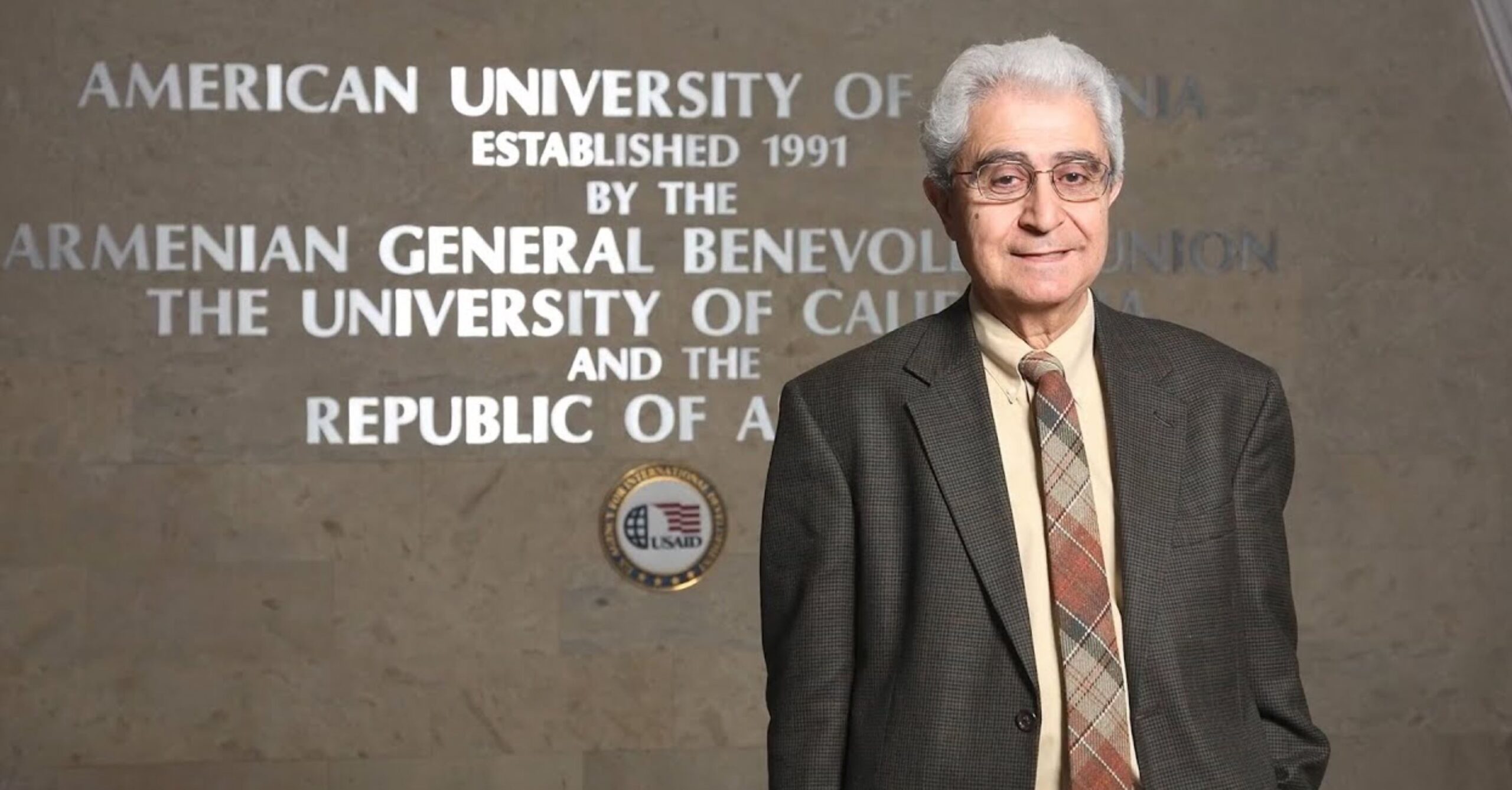
Dr. Haroutune Armenian, honorary president of the American University of Armenia (AUA), former trustee, professor, distinguished educator, beloved friend, and philanthropist, has passed away.
The university’s statement reads:
“Dr. Armenian led AUA as president for 14 transformative years, leaving an enduring legacy that shaped the institution’s path and broadened its impact both in Armenia and internationally. A visionary educator, physician, and public health expert, he was instrumental in launching novel academic programs, expanding AUA’s research profile, and guiding the University toward accreditation by the Western Association of Schools and Colleges (WASC). Under his leadership, AUA developed modern facilities, welcomed its first international students, and introduced programs like the Digital Library of Classical Armenian Literature and the Turpanjian Rural Development Program, with over 550 businesses established in villages, 1,169 jobs created, and 1,830 people trained in entrepreneurship. This and other initiatives brought forward under the leadership of Dr. Armenian continue to shape the lives of AUA students, alumni, and faculty across Armenia and the world.
“When I first became president of AUA in 2010, immediately after Harout, I remember that he and Sona graciously invited me to their home in California for two days of discussion about the job I was taking on. During his 14-year service as AUA’s president, Harout shaped this institution in a way that few other people have. He worked very hard to build our College of Health Sciences into the high-quality, research-active organization that it is today. He also oversaw AUA’s initial accreditation and the construction of the Paramaz Avedisian Building, making possible the subsequent expansion of the institution. It was a pleasure and an honor to learn from him and stay in touch with him over the years, and I was very pleased to award him the AUA Presidential Commendation during our 2025 Commencement. My deepest condolences go to Sona and their entire extended family,” said AUA President Dr. Bruce Boghosian.
Together with his wife Sona, Dr. Armenian generously supported students studying at the Turpanjian College of Health Sciences. These scholarships transformed many lives by removing financial barriers to education.
Dr. Armenian was a profound Armenian patriot whose dedication to the homeland shaped every chapter of his life’s work. He believed deeply in the potential of the Armenian people and worked tirelessly to create opportunities for generations of bright, ambitious Armenians to thrive in the homeland. Through his leadership at AUA and beyond, he opened doors for students and professionals alike, equipping them with the education, skills, and confidence to lead, innovate, and serve their communities. His vision was to build not only institutions, but also lives anchored in knowledge, purpose, and a shared commitment to Armenia’s progress.
Born in Beirut, Dr. Armenian received his M.D. from the American University of Beirut (AUB), and later an MPH and DrPH from the Johns Hopkins School of Hygiene and Public Health (now the Johns Hopkins Bloomberg School of Public Health). He was a leader in the global academic and public health communities. Dr. Armenian’s academic and development leadership included program development at the Ministry of Health in Bahrain; dean of the Faculty of Health Sciences at AUB; deputy and interim chair of Epidemiology, director of the MPH program, and professor emeritus at Johns Hopkins University (JHU); founding dean of the College of Health Sciences at AUA; supervisor of the chair of the Department of Epidemiology, Public Health and Environment at King Saud University, Riyadh; and associate dean of Academic Programs at the University of California, Los Angeles Fielding School of Public Health, where he also served as a Professor in Residence of epidemiology.
Dr. Armenian was also a fellow of the Royal College of Physicians in London, and a member of the American Epidemiological Society. He served on the central executive council of the Armenian Church in Lebanon as well as on the executive of the Hamazkaine Cultural Association and the Karageuzian Foundation.
Dr. Armenian served as the editor-in-chief of Epidemiologic Reviews for 15 years and on the editorial board of a number of professional journals and publications. He pioneered epidemiologic research by using Armenian Church parish records to study infant mortality and other health indicators in 16 diasporan countries over a timeframe of 300 years. He was also one of the earliest to apply epidemiologic methods to study the effects of the civil war at the population level during the 1980s in Lebanon, and the long-term effects of the 1988 earthquake in Armenia, including a 23-year follow up on the survivors of the earthquake. He published over 100 scientific papers and peer-reviewed chapters, 20 books, and two collections of his watercolors and prose-poetry in Armenian and English, titled Colors and Words: From Armenia and Beyond and Past Does Not Yet Melt Here. In 2009, he released a new textbook on The Case-Control Method: Design and Applications at Oxford University Press.
His numerous awards included the Ernest Lyman Stebbins Medal for Excellence in Education, the Golden Apple Award and Advising Teaching and Mentoring Award (on two occasions) for Excellence in Teaching from the Johns Hopkins Bloomberg School of Public Health, the Movses Khorenatsi Presidential Medal from the Republic of Armenia and the Gold Medal of the Ministry of Education and Science, the St. Sahak-St. Mesrop Medal from the Catholicos of All Armenians, the Presidential Medal of the Order of Cedars from the Republic of Lebanon, and membership in the Alpha Omega Alpha medical and Delta Omega public health honorary societies.
“Harout had a pivotal role in establishing the Master of Public Health (MPH) program as well as the Center for Health Services Research and Development (CHSR) in 1995 and served as the founding dean of MPH and founding director of CHSR,” remembered Dr. Armen Der Kiureghian, AUA co-founder, president emeritus, and trustee. “Starting in 1997, he served as president of AUA until 2010. During his presidency, the University facilities were largely expanded, with the completion of the AUA Center and construction of the Paramaz Avedisian Building. Most importantly, with Harout’s initiative, in the year 2000, AUA applied to WASC, one of seven regional accrediting agencies recognized by the U.S. Department of Education. After several years of preparation and reviews, AUA was eventually granted accreditation in 2007, the first university outside U.S. territories to be granted accreditation by WASC. Harout’s vision and leadership were instrumental in achieving this important recognition.”
In addition to his professional achievements, Dr. Armenian was also a gifted artist. He began watercolor painting in Beirut, Lebanon in 1976, during a time when the country was facing an increasingly violent civil war. With his paintings, Dr. Armenian aimed to capture what few scenes of peace and beauty were left in his homeland. “The most fulfilling and peaceful was the time of expression through colors and images,” he once said.
Dr. Armenian’s contributions to AUA, higher education, public health, and Armenian society will never be forgotten. His work continues to live on through the thousands of students, faculty, researchers, and community members he inspired, mentored, and empowered.”